President Trump’s best idea of the week: Eliminate the U.S. penny

President Trump has put forward some good ideas in the first few weeks of his presidency, and some very bad ones, such as imposing “reciprocal tariffs” and ending birthright citizenship. But one of his good ideas that I hope comes to reality is eliminating the next to worthless U.S. penny.

The penny is more trouble than it’s worth for the individual consumer. When I was a kid, I could actually buy a piece of candy for a penny or two at Joe Bracco’s Variety Store in West Salem, WI. But today the value of a penny has been so eroded by inflation that there is virtually nothing you can buy for one or two pennies. Pennies are only used to make precise change in a cash transaction, and even then I often find myself saying to the cashier, “Keep the pennies!”
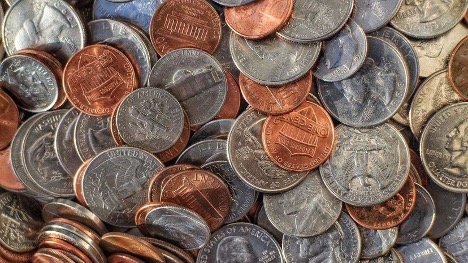
For the U.S. government the penny is not just an inconvenience but a significant money loser. According to the U.S. Mint, the cost of producing a penny in fiscal year 2024 was 3.7 cents. The mint reports that it lost a total of $85 million on the approximately 3.2 billion pennies it minted last year. (It reminds me of the joke I heard from a college accounting professor that, “Sure, we may be losing money on each sale, but we can make up for it in volume.”)

A story in the New York Times Magazine last year, “America Must Free Itself from the Tyranny of the Penny” by Caity Weaver, laid bare the absurdities of the U.S. penny. Because the penny is such a nuisance, the article notes, Americans don’t even bother to use the pennies they acquire. Instead, they pile up in mason jars and piggy banks. Estimates are that 240 billion pennies are lying idle and out of circulation in the United States. That’s $2.4 billion of dead capital.

Defenders of the penny raise fears that it will lead to price increases as retailers round prices up to the nearest 5-cent increment. This may happen on a one-time, limited basis. But I could see it going the other way, as something for sale at $2.99 drops to $2.95 to accommodate cash sales and still retain the appeal of being $2 and something. More than 80 percent of U.S. retail transactions are electronic, anyway, and wouldn’t be affected.

Canada, Australia, and New Zealand all ditched their versions of the penny years ago and saw no general increase in prices. A study mentioned in the New York Times article found that, when the penny was eliminated in Canada, retailers were as likely to round cash prices down to the nearest nickel as up.

One final pet peeve on coinage: While President Trump is issuing a directive to eliminate the penny, I wish he would sign something to promote creation of a usable U.S. $1 coin. The U.S. Mint tried introducing the Susan B. Anthony and Sacagawea one-dollar coins years ago, but they didn’t catch on. My theory is they were too close in size and weight to the U.S. quarter. When people fumble in their pockets for change, they want to be able to quickly sort one coin from another.

It’s time to go back to the drawing board for a new, distinct $1 coin. Canada and the United Kingdom have one-dollar and one-pound coins, respectively, that are widely used. In my many years of visiting the UK, I have always appreciated the small, thick one-pound coin that I could easily identify by feel in my pocket. Unlike at home, I could buy a sandwich and coffee with the coins in my pocket. Both Canada and the UK eliminated the paper-equivalent of the coins, saving millions from not having to print bills that wear out in a few years.

If in his second term President Trump could swap out the penny in exchange for a usable $1 coin, the U.S. government could save tens of millions of dollars a year and Americans could carry coins in their pocket that are a far more convenient match for how they actually spend their cash.

Should we let the sun go down on daylight savings time?

President-elect Trump recently let drop that he would like to see daylight savings time eliminated. It’s not his worst proposal. Serious arguments have been made for leaving the clocks on standard time year around. But before we ditch this century-old practice, let me offer a modified defense of DST.

The best argument for daylight savings time, dating back to our nation’s founding, is that it better aligns the clock with our normal daily activities. DST makes it easier for Americans to spend more of their waking hours in the daylight rather than the dark of night. Instead of sleeping through the first hour of sunlight in the morning, we can spend more time in in the daylight after work. As Ben Franklin (an early proponent of the idea) pithily observed, it’s silly during summer “to live much by candlelight and sleep by sunshine.”

If we stuck to standard time through the full year, the sun would rise at an absurdly early hour for tens of millions of Americans. Without DST, sunrise on June 22, 2025, in Boston would be 4:08 a.m., Chicago 4:16 a.m., Denver 4:32 a.m., Seattle 4:12 a.m. Who in their right mind wants to hear birds chirping outside their window at such an early hour? That’s a good three to four hours before most people need to report to work or otherwise start their daily activities.

With DST, after a day or two of adjustment, most people can enjoy an extra hour of sleep in the dark without sunlight streaming in their windows. And in the evening, after dinner, they can spend an extra hour of daylight sitting on the back porch, riding their bike, or playing catch in the backyard with the kids.

Opponents of DST argue that forcing people to change their clocks in the spring and fall can endanger health by raising stress. I’ll admit that getting up an hour earlier in the spring can be a challenge for the first few days. But nobody objects to having four different time zones across the United States, even though it can cause the same jet-lag-type stress with travelers. Time zones achieve the same end as DST by more closely matching the local clock with the rhythm of daily life.

Perhaps my anti-DST friends secretly long to emulate Communist China! Shortly after Chairman Mao and the Red Army seized power in 1949, the People’s Republic folded the country’s five time zones into a single zone. (See the results below.) Today you can drive or fly 3,300 miles across Mainland China and never need to adjust your watch. I suppose there are advantages to a single, nationwide time zone even in a continental-sized country, but I can imagine the obvious downsides, too.

Moving to year-around DST isn’t the answer. That would just create a different mismatch between daylight hours and daily activities, forcing people in winter to start their work and school day long before the sun comes up. In central Minnesota, where I grew up, DST in late December would mean the sun wouldn’t rise until 9 a.m.! (A Wall Street Journal editorial this morning rebuts the common arguments made for permanently shifting the clocks forward.) With DST we can flexibly adjust both the summer clock and the winter clock to better match our daily schedules.

Note that I haven’t argued for DST as a way to save energy. The empirical evidence for that is weak. Congress in its zeal to save the planet has expanded DST in recent decades, most recently in 2005, to run from the second Sunday in March to the first Sunday in November. That’s almost eight months of DST, more than enough, even for me! As a compromise, perhaps the incoming president can work with Congress to restore DST to its more traditional six months, running from, say, mid-April to mid-October.

Daylight savings time is essentially a way to collectively trick ourselves into getting up an hour earlier in the summer months. But the benign result is that our normal activities better align with daylight hours. Ben Franklin was right. By adjusting our clocks twice a year, we can sleep more in the dark, and work and play more in the light.