President Trump has put forward some good ideas in the first few weeks of his presidency, and some very bad ones, such as imposing “reciprocal tariffs” and ending birthright citizenship. But one of his good ideas that I hope comes to reality is eliminating the next to worthless U.S. penny.
The penny is more trouble than it’s worth for the individual consumer. When I was a kid, I could actually buy a piece of candy for a penny or two at Joe Bracco’s Variety Store in West Salem, WI. But today the value of a penny has been so eroded by inflation that there is virtually nothing you can buy for one or two pennies. Pennies are only used to make precise change in a cash transaction, and even then I often find myself saying to the cashier, “Keep the pennies!”
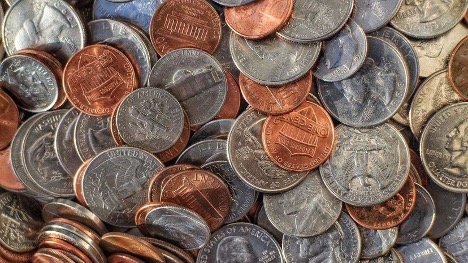
For the U.S. government the penny is not just an inconvenience but a significant money loser. According to the U.S. Mint, the cost of producing a penny in fiscal year 2024 was 3.7 cents. The mint reports that it lost a total of $85 million on the approximately 3.2 billion pennies it minted last year. (It reminds me of the joke I heard from a college accounting professor that, “Sure, we may be losing money on each sale, but we can make up for it in volume.”)
A story in the New York Times Magazine last year, “America Must Free Itself from the Tyranny of the Penny” by Caity Weaver, laid bare the absurdities of the U.S. penny. Because the penny is such a nuisance, the article notes, Americans don’t even bother to use the pennies they acquire. Instead, they pile up in mason jars and piggy banks. Estimates are that 240 billion pennies are lying idle and out of circulation in the United States. That’s $2.4 billion of dead capital.
Defenders of the penny raise fears that it will lead to price increases as retailers round prices up to the nearest 5-cent increment. This may happen on a one-time, limited basis. But I could see it going the other way, as something for sale at $2.99 drops to $2.95 to accommodate cash sales and still retain the appeal of being $2 and something. More than 80 percent of U.S. retail transactions are electronic, anyway, and wouldn’t be affected.
Canada, Australia, and New Zealand all ditched their versions of the penny years ago and saw no general increase in prices. A study mentioned in the New York Times article found that, when the penny was eliminated in Canada, retailers were as likely to round cash prices down to the nearest nickel as up.
One final pet peeve on coinage: While President Trump is issuing a directive to eliminate the penny, I wish he would sign something to promote creation of a usable U.S. $1 coin. The U.S. Mint tried introducing the Susan B. Anthony and Sacagawea one-dollar coins years ago, but they didn’t catch on. My theory is they were too close in size and weight to the U.S. quarter. When people fumble in their pockets for change, they want to be able to quickly sort one coin from another.
It’s time to go back to the drawing board for a new, distinct $1 coin. Canada and the United Kingdom have one-dollar and one-pound coins, respectively, that are widely used. In my many years of visiting the UK, I have always appreciated the small, thick one-pound coin that I could easily identify by feel in my pocket. Unlike at home, I could buy a sandwich and coffee with the coins in my pocket. Both Canada and the UK eliminated the paper-equivalent of the coins, saving millions from not having to print bills that wear out in a few years.
If in his second term President Trump could swap out the penny in exchange for a usable $1 coin, the U.S. government could save tens of millions of dollars a year and Americans could carry coins in their pocket that are a far more convenient match for how they actually spend their cash.
 Daniel Griswold's Blog