Day 13 on the road: Hiking the Appalachian Trail, touring the Biltmore Estate

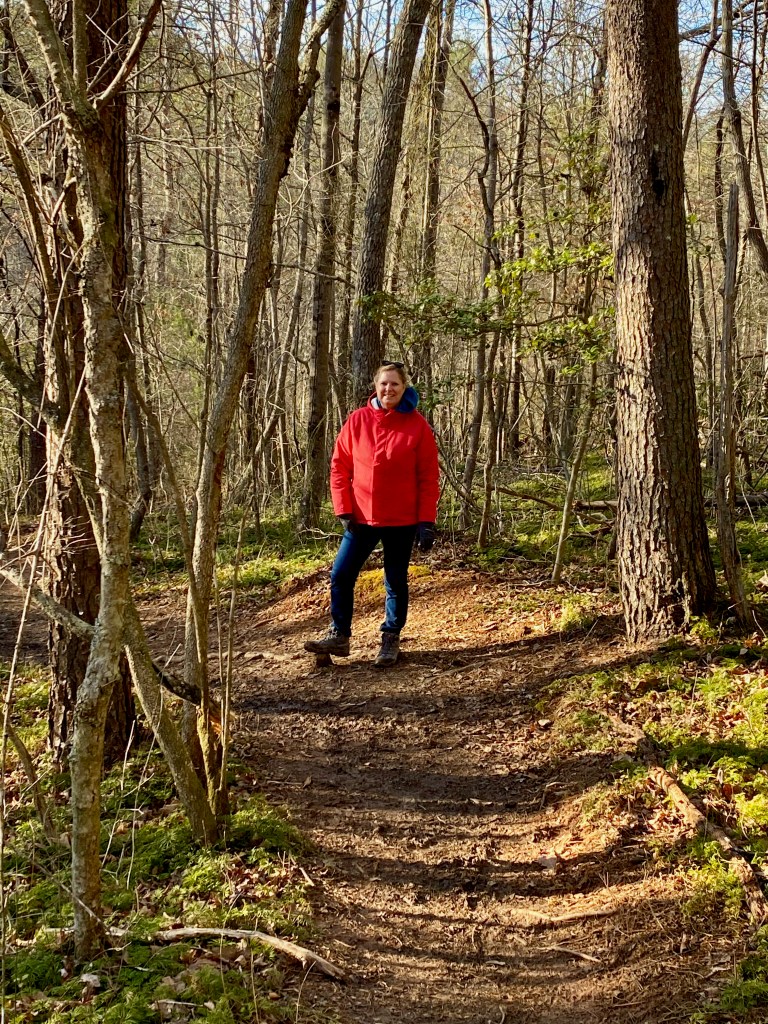
PIGEON FORGE, Tenn. — Today I hiked 9 miles out and back on the Appalachian Trail to Charlies Bunion, a rock outcropping to the north of the Newfound Gap parking area in Great Smoky Mountain National Park. Even with the recent snow and cold, the skies were clear blue and the temperature warmed up enough that I soon pealed away two of my five layers. 

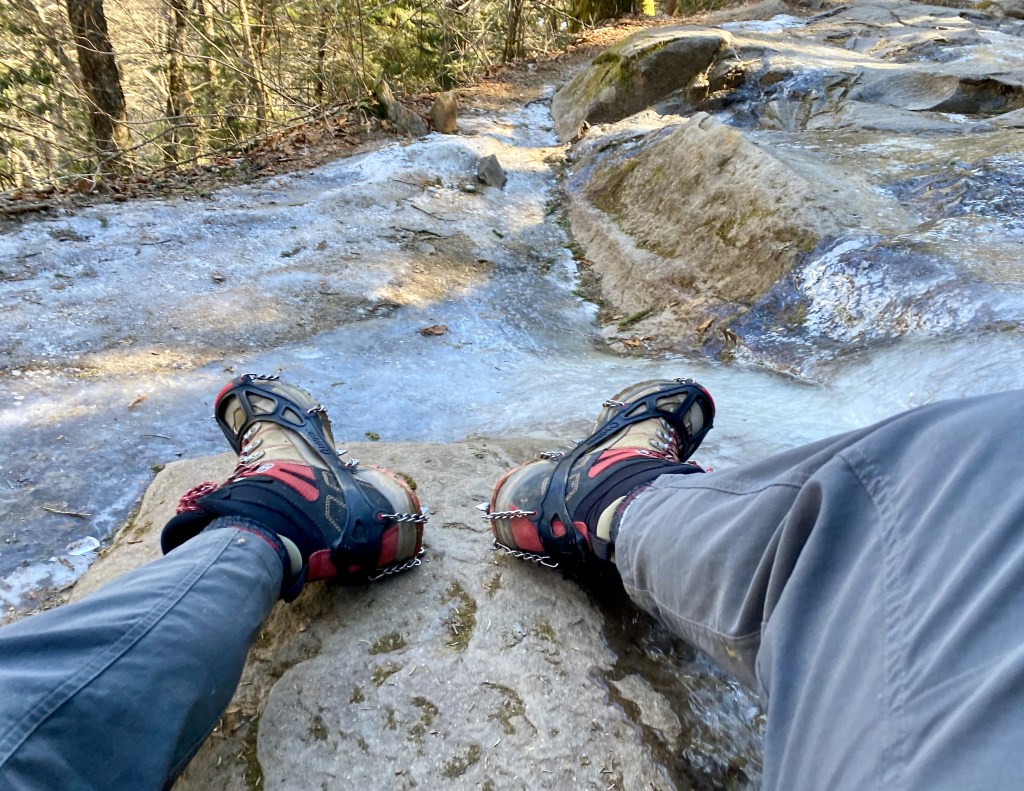
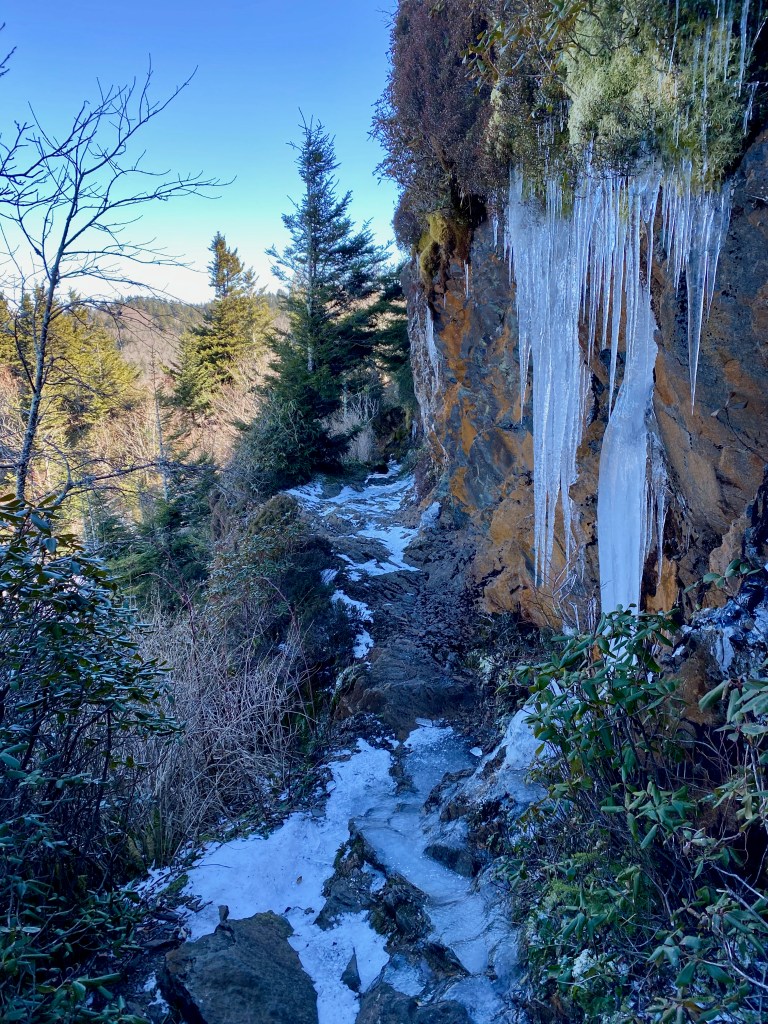
When I asked the staff at the Sugarland Visitors Center yesterday about hiking the trail I was advised to have clamp-on cleats on my boots because much of the trail is icy and snow packed. We stopped by the new REI store in Pigeon Forge last night to get a pair and I’m grateful we did. As you’ll see from the photos, parts of the trail were like a bobsled run. But with the spikes on my boots, I had no trouble walking across sheer ice.

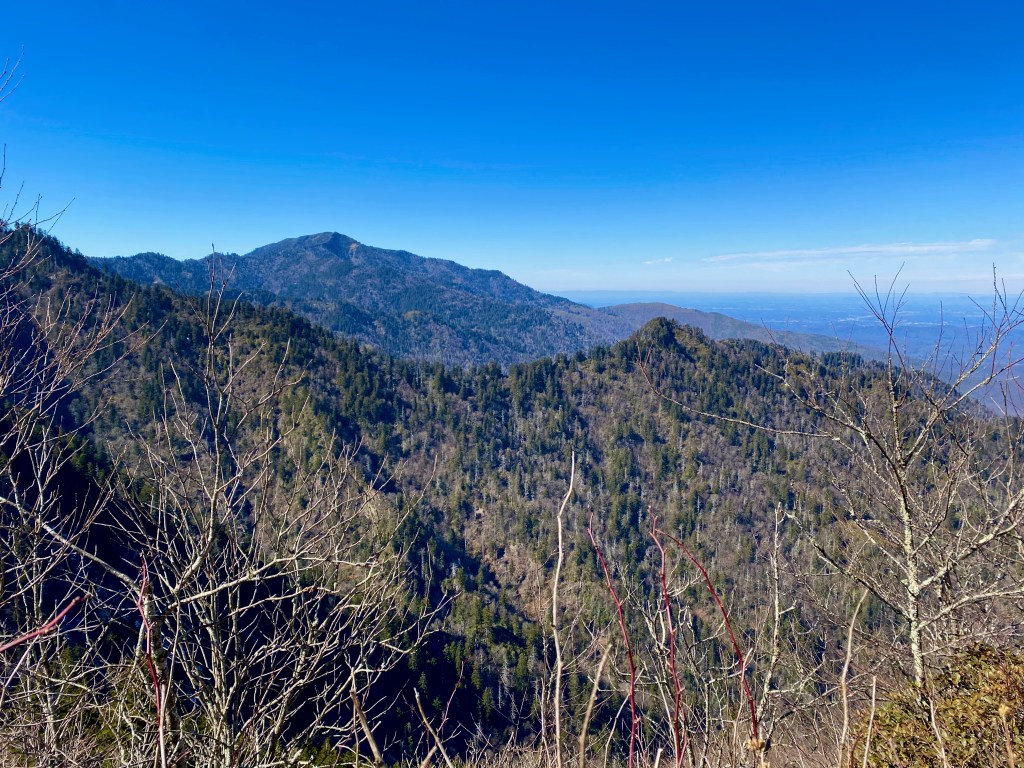
The views from Charlies Bunion were sublime. To the left as I’m standing on the rock you can see Mount LaConte, one of the highest and most climbed peaks in the park. I’ll add another photo showing the peak from an earlier spot on the trail. Elizabeth and Emily and I climbed the peak from another direction in June 2019, where we enjoyed hot chocolate at the LaConte Lodge. My good and late friend Don Grove would hike the peak every year with his wife Barbara. 

Since we arrived in Pigeon Forge TN on Friday we’ve been enjoying the colorful sites of this tourist magnet and home of Dollywood. It’s like a small Las Vegas without gambling. We recommend Pigeon Island and the Old Mill for shopping. At a previous visit we toured the excellent Titanic Museum, where I learned a lot about the 1912 disaster. Despite Covid-19 and winter, the place is humming with tourists. I saw multiple signs that businesses are hiring.

***

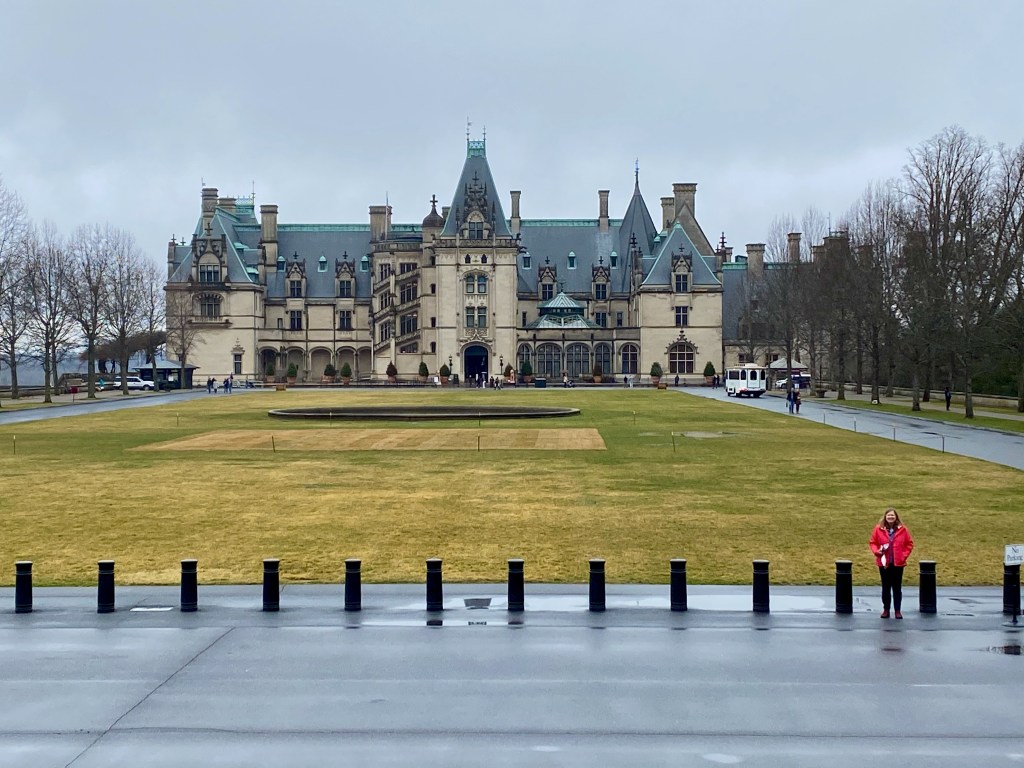
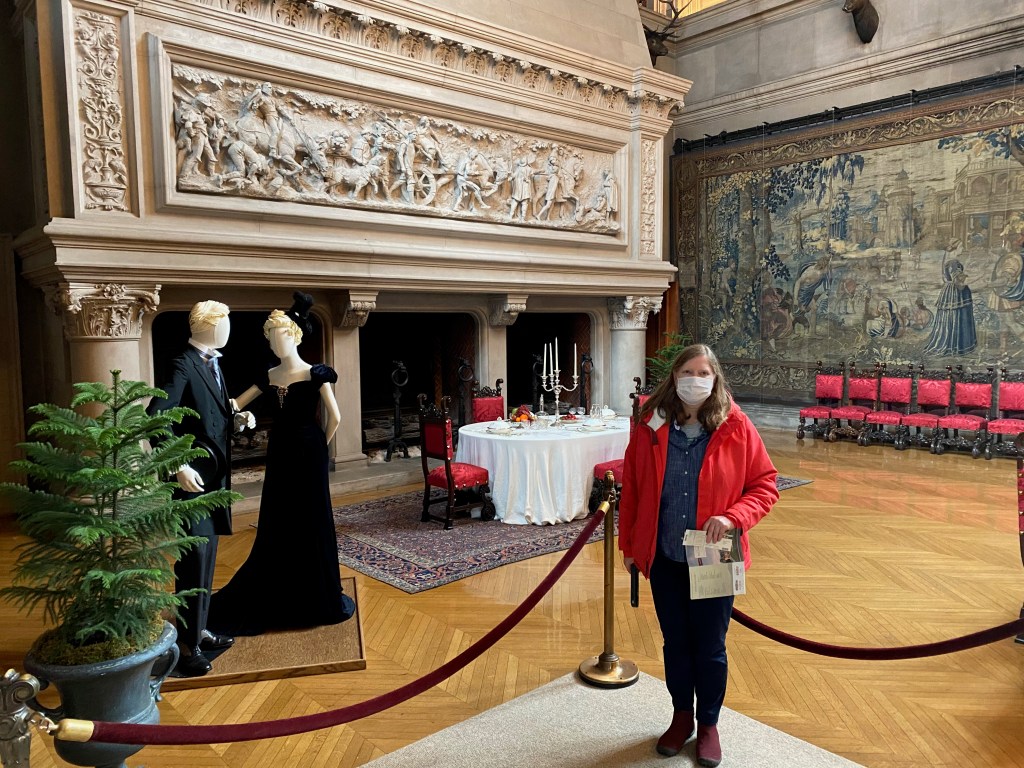
On Thursday, in Ashville NC, we toured the Biltmore Estate, the largest private home in America. It was built by George W. Vanderbilt, grandson of the railroad entrepreneur Cornelius Vanderbilt, and completed in 1895 after six years of construction. It sits on 125,000 acres of mostly undeveloped wooded mountains. 

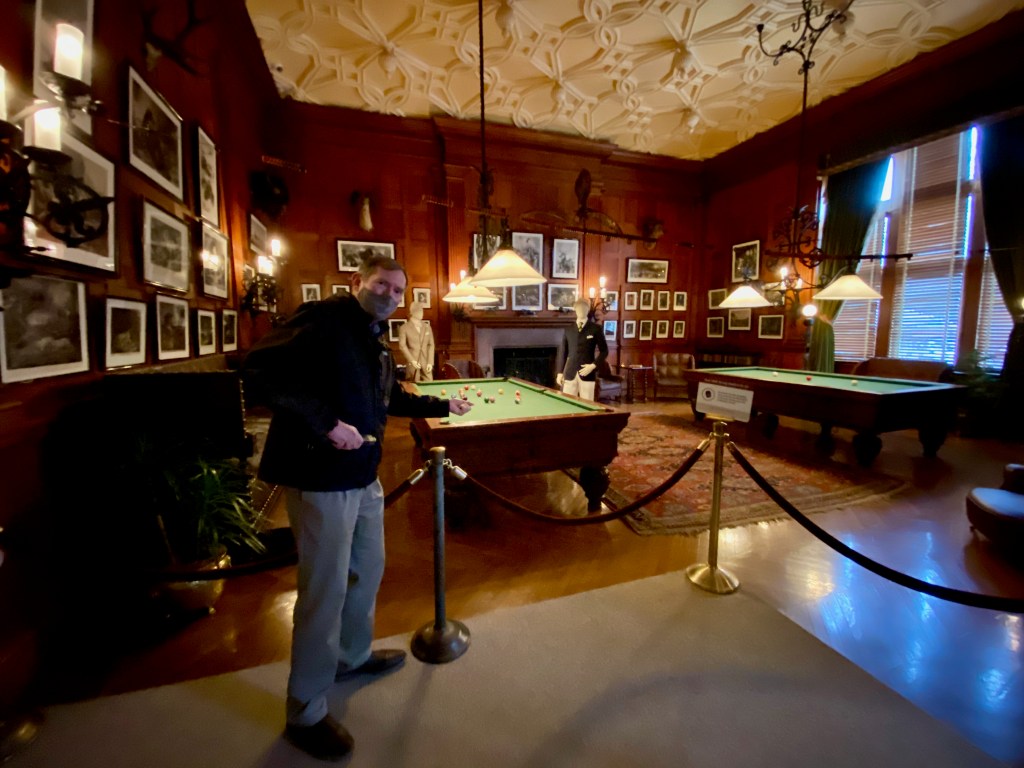
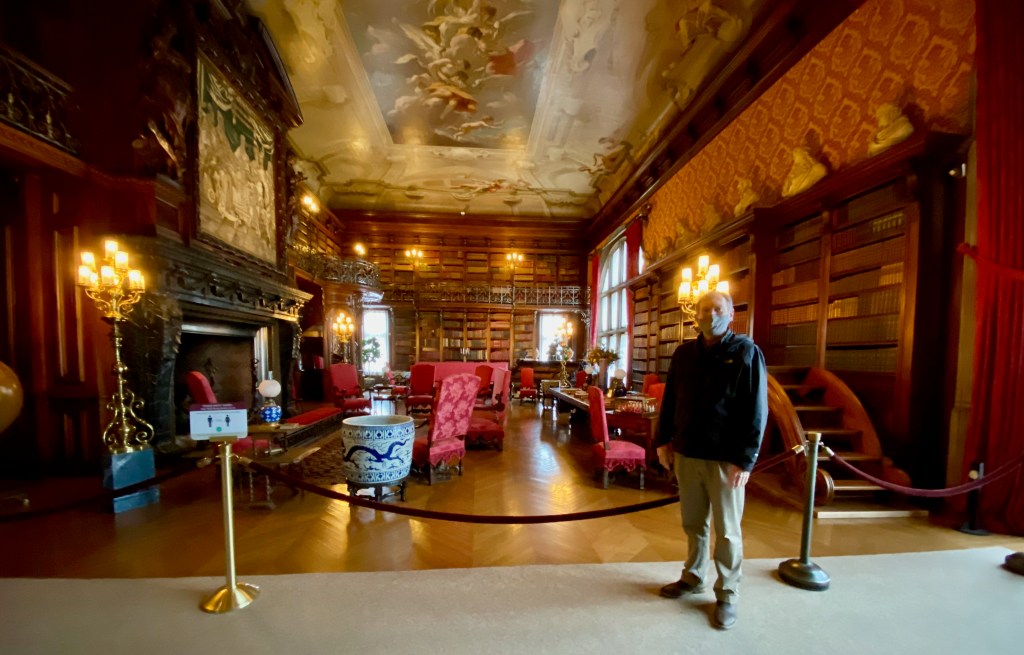
The place is an American Downton Abbey! It has a grand dining hall and 40 some bedrooms and 30 bathrooms. It was built with such cutting-edge conveniences for the late 19th century as electricity, an indoor swimming pool and bowling alley, and walk-in refrigerated storage rooms for food. My favorite rooms were the billiard room and the library, which contained 10,000 books. We also admired the wide variety of plants and flowers growing in the Conservatory.

Some might dismiss the Vanderbilts as “robber barons,” but I don’t. Cornelius used $100 from his mother to first fund a ferry service in New York, and then he built a railroad network to serve an expanding nation that turned that initial $100 into $100 million (which would be a lot more in today’s dollars). His grandson used a small share of that wealth to build a beautiful home that gave pleasure to hosts and guests alike for decades, and now gives pleasure to thousands of visitors, like us! The estate also pioneered modern forestry and has preserved tens of thousands of acres of trees and open space. I’m glad I live in a country were Biltmore Estates are possible. 

***

In an earlier post, I mentioned that our Keystone Hideout RV is 30 feet long, which is about as long a trailer as I would want to pull. But as we stay in more RV parks, we realize that our unit is on the smaller side. We’ve parked alongside some monster motor homes and fifth-wheels, as well as travel trailers that look to be 35 feet or longer. 

Our informal survey may be a bit misleading. In the colder months, RV parks are probably overweighted with full-time RVers, who lean towards bigger rigs. The weekend campers with their smaller units are busy at home right now waiting for better weather and summer vacation.

At the Asheville campground, we met a young full-time RV couple, Christian and Jenny, who’ve been living in their 40-foot fifth-wheel for two years. Jenny is a “travel nurse,” so they move to locations where she can work at health-care facilities that need her temporarily. In their off time they hike and do other activities that are probably a lot like what we’re doing. They’re also checking out places where they may buy land and settle one day. 

We first met them when they were walking their two dogs not long after we had settled into our campsite on Wednesday. Christian asked me if we were towing a new trailer. I asked him how he knew, and he told me he could see the trailer’s license plate had just been registered and that we still had the “3 Year Warranty” sticker on the door! On Friday before we hit the road, I removed the sticker.

Dashboard:

Days on the road: 13; Miles towing the RV: 827; RV parks stayed at: 5; National parks visited: 1 

The road ahead (Lord willing): Graceland, Hot Springs N.P.

How we came to buy a Keystone Hideout 253RL

Elizabeth and I are crossing the country in a Keystone Hideout 253RL travel trailer. We picked this RV after a good eight months of research, online and on the lots of more than a half dozen RV dealerships. 

We quickly learned that RVs come in three basic types: “motor homes,” which power themselves and so don’t need towing; “travel trailers,” which are attached behind the rear bumper of a tow vehicle; and “fifth-wheels,” which arch over and are attached to the bed of a pickup truck. 

All three have their advantages and drawbacks. We settled on a travel trailer because they tend to be less expensive than motor homes and fifth-wheels. We also wanted a vehicle for running to the Walmart or driving to the trailhead  once we arrive at our next destination. With motor homes, unless they’re the smaller kind, you need to tow a separate vehicle behind the RV. (Maintaining one engine and drive train on a long trip seemed enough for me!)

Elizabeth and I agreed at the start that we wanted an RV with the bedroom separated from the kitchen and living area. That means the RV would be close to 30 feet in total length. (The 253 in our unit name means that it’s roughly 25.3 feet long on the inside, plus the length of the hitch that extends to the pickup’s “receiver” ball. The RL means “rear living,” with the easy chairs at the back of the unit where there are more windows and light.) Being a novice “truck driver,” I wasn’t keen on towing anything longer than 30 feet.

We explored a number of floor plans but none of them seemed quite right. A lot of them have the TV and/or the electric heater “fireplace” at the front end of the living area, closer to the kitchen than where we would be seated. We found a plan we both liked in September when I was watching a virtual RV show online. One segment featured a tour of the newly designed Hideout 253RL by the Keystone engineer responsible for the project. Here’s the floorpan:

The problem then was finding an actual unit we could look at! No dealerships within driving distance of Northern Virginia had a 253RL in stock.  The main problem was supply and demand: RV shipments nationwide rose 34 percent in the second half of 2020, fueled by new buyers who wanted to escape more urban areas during the covid pandemic. At the same time, the virus had disrupted domestic RV production last April and May, creating bottlenecks in getting units to dealers and customers.

Then in December we were contacted by Mountaineer RV in Weston, WV, that they had a Hideout 253RL on the lot. We drove four hours west into the Allegheny Mountains to look it over and bought it that day. We picked it up in late January and hit the road Feb. 9. 

In the coming days, I’ll post more about what it’s like to hitch up, tow, and unhitch this 30-foot, 3 1/2 ton mobile home. And we’ll share what it’s been like so far to live in an RV and manage its specialized systems for heating, cooking, water, electricity and (ahem) sewage disposal. And if you’ve been thinking of hitting the road yourself in an RV, we’d be happy to share the modest knowledge we’ve gained so far. Please contact me through the blog site to ask any questions.

Day 9 on the road: From Charlotte to Asheville and the Biltmore Estate

ASHEVILLE, N.C. — When we left Northern Virginia 8 days ago we headed straight south 364 miles to Sneads Ferry, NC, about an hour up the coast from Wilmington. We were deluged with rain there but so far we’ve managed to escape the ice and snow covering most of the rest of the nation. Yesterday we visited friends and a nephew and his family in Charlotte. For the next few days we’re staying at an RV park near Asheville, NC, where we plan to tour the famous Biltmore Estate on Thursday. Built by George Vanderbilt II, it’s the largest private estate in America. Rain and ice are predicted here tomorrow, which may delay our departure later this week for Tennessee. After arriving in Asheville early this afternoon, we hiked 2.5 miles through Richmond Hill Park (see Elizabeth on the trail) and ate dinner at the Jerusalem Garden Café downtown. Pray for our safety when we do hit the road again, likely on Saturday.

Elizabeth showing her new hiking boots, which gave her sure footing on the trails muddied from all the recent rain.

Dashboard:

Days on the road: 9; Miles towing the RV: 734; RV parks stayed at: 4; National parks visited: 0 

The road ahead (Lord willing): Great Smoky Mountains N.P.

About our extended RV trip across America

On Tuesday, Feb. 9, 2021, Elizabeth and I pulled our 30-foot travel trailer RV out of a campground in Northern Virginia to begin an extended cross-country tour of the United States. Our plan, Lord willing, will take us across North Carolina and Tennessee, through Arkansas to Texas, then the desert Southwest, up the West Coast, and over to Montana, Wyoming, and Colorado by summer. We’ll be visiting friends and family along the way, enjoying the culture, history, and natural beauty of America, and just chilling in agreeable places. Through the wonders of the Internet—including this blog —we plan to stay connected to our family and friends while we’re on the road.

Pulling out of the Greenville Family Farm Campground in Haymarket on the morning of Tuesday, Feb. 9

A brief background on our trip: At the end of 2020, I retired from full-time work after more than 40 years in the media and public policy business. As Elizabeth and I thought about my pending retirement, we both latched on to the idea of living for a time in an RV as we roamed the country (inspired in part by our friends and full-time RVers Lyle and Melanie Brunson). One thing led to another, and in December we bought a Keystone Hideout 253RL travel trailer from Mountaineer RV in Weston, WV. (We’ve rented out our home in Vienna, VA, and plan to resume normal life there when we return.)

Since Feb. 9, we’ve traveled about 600 miles, visiting our son Paul in Sneads Ferry, NC, and now staying for a couple of days at a KOA campground in Fort Mill, SC, just across the state line from Charlotte, NC. In the days and months ahead, I’ll be blogging about the places we visit and the fun and challenges for a couple sharing a 230-square-foot efficiency apartment on wheels. I’ll also blog about books I’m reading and any useful insights I might have about our shared public life in America.

Your comments and feedback are always be welcome.

Netflix documentary “The Social Dilemma” worth watching, but with caution

A friend with teen-age kids recently recommended the Netflix documentary “The Social Dilemma,” a documentary critiquing social media giants such as FaceBook and YouTube. It’s worth watching, and I’m grateful for the recommendation, but viewers should exercise the same discretion that the talking heads of the documentary urge we do with social media.

The thrust of the 90-minute “documentary-drama-hybrid” is that social media platforms, Facebook especially, employ sophisticated algorithms to entice us to spend an unhealthy amount of time viewing their content. We are all “users” who are in fact the product these companies sell to advertisers.

The documentary interviews experts and former tech company insiders who are almost uniformly critical of the social media business model. Interwoven with the interviews is a fictional family under the strain of social media. A young “tween-age” daughter is obsessed with gaining the approval of her peers, while an older sibling is drawn into content promoting extremist activities. At one point the girl sheds a tear when one of her friends remarks on social media that a photograph she posted makes her ears look big.

As the father of three Millennial kids who grew up with social media, I can relate to the warnings raised by the show. As I used to tell my kids, the Internet is a tool, not a way of life.

All that said, the picture “The Social Dilemma” paints of social media is too one-sided. Just about every talking head reinforced the point that social media platforms are a dark force. Like any technology, it has its downside, but there was almost nobody offering a more balanced picture, including the many benefits of connecting family and friends, sharing significant moments in life, and alerting us to new information and commentary. It’s only nod to “the other side” were brief clips of Mark Zuckerburg testifying before Congress, which were plainly packaged to make him look bad.

The documentary is also too breathless in its assertion that we are on some new unexplored terrain of human existence. While social media is new, it’s not the first technology to impact our culture and home life. Starting in the 1950s, TV began to dominate American family life, offering news and entertainment that changed the way we think and interact. We’ve been subject since then to powerful advertising, too, including subliminal messaging. And conspiracy theories are nothing new: I remember a lot of disinformation when I was a kid about the alleged nefarious designs behind fluoridating water supplies.

Yet another shortcoming of the show is that it portrays Americans as too sheeplike in our lack of self-control. Young and old alike, we can always choose not to click on whatever is offered, or to put our devices on silent and carry on with other activities. Parents can exercise more control over their kids’ access to devices and content.  We are told it’s a sinister fact that YouTube and other platforms employ algorithms designed to present us with video clips and other content we’re most likely to click on. One of the talking heads yearns for a past when we all saw the same thing on home pages.

For this social media user, those algorithms are a thing of wonder. When I go to my personalized YouTube home page, I’m presented with a smorgasbord of what Dan Griswold likes—videos on Rocky Mountain hikes, Premier League highlights, clips of the day’s news. Just recently I clicked on a FaceBook link to the Christian musical group We the Kingdom, and later that day–Shazam!—YouTube offered me multiple clips of the group performing. I had discovered something new and enjoyable. If I search to buy something online, say a tonneau cover for my pickup truck, all of a sudden ads on the side of my social media platforms offer variations of that very product. In economic terms, that’s a service that lowers my “search costs.”

Toward the end of the documentary, the talking heads uniformly endorsed more regulation, although they weren’t very exact about what that would mean. For example, I wondered just how federal regulation would protect the young girl in the family drama from hurt feelings over comments about her appearance.

In a final irony, the show ended with several of the talking heads offering common-sense steps that any family can take to mitigate if not eliminate the dark forces it portrays. The no. 1 tip: Turn off notifications. Repeat: TURN OFF NOTIFICATIONS!!! That means you’ll check your smart phone when you want to, not when it tells you to. And for those with kids, limit their screen time. Encourage them to read a book, take a walk, discuss current events at the dinner table. One IT insider said he won’t let his kids access social media until they’re 16.

And we are told to get our information from a variety of sources. Great idea! For a news junkie, the World Wide Web is a moveable feast. I have my own political opinions, but through the wonders of the web, I can easily sample alternative views. Google News is a good amalgamator of sources. Other regular stops include the Associated Press, The Wall Street Journal, The Atlantic, Real Clear Politics, Politico, National Review Online, Vox, and news organizations from around the world such as the BBC.

The bottom line for me is that social media is like any technology—it can be used for good or bad, and largely reflects the in-born nature of its human users. It’s up to each of us to manage how we and our households use this new capability. Social media is a tool, not a dilemma.