Following the Viking Trail from Gros Morne to the northern tip of Newfoundland

During our time in Newfoundland this past week, we spent two full days in Gros Morne National Park along the Gulf of St. Lawrence. The park is a geological wonder, a UNESCO World Heritage Site. On Wednesday we joined a boat cruise up Western Brook Pond, a 10-mile-long, 500-foot-deep freshwater lake with 2,000-foot cliffs on either side. It’s like a fjord, but it was cut off from the Gulf of St. Lawrence when the glaciers from the last ice age retreated and the ground rose when the weight of all that ice was removed. The boat tour guide said that explains why they found whale bones on a cliff far above the edge of the lake. We saw four waterfalls coming down the cliffs into the lake.

On Thursday we joined a guide-led walk along the Tablelands, one of the rare places in the world where the earth’s mantle is exposed. The mantle normally lies several miles beneath the crust, but geologists theorize that this mantle was thrust up by a collision of continents millions of years ago. The mantle is made of different minerals than the crust and is generally toxic to plants. That and the orange color of oxidized iron gives it its bare, alien appearance. Because normal plant nutrients are scarce, we saw three different kinds of carnivorous plants. We looked down a valley carved by the glaciers, and climbed up to a small waterfall fed by a spring. If you visit Gros Morne, we recommend both of those excursions. If we had more time in the park, I might have tried climbing the park’s namesake mountain and taking the Green Garden hike. (See more photos from the park here on FB.)

On Friday, we left the RV at the campground and headed up the Great Northern Peninsula along the Viking Trail. The trail is a 230-mile highway that hugs the Gulf of St. Lawrence and leads to the remains of a Viking settlement at the top of the island. Along the way on Friday we stopped at the Lobster Cove Head Lighthouse just outside Rocky Harbour near our RV park. The lighthouse offered a lovely view of the harbor, views made more poignant by the Canadian flag fluttering at half mast in mourning for the queen. Elizabeth especially enjoyed the exhibits at the lighthouse keepers quarters. We next stopped at Cow Head, where Elizabeth visited two knitting shops! At Arches Provincial Park we walked underneath the rock formations by the sea; a young Chinese national working in Canada snapped the photo of us together under the main arch. Further up the coast, at Flower’s Cove, we took a short path to the shore to see very rare evidence of thrombolites. The roundish stone mounds were left behind by tiny life forms that biologist believe are some of the oldest on earth. The only other place where such evidence of thrombolites exist is on the other side of the world, in Sharks Bay, Western Australia. I’d seen photos of these strange bun-like rock forms in books, but it was a highlight to actually walk among them.

The Viking Trail (Highway 430) was a beautiful drive, with the sparking waters of the gulf on one side and the green, rounded tops of the Long Range Mountains in the distance. And everywhere, in the small fishing villages as well as alongside the road, we saw stacks and stacks of firewood. So much wood stored for the long winter! In a memoir I saw in one of the shops in Cow Head on growing up on the Great Northern Peninsula, the dust cover blurb said that here, “A man was judged by the size of his woodpile in the spring. It was a symbol of his ability to provide every necessity for his family.” By that measure, I can attest that the men in this region remain responsible and conscientious!

On Saturday morning, we joined a Northland Discovery boat excursion from the harbor in St. Anthony, the largest town at the north end of the peninsula. It was too late in the season to spot icebergs, but we were hoping to see whales. Paul, the captain and guide on the 2-hour excursion, said they had spotted humpback whales earlier in the week. The weather the day we went out was blustery and the sea was swelling, which probably explains why we didn’t see any whales. We did see a lone harp seal, an ocean sunfish, aka a mola mola, and a large leatherback turtle, which the captain said was a rare sighting. The captain also took us by what he said was the largest sea cave on the island, which was 100-by-100-feet at its opening and 200 feet deep. He told us the story of a fisherman who in 1955 was stranded in the cave for six days before being rescued. The captain said that the icebergs that come down from Greenland in the summer often carry seals into the St. Anthony area and sometimes even polar bears! One of the bear visitors is now mounted in the town’s municipal building, and another starred in this YouTube video after it wandered onto the roof of a house in town earlier this year. We could see the house from our boat.

After the boat tour, we spent an hour touring an exhibit in St. Anthony on Dr. Wilfred Grenfell, a medical missionary to Newfoundland and Labrador. Dr. Grenfell was born in northern England in 1865, studied medicine at the London Hospital, and dedicated his life to Christian service after hearing an address by D.L. Moody. He founded hospitals and established charitable programs to serve the thousands of underserved fishermen in the region. While seeing hundreds of patients a month, he also delivered gospel messages, wrote 33 books, and lectured widely. He’s one of a number of remarkable men and women we’ve learned about on our travels.

That afternoon we visited another World Heritage site, the Viking settlement at L’Anse aux Meadows. The site was uncovered by archeologists in the 1960s and is the only definite proof that the Vikings reached the North American continent. We walked by the small mounds of dirt that outlined the sod buildings the small party had built in about 1,000 A.D. The highlight was entering one of the large recreated huts nearby and listening to the Viking-clad park employees tell us about life at the encampment. It impressed me that they were able to forge nails for their boats from iron ore found in the nearby bogs. They stayed about 10 years before burning the camp and heading back to Greenland. We also walked the 1.5-mile coastal trail, which allowed me to plant my foot on the small tip of the island considered “subarctic tundra.” Down the road from the site is a 10-foot bronze statue of Leif Ericson. (See my photos from the Viking Trail at FB.)

Tomorrow we’ll roll the RV onto the ferry at Port aux Basque for the six-hour, 96-mile trip across the Cabot Strait back to Nova Scotia.

Exploring the Great Falls gorge, the tides, and fossils in the Maritimes

On Tuesday, August 30, we left our campground near Quebec City and drove across the St. Lawrence River east and south into New Brunswick. Crossing the border into the Maritime Provinces we left the land of “French only” and into the Atlantic time zone, an hour ahead of Washington, D.C., time.

Our first stop was the city of Grand Falls, where we stayed one night at one of the nicest camping spots we’ve had in all our RV travels. Our door opened to a view of the Grand Falls gorge, a U-shaped bend in the Saint John River with 200-foot-high rock cliffs on either side. The next morning, before we hitched up, Elizabeth and I hiked along the gorge to view the 75-foot water falls at the heart of the town.

On Wednesday we drove four hours through heavy rain to Moncton, N.B. Along the way we spotted five moose by a small river in the woods not far from the road. Moncton is a mid-sized city with a Costco and two Walmarts. It describes itself as the hub of the Maritimes.

On Thursday, under gloriously blue skies, we explored the Hopewell Rocks on the Bay of Fundy about an hour south. At high tide the rocks appear to be small islands with trees, but at low tide they are high stone towers on narrow bases surrounded by the sandy sea floor and clumps of seaweed. The difference there between high and low tide is an amazing 46 feet. (Here’s a batch of photos I posted on FB.)

On Friday, while Elizabeth kept busy at the RV, I drove to another spot on the bay called the Joggins Fossil Cliffs just across the provincial line in Nova Scotia. The tides aren’t as high here, a mere 35 feet or so, but the cliffs have yielded a cache of fossils from the Carboniferous Period that geologists date to 310-325 million years ago. Walking along the beach our guide Jordan pointed out fossilized plant stems and a tree trunk. This is the age that coal formed, and we could see an exposed black seam of it on the beach. The guide said they had found fossilized bones from an early reptile that proceeded the dinosaurs by a hundred million years or so. The visitor center there had clear, colorful, and informative exhibits on the fossils found there as well as general earth history.

On Saturday, we hitched up the RV and drove into Nova Scotia and out to our campsite on Cape Breton Island near the small but significant town of Baddeck. (I’ll post about Baddeck further down the road since we’ll be back there later on our trip.) On Monday we loaded the RV onto a huge ferry at the dock in North Sydney for the seven-hour ride to Newfoundland. On Tuesday we drove to our current campsite near Gros Morne National Park.

****

We’ve now been traveling through Canada for two weeks. We can’t say enough good about our experience so far. The people are friendly, the roads and services completely modern, and public places clean and attractive. Canada has its own franchises—Tim Horton’s coffee shops are ubiquitous—as well as American favorites. A&W Root Beer joints are far more common north of the border than in the USA—a cultural phenomenon that perhaps one of my Canadian friends could explain!
A recent article I read said that visits by Americans to Canada are still down 45 percent compared to pre-Covid levels. The biggest complaint is the need to register on the “ArriveCan” app and to provide proof of vaccination. Neither was a barrier for us. We’ve been vaccinated, and I found downloading and entering our info on the app to be no challenge, even though I’m a typical Baby Boomer when it comes to online tech. We spent less than an hour in line to pass through border control when we crossed the bridge with our truck and RV from upstate New York.

The Canadians dollar is currently worth about 77 US cents at the current exchange rate. As tourists, we appreciate the relatively strong US dollar, although everyday items in Canada seem to cost about what they do in the US even after converting. Gas in Canada costs around $1.60 (CA) per liter, which converts to just under $5 (US) per gallon. Canadians use a $1 dollar coin, not paper notes, which we find convenient, especially when using the campground laundromats. As everyone knows, the Canadians affectionally call their dollar coin a loony, after the bird engraved on it. That led to this email exchange between Elizabeth and the campground manager in Moncton after we asked about the laundry facilities:

Hi Elizabeth,

Yes we have a laundry room that is open 24/7.  It takes 2 loonies to wash and 2 loonies to dry.  We can make change if you need it.

Nancy Ryder

Stonehurst Campground

Thanks Nancy. Does that mean I’ll have to get my husband to come along to make us 2 loonies doing the laundry!!!! Ha ha

See you soon.

Ambling up the St. Lawrence River through Quebec

During the past week we made our way through Quebec along the St. Lawrence River. What a beautiful part of North America—the scenery, the history, the food!

After our time in Montreal, we towed the RV on Friday to a campground near Quebec City on the far northeast end of Ile d’Orleans. The island is known as the Garden of Quebec. It is quilted with vineyards and farms growing strawberries, raspberries, potatoes, and corn. We sampled the local produce, including Tomme cheese and the best sweet corn I’ve ever eaten. Our friends Andre and Letha du Plessis camped on the island years ago with their children and expressed their love of the place.

On Saturday, we drove into Quebec City and found a parking spot near the city center. We loved walking the cobblestone streets of the old upper and lower towns. We drank coffee on the terrace outside the famous Hotel Frontenac overlooking the river below. We took a ferry from the lower town over to the south side of the river and back. (I’d post more photos but we continue have trouble with internet connections.)

Overlooking the Hotel Frontenac and the St. Lawrence River in Quebec City

From the hotel we walked along the promenade above the cliffs overlooking the river, alongside the walls of the Citadel, and onto the Plains of Abraham. The rolling expanse of green space was not named after the Old Testament patriarch but after Abraham Martin, the original owner of the land. On September 13, 1759, British forces led by Gen. James Wolfe scaled the cliffs in the pre-dawn darkness, surprising the French defenders. After an hour’s fighting, they occupied the city, winning a key battle in the Seven Years War with France. The battle basically won Canada for the British.

On Monday we drove along the north side of the river to Charlevoix, a region of striking scenery where the southern edge of the Canadian Shield rises above a widening river. Highlights were a free round-trip ferry ride across a section of the river to dock on the Isle-aux-Coudres, a bit of pottery shopping, wading into the river at the beach at Saint Irenee, and an afternoon tea on the veranda of the Fairmont Le Manoir Richelieu, near Le Malbaie. As we looked out on the river there in perfect summer weather, we could see two passing freighters and the southern bank of the river more than 10 miles across.

After a week in the province of Quebec, we hitched up the trailer on Tuesday morning, crossed the river, and drove on to New Brunswick and a one-night camping spot in Grand Falls and today on to Moncton in a steady rain. Lord willing, we’ll spend the next four weeks in the Maritime Provinces and Newfoundland.

[Dear readers: I may not be able to post regularly on this blog for the rest of this RV trip. Poor or non-existent internet connection has made it a real challenge to upload the text and especially the photos. I will continue to post photos and comments on FaceBook.]

We’re off on an RV trip to Canada–after a passport hiccup

A week ago today we began a seven-week RV trip that will take us through eastern Canada and then back home through the Hudson Valley of New York. Our itinerary includes Quebec, the Maritime Provinces, and Newfoundland, which can only be reached by a seven-hour ferry ride.

We intended to enter Canada on Saturday, but I forgot to pack may passport! Our friend, neighbor and pastor, Dan Clifford, kindly sent it to our campground along the St. Lawrence River near Clayton, NY, via FedEx. It arrived on Monday just before noon.

We entered Canada with our 30-foot travel trailer early that afternoon. The entrance at the Thousand Island station took about an hour. The friendly Canadian border agent asked us if we were going to leave anything in Canada and if we had any firearms (no to both) and where we were going. When we told him our itinerary, he gave us several suggestions of what to see.

With our stay in Ottawa cut down to one night, we only had time to go out to dinner with a long-time friend of Elizabeth from her time in the hotel business in England. Elizabeth had not seen Christine since the mid-1980s, but they had kept in touch and had plenty to talk about, as good friends do.

On Tuesday morning, we hitched up the travel trailer and drove to our current campground on the northwest edge of Montreal. Yesterday we drove the truck into the city and spent the afternoon walking through Old Montreal. We paid $14 (Canadian) each to enter the ornate Notre Dame Basilica and were treated to works played on its giant pipe organ, including Bach’s wonderful Toccata and Fugue in D Minor (see this 30-second FB clip). At a coffee shop Elizabeth wrote a birthday note to her friend in Ottawa and then we caught a one-hour cruise on the St. Lawrence River that took us beneath the huge Jacques Cartier Bridge.

Tomorrow we’re off to spend four nights at an RV park on the Ile d’ Orleans on the St. Lawrence River near Quebec City.

Remembering my Dad, Donald W. Griswold, on what would be his 108th birthday

My father, Donald W. Griswold, was born 108 years ago today, on August 6, 1914. We all remember him fondly for his devotion to his wife, family, community, career, and country. Below the photographs is the eulogy I delivered at his funeral in Sauk Centre, Minnesota, in 2005. For more details about his life story, here is an obituary posted at the time by the local funeral home.

Clockwise from upper left: 1) Don and Gail Griswold, who were married for almost 60 years; 2) Dad at his desk in the Aleutian Islands during World War Two. He was captain of a photo lab, honing skills he would put to use in his long career in the newspaper business; 3) This photo was probably taken at a press association meeting in Wisconsin; 4) Mom and Dad with our three kids at our home in Colorado Springs in the summer of 1994.

Eulogy for Donald W. Griswold (1914-2005), delivered by Daniel Griswold, Sauk Centre, Minnesota, July 25, 2005:

My Dad was a good husband, a good father, and a good man, and he enjoyed a good life. In his final years, he surrendered many of the activities he enjoyed one by one, and he did so with dignity, grace, and good humor. I would often remind my Dad that he had a lot to be thankful for. He would always respond, “I know.”

His greatest blessing in this life was my mother. She looked after him for almost 59 years with love and patience. He had the best in-house hospice care any man ever had. Another great blessing for my dad was the town of Sauk Centre. On behalf of my family, let me thank the people of this church and this town for being such good neighbors to my mom and dad for the past 34 years. My dad could not have picked a better place to settle and run a newspaper. And these past four days, you have shown your love through cards, phone calls, visits, and all that wonderful food that piled up in Mom’s kitchen.

Anyone who knew my Dad well, or maybe for 15 minutes, knew that he admired Abraham Lincoln. One of the characteristics of Lincoln that he told me he admired was that Lincoln was always thinking. Like his idol, my dad’s mind was always working—whether he was crafting an article or an argument, or solving an engineering problem at home or the newspaper. His ceaseless mental exercise kept him sharp to the end. When I was home for a brief visit only ten days ago, he was retrieving articles for me to read from the pouch of his walker. He had just finished reading David McCullough’s new book, 1776, and was reviewing it when he died.

There was much about my dad’s life to admire. Four years ago, on his 87th birthday, I sent him a letter, telling him the lessons I had absorbed from him over the years.

Dear Dad …

I enjoyed our telephone conversation today. You remain in good fighting form. If you thought I sounded good in articulating my arguments on C-SPAN on Saturday, you deserve a good chunk of the credit for teaching me how. I’ve been listening to you do basically the same thing for 40 years or so.

Other things I’ve learned from watching you at home and at work:

  • Study history. It is more interesting than most stories people make up, it’s true, and it helps us understand our present condition. We can learn much from the examples of great and good men in history.
  • Get your facts straight. People are persuaded by facts. If you get a fact wrong, your opponents will jump on it to undermine your credibility and cause.
  • Stick to your principles. Friends and acquaintances come and go, but sound principles endure. They are worth fighting for.
  • Deal honestly with people. No short-term gain from dishonesty is worth sullying your reputation.
  • Work steadily. Show up for work at the same time each day, the earlier the better. A slothful man is next to worthless.
  • Look at the big picture. Ask yourself how your actions contribute to making this a better society. Avoid petty personal squabbles.
  • Support your family. Support them financially in comfort but not in luxury. Be faithful to your wife.
  • Appreciate things for their usefulness, not the status they confer. This applies to meals, clothes, cars, houses, etc.
  • Measure people by their character. Are they honest, do they think clearly, do they care about principles and the big picture? Money, big houses, and flashy cars mean nothing.
  • Observe moderation in personal habits. Late nights, excessive drinking, and time-consuming hobbies distract from steady work, principles, and the big picture.
  • Don’t demand or expect perfection in others. This applies to co-workers as well as children. I feel sorry for those men I meet or hear about who say, ‘I could never live up to my father’s expectations.’ You always took pleasure in my modest triumphs and always had a kind word, never harsh, when I stumbled.

Well, I’m sure I could think of more lessons I’ve learned from you, Dad, but I think these cover most of the major ones. I’m thankful to the Lord that I have been able to call you Dad for these almost 43 years. You and Mom have been wonderful parents. May you enjoy good health and many more birthdays.

Love, Dan.

Ninety years may seem to be a long time, but it is a brief moment in the eyes of God. The prophet Isaiah tells us in Chapter 40:

All men are like grass, and all their glory is like the flowers of the field.

The grass withers and the flowers fall, because the breath of the Lord blows on them.

Surely the people are grass.

The grass withers and the flowers fall, but the word of our God stands forever.

And in Chapter 55:

Seek the Lord while he may be found; call on him while he is near.

Let the wicked forsake his way and the evil man his thoughts.

Let him turn to the Lord, and he will have mercy on him, and to our God, for he will freely pardon.

“For my thoughts are not your thoughts, neither are your ways my ways,” declares the Lord.

“As the heavens are higher than the earth, so are my ways higher than your ways and my thoughts than your thoughts.

I thank God for such a wonderful dad.

Book notes: Conservative scholar argues that immigration boosts America’s ‘soft power’

The Immigrant Superpower: How Brains, Brawn, and Bravery Make America Stronger, by Tim Kane (Oxford University Press, 2022, 250 pp, $29.95)

In today’s polarized debate over immigration, Hoover Institution scholar Tim Kane offers fresh and nuanced arguments in his new book, The Immigrant Superpower: How Brains, Brawn, and Bravery Make America Stronger.

As an Air Force veteran, a Ph.D. economist, and card-carrying conservative Republican, Kane represents a point of view on immigration that is underrepresented on cable TV and the Twitterverse. While the book offers an informed analysis on more familiar economic and cultural questions, his central argument that immigration puts “the power in American super power” should appeal to a broad cross-section of Americans, especially in our time of rising conflict with rivals China and Russia.

“The only way to win the great power competition of the 21st century,” Kane writes, “is by embracing America’s identity as a nation of immigrants.”

Immigration boosts America’s “soft power” in the world by attracting talented scientists and entrepreneurs from other nations, while enhancing our national image as a haven for oppressed people. But immigration also enhances America’s hard power by strengthening the U.S. military compared to our chief rivals.

“We should be wary that the restrictions some politicians today want to place on legal immigration might hurt the long-term strength of the American military,” Kane writes, reminding us that the U.S. military has relied heavily on immigrants to fill its ranks during war time.

Immigration represents a key advantage for the United States militarily against demographically-challenged Russia and China. “Not only have the immigrants increased the population of the United States decisively – putting the power in American super power – but a disproportionately high percentage volunteer to serve in the ranks,” Kane writes. “Furthermore, immigrant soldiers are disproportionately heroic. That’s not just a claim rooted in anecdotes. Across all of America’s conflicts, one out of five recipients of the medal of honor are first-generation immigrants.”

Looking back on our history, immigrants were a huge advantage to the north in the Civil War. Kane notes that at the outbreak of the war there were more immigrants in the 10 square miles of lower Manhattan than over the 770,000 square miles of the confederacy. And in the 20th century, first- and second-generation immigrants from southern Europe–what one critic characterized as the “dark Mediterranean sub species”–fought bravely alongside their fellow Americans on the beaches of Normandy and the Pacific, and other battlegrounds in both the First and Second World Wars.

In one of the more original sections of the book, Kane offers evidence that presidential greatness tends to be associated with a more favorable policy approach to immigration. Two of the nation’s greatest presidents, Washington and Lincoln, embraced immigration. At a tavern in New York City after the British finally left in 1783, Washington offered the toast, “May America be an asylum to the persecuted of the earth!” And President Lincoln, in a letter to Congress, advocated “a system for the encouragement of immigration,” calling it “this source of national wealth and strength.”

No ethnic group benefited more from Washington’s vision of America as a haven for the oppressed than the Jews of Europe. Jews began to flee the continent in 1881 as anti-Jewish pogroms swept through the Russian Empire after the assassination of Tsar Alexander II. During the decade that followed, Kane notes, one-third of Europe’s Jewish population fled to the United States. That door was tragically shut with “the shameful turning away of Jewish refugees fleeing Nazi persecution during Franklin Roosevelt’s presidency.”

Like more immigration-skeptic conservatives, Kane argues for limiting immigrant access to welfare, which has the political benefit of making American voters more comfortable with expanding immigration. He affirms the need to offer asylum to those fleeing persecution, but reasonably observes that most nations deny asylum to applicants who are arriving from a safe third country. He believes that border walls can play a constructive role in curbing illegal immigration and other problems at the border.

Kane isn’t worried about whether immigrants are assimilating into American culture. As in past generations, immigrants and their children are learning English and largely embracing traditional American values. Today’s culture wars are more of an internal struggle among the native born. As Kane writes, “The problem today is not that immigrants aren’t assimilating to American values but that young Americans aren’t assimilating to American values.”

Instead of a sweeping overhaul of the immigration system, Kane favors more incremental reforms. He argues for expanding the under-appreciated diversity lottery visa, describing it as a program that radiates soft power in a way that is unmatched by our rivals. He supports economic agreements with other market democracies to allow the freer flow of people along with goods, services, and capital. (I’ve argued myself for such agreements with Canada and the United Kingdom.) He wants Congress to expand work visas, setting higher standards while raising ceilings on the numbers.

When it comes to immigration, Tim Kane is no stereotyped “open borders” liberal. He’s an economically literate, Republican veteran with a wealth of practical policy experience. In The Immigrant Superpower, he asks the perfectly sensible question, “Why would we change the policy and approach that has made America the strongest country of all time?”

Hiking as a metaphor for life: Three lessons I’ve learned from the trail

Of all the ways to get exercise, my favorite is hiking through a stretch of beautiful scenery, with a preference for woods, rushing streams, and mountain peaks. In the past year, I’ve been able to indulge my interest as my wife Elizabeth and I—both recently retired—traveled across the United States with an RV in tow, visiting more than 20 national parks. Along the way, I was able to hike some memorable trails in such parks as the Great Smoky Mountains, Big Bend, Yosemite, Olympic, Glacier, and Yellowstone, as well as the mountains of Colorado.

In contrast to a treadmill or a swimming pool, hiking gets you out in God’s creation, breathing fresh air, seeing new sights, with no special skills required other than reasonably good health. And hiking also reminds me of deeper truths by providing a metaphor of our journey through life.

I can think of at least three ways that hiking reminds me of our life in this world. One way is that on the hiking trail, as in everyday life, the more difficult path is often the most rewarding. Steep switch backs up a mountainside can strain our knees and tax our lungs, but they can also take us above timberline to the highest spots where we can see stunning vistas for miles and miles.

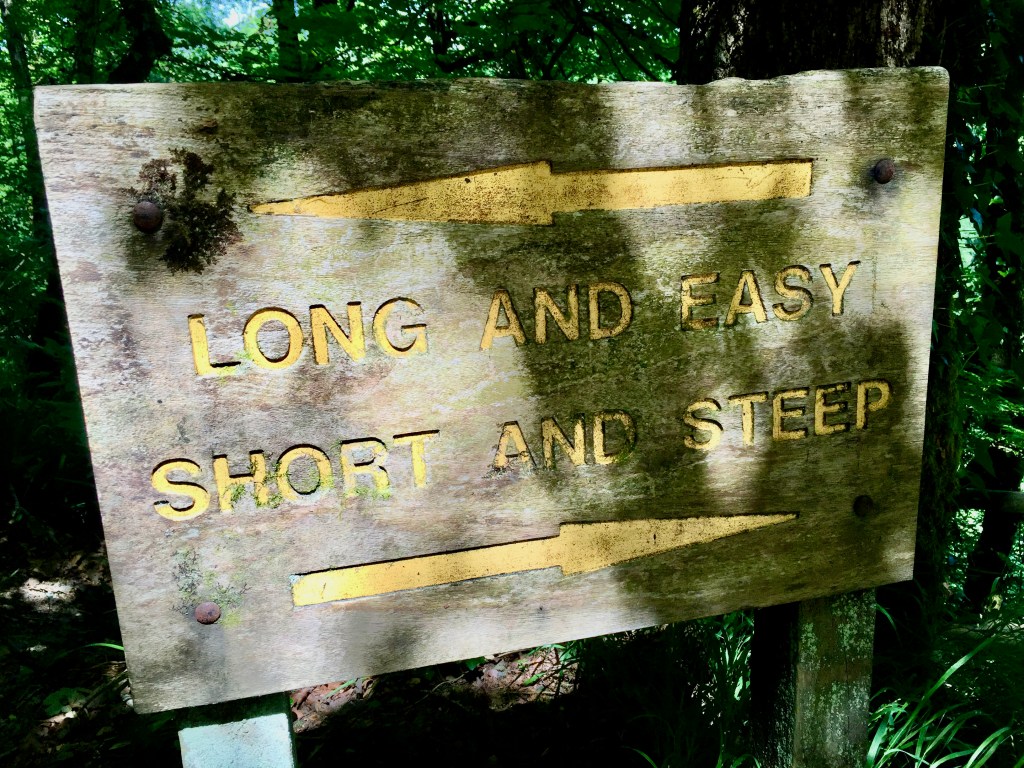
In a hike through Lydford Gorge in southwest England in 2016, we came across a sign at a fork in the path that pointed one way for “LONG AND EASY” and the other for “SHORT AND STEEP.” In this case, both paths led to the same destination, but on other trails, the seemingly easier path can lead us astray. In John Bunyan’s The Pilgrim’s Progress, Christian comes to his own fork in the road, with one path leading up to “Hill Difficultly,” and two others appearing to be easier but labeled “Danger” and “Destruction.” The pilgrim takes the correct path, despite its promise of difficulty, while Formalist and Hypocrisy take the other two, both leading to fatal dead ends. Bunyan concludes the scene with this verse: “Better, though difficult, the right way to go/ Than wrong, though easy, where the end is woe.”

This lesson came home to me the hard way more than 30 years ago when we were living in Colorado and I climbed Pikes Peak for the first time. A popular path to the 14,115-foot summit, Barr Trail, is both long and steep, covering 13 miles and climbing 7,000 feet from the trailhead to the top. More than halfway up, I came to a fork in the road and, probably because I was tiring and my brain was a bit short of oxygen, I missed the sign and took the path that looked easier. It proved to be a side trail leading to a dead end called the “Bottomless Pit.” Once I realized my error, I had to turn around and, back at the fork, continue my journey upward because it was too far to go back down. I eventually reached the summit, exhausted by the extra effort but elated to tears.

Another way hiking mirrors our walk through life is that, in my experience, it’s better to stick to established trails than to blaze one’s own path. This doesn’t mean that we mechanically follow the crowd, but that we humbly rely on the wisdom of those who’ve walked before us. As the Lord spoke through the prophet Jeremiah, “This is what the Lord says: ‘Stand at the crossroads and look; ask for the ancient paths, ask where the good way is, and walk in it, and you will find rest for your souls.’” (Jeremiah 6:16).

Sticking to a marked path can avoid unnecessary trouble while leading us to the most rewarding destinations. If you try to find your own way by leaving an established trail, you can end up in a thicket, or going in circles, or worse. In fact, established paths are the best and often the only way to reach our desired goals, whether it’s an overlook at the rim of Yosemite Valley, success in your profession, happiness in marriage, or eternal rest with God in the Celestial City. In all those journeys, I’m grateful for the more “ancient paths” that have been blazed before us.

Years ago I read Tolkien’s The Hobbit to our three children. Early in the book, Gandalf warns the hobbits to follow the Old Forest Road as the best way to get through the “cursed forest”:

Stick to the forest-track, keep your spirits up, hope for the best, and with a tremendous slice of luck you may come out one day and see the Long Marshes lying below you, and beyond them, high in the East, the Lonely Mountain where dear old Smaug lives, though I hope he is not expecting you.

Many readers will know how the story unfolds. Despite the wizard’s warning, the hobbits stray from the path and end up lost and at the mercy of the wood elves. For the hobbits, as for us, sticking to the path and doing what’s right, far from being boring and predictable, can lead to the adventure of a lifetime.

Many beautiful and well-established trails remain uncrowded exactly because they are strenuous and remote. I recently hiked a 9.5-mile loop along the Fiery Gizzard Trail near Tracy City, Tenn. The white-blazed path led me over moss-covered rocks, along a rushing stream, past waterfalls, and up to scenic overlooks. In my five-plus hours on the trail, I didn’t encounter a single other person, even on a mild 60-degree December day.

A third life lesson I’ve learned from hiking is the reward of steady, sustained, if unspectacular effort. It’s amazing the spots you can reach if you just put one foot ahead of the other mile after mile. On the back end of a two-day, 20-mile backpacking hike in Colorado two years ago, I was able to motivate myself up a steep series of 16 switchbacks by tackling them two at a time, telling myself I’ll savor the view for a minute at every other turn. Before long I was going over the ridge line and on my way back to the parking lot and home.

A corollary to this lesson is not to stop but to keep going even when you’re tiring. When I took that wrong turn on Pikes Peak, feeling weary and a bit discouraged, I fell in with an older and more experienced hiker on his way up. As we plodded along together, he gave me a piece of advice that I’ve always remembered: when you’re tired, keep walking, even if it means taking slower and shorter steps. Better to make slow, steady progress than no progress at all.

I’ve found these rules apply whatever kind of path I’m walking. In the Psalms, the writers took comfort in knowing God was with them wherever they were, whether on a mountainside or in a meadow or a dark valley. In Psalm 18 we read, “[God] made my feet like the feet of a deer and set me secure on the heights.” In Psalm 143, God is asked, “Teach me to do your will, for you are my God! Let your good Spirit lead me on level ground!” And even at the lowest and most difficult moments, Psalm 23 declares, “Even though I walk through the valley of the shadow of death, I will fear no evil, for you are with me; your rod and your staff, they comfort me.”

Whatever path you’re called to walk at this moment in your life, my advice is to not fear the more difficult path, to stick to the trail, and to keep walking, one step at a time, until you reach the end.

Book notes: Rereading Moby Dick, a wondrous work of genius

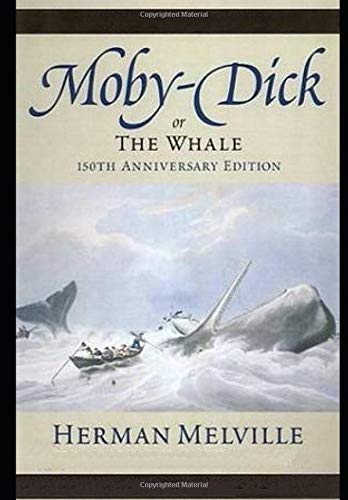
Finished Moby Dick last week (Hertfordshire: Wordsworth Editions Limited, 1993). It’s a wondrous work of genius. Among the more memorable passages was the image of the ship heading into the night with the fire of the blubber boiler blazing on deck (p. 350), the encounter with the Rachel and its distraught captain seeking his son in the missing boat (p. 432), and Ahab peering into the deep to see the open maw of Moby Dick rising to the surface (p. 448– see the cover from another edition below). 

Ishmael counts it time to go to sea “whenever it is a damp, drizzly November in my soul.” The sermon early in the book calls us to be “only a patriot of heaven.” Melville describes the sinking of the whale ship Essex by a whale in 1820 on p. 172, which I’ve read may have inspired him to write the book.

I loved the descriptions of the sea, such as this passage on p. 442 just before the final encounter with the white whale:

It was a clear steel-blue day. The firmaments of the air and sea were hardly separable in that all-pervading azure; only, the pensive air was transparently pure and soft, with a woman’s look, and the robust and man-like sea heaved with long, strong, lingering swells, as Samson’s chest in his sleep.

Or this as the Lakeman on p. 215 recounts an encounter with Moby Dick where “the appalling beauty of the vast milky mass, that lit up by a horizontal spangling sun, shifted and glistened like a living opal in the blue morning sea.”

The most sympathetic character to me was Starbuck, the first mate who appealed in vain to the captain to give up his monomaniacal quest. I would want to be him in such a forbidding situation—competent, loyal, yet speaking the truth to power and guarding the general interest of others. Starbuck said, “I will have no man in my boat who is not afraid of a whale.” Melville writes that, “By this he seemed mean that not only the most reliable and useful courage was that which arises from the fair estimation of the encountered peril, but that an utterly fearless man is a far more dangerous comrade than a coward.” In a final confrontation, Ahab waves a pistol at Starbuck and orders him on deck. But Starbuck, “mastering his emotion, he half calmly rose, and as he quitted the cabin, paused for an instant and said: ‘Thou has outraged, not insulted me, sir; but for what I asked thee not to beware of Starbuck; thou wouldst but laugh; but let Ahab beware of Ahab; beware of thyself, old man.’”

Rating the 22 national parks we visited in 2021: From Yosemite and Glacier to Wind Cave and Lassen Volcanic

One of the organizing principles of our RV trip around the country this year was visiting as many national parks as we could. We love the outdoors, and one of my passions is hiking to beautiful spots. I collected national park brochures along the way like a big game hunter collecting mounted trophies.

In the course of our eight-month, 10,500-mile journey, we visited 22 national parks. I’ve blogged in more detail about each of them, but I thought it would be useful to list the parks here and briefly note the highlights of each, with links to the relevant blog posts I wrote at the time of our visit.

Our trip reminded me that our national park system is a treasure. Ken Burns went a step too far in saying the parks are “America’s best idea.” I would assign that honor to limited, constitutional government and the guarantee of individual rights. But national parks were a very good idea, and I’m grateful for the foresight that was exercised to preserve these places for the public’s enjoyment. We found the park facilities generally well run and park service employees helpful and usually friendly, although the facilities were often stricter about COVID rules than society in general.

Since we’ve been asked a few times what were our favorite national parks of those we visited, I’ll organize the list below starting with the parks that were the most awesome down to those that were merely interesting to visit.

At the top of the list:

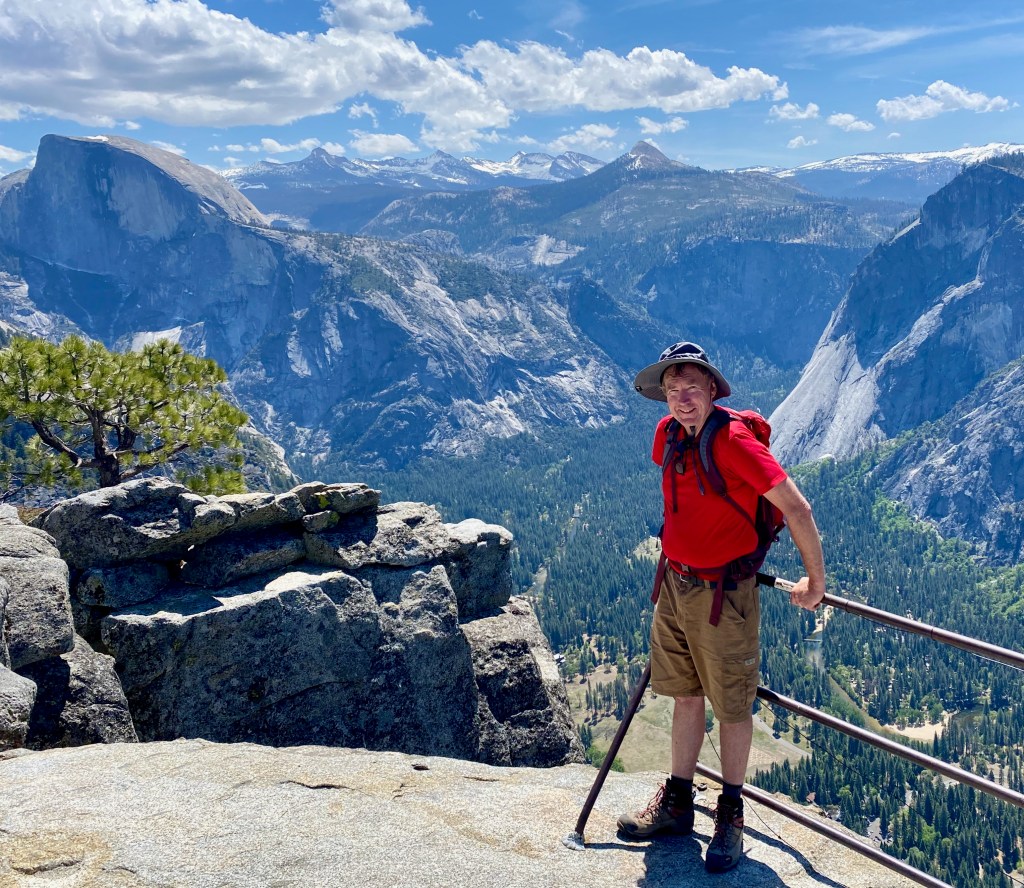
Yosemite (California). Top sights were the water falls and the views from the valley and the rim. See “Hiking to the top of Upper Yosemite Falls.” and “A final misty hike.”

Yellowstone (Wyoming). We saw Old Faithful, hot springs, and lots of wildlife. See “Camping near bison.”

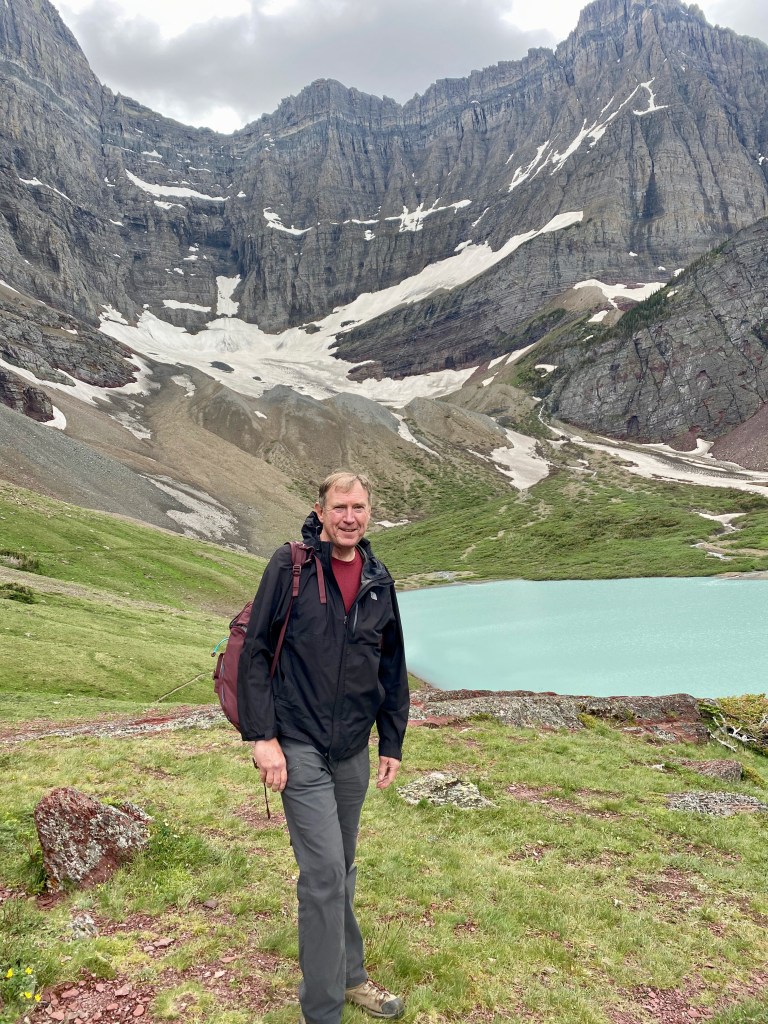
Glacier (Montana). We hiked to glacial lakes, encountered a black bear, boated on Lake McDonald, and drove the Going to the Sun Road up to Logan Pass. See “Sampling the wonders of Glacier.”

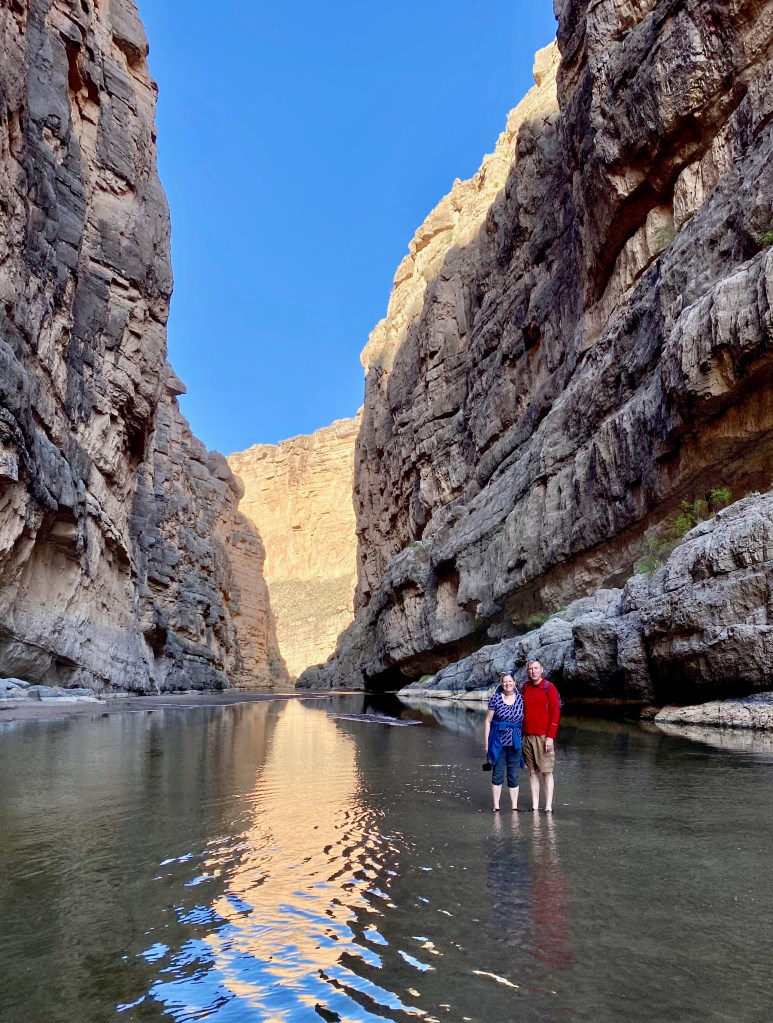
Big Bend (Texas). We waded in the Rio Grande River, and hiked into canyons and through the Chisos Mountains. Our visit there was eventful enough to rate three blog posts! See “Boondocking in Big Bend,” “Hiking the South Rim,” and “Hiking into Santa Elena Canyon.”

Other favorites:

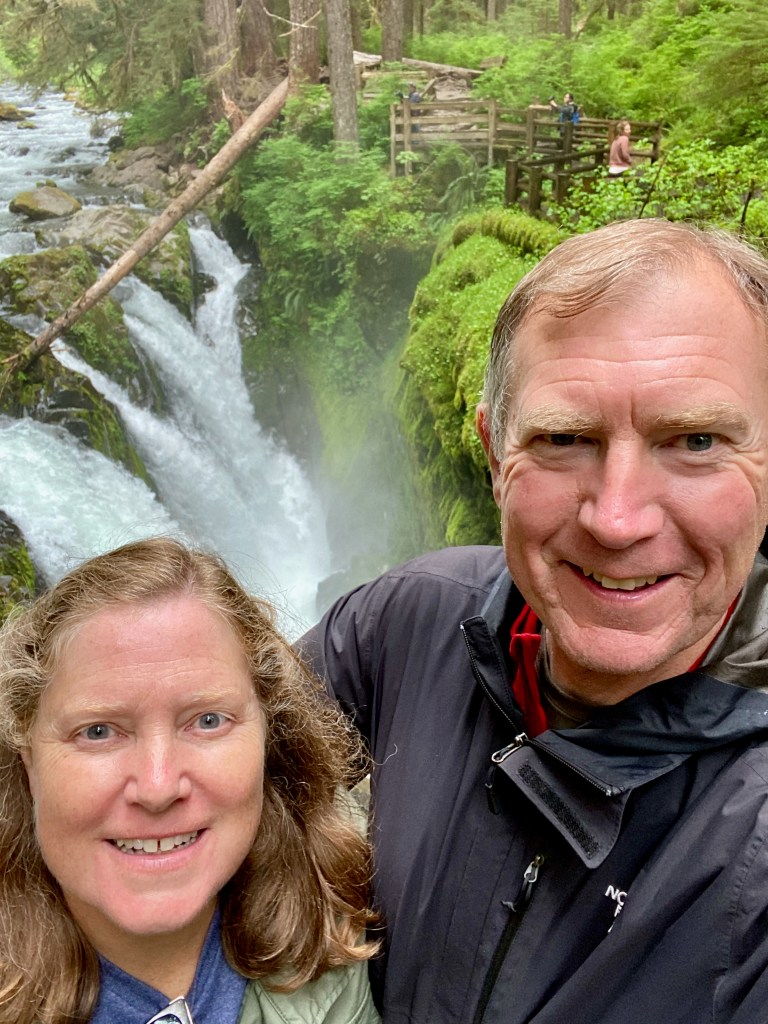
Olympic (Washington). We hiked up to Hurricane Ridge, biked along Lake Crescent, and visited Sol Duc Falls. I ventured into the Hoh River Rain Forest on a two-night backpacking trip. See “Hiking Hurricane Ridge” and “Backpacking into the enchanted wilderness.”

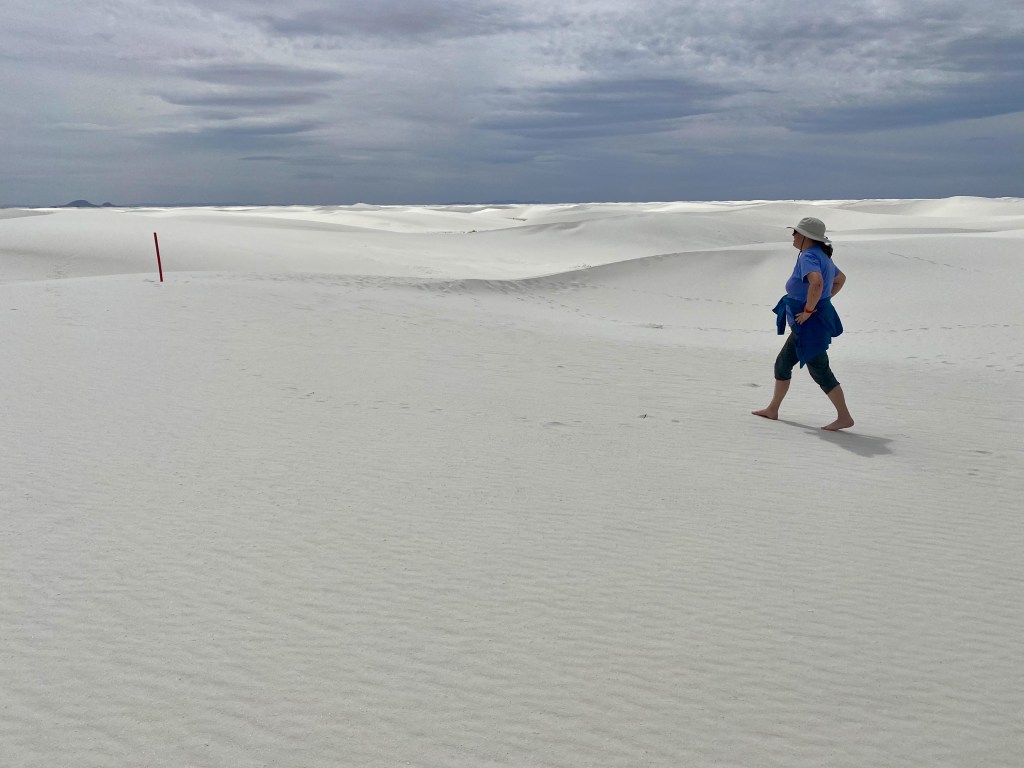
White Sands (New Mexico). This park and Big Bend were the two that exceeded expectations by the widest margins. We loved our five-mile walk in bare feet across the cool sand to the Alkali Flats and back. See “The otherworldly expanse of White Sands.”

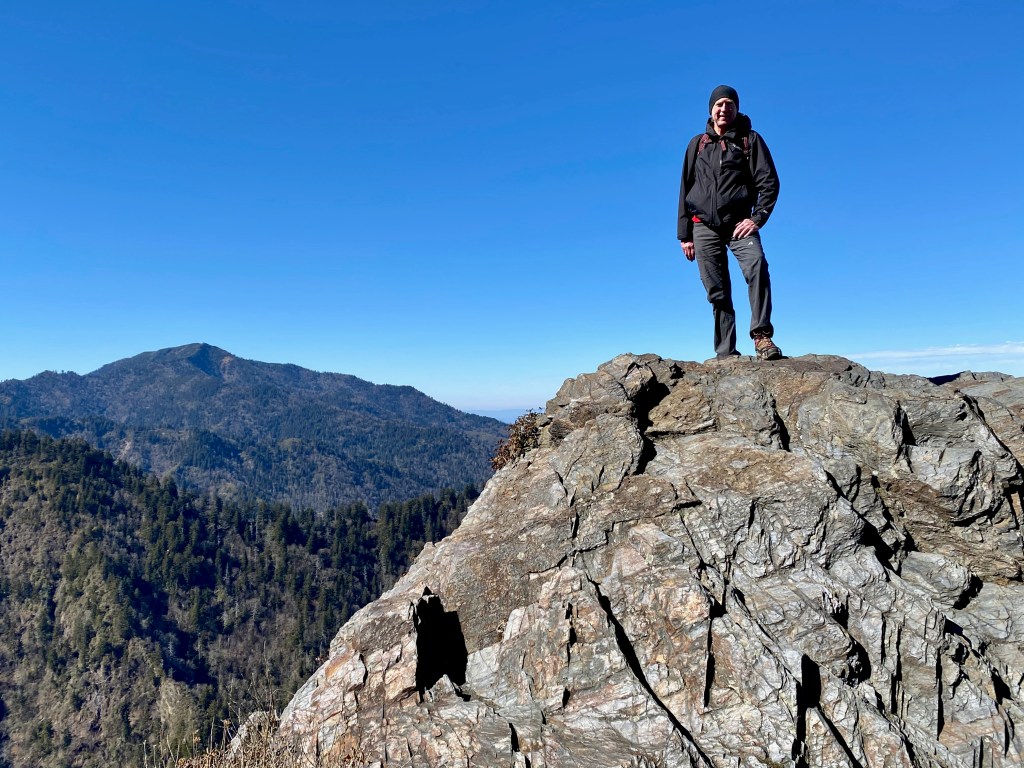
Great Smoky Mountains (Tennessee/North Carolina). We’ve visited here before, hiking the Alum Cave Trail to Mount LeConte. During this trip, I hiked a four-mile section of the Appalachian Trail to Charlies Bunion on a winter’s day for amazing views. See “Hiking the Appalachian Trail.”

Carlsbad Caverns (New Mexico) and Guadalupe (Texas). The caverns are spectacular and make just about all other cave systems rather ordinary. Just down the road Guadalupe offers great views from the highest point in Texas and unique terrain shaped by an ancient sea. See “From Carlsbad Caverns … to Guadalupe Peak.”

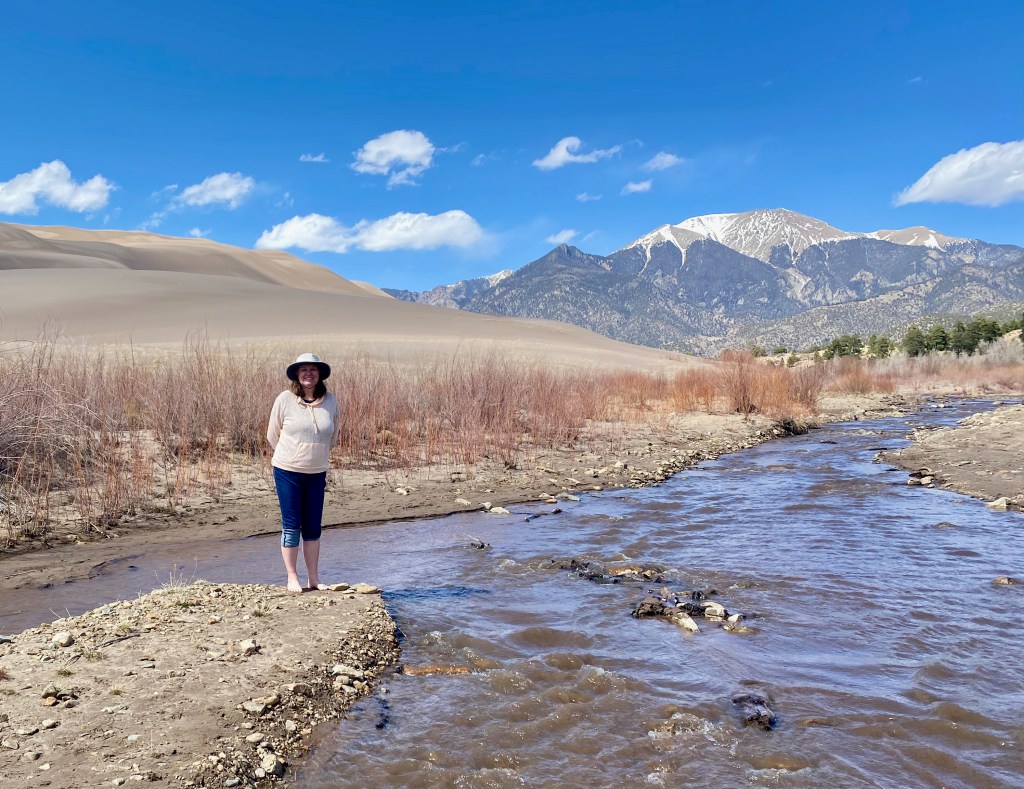
Great Sand Dunes (Colorado). Be sure to go here in spring or early summer when the water is running through Medano Creek. Otherwise it’s just a big pile of hot sand. See “Great Sand Dunes National Park.”

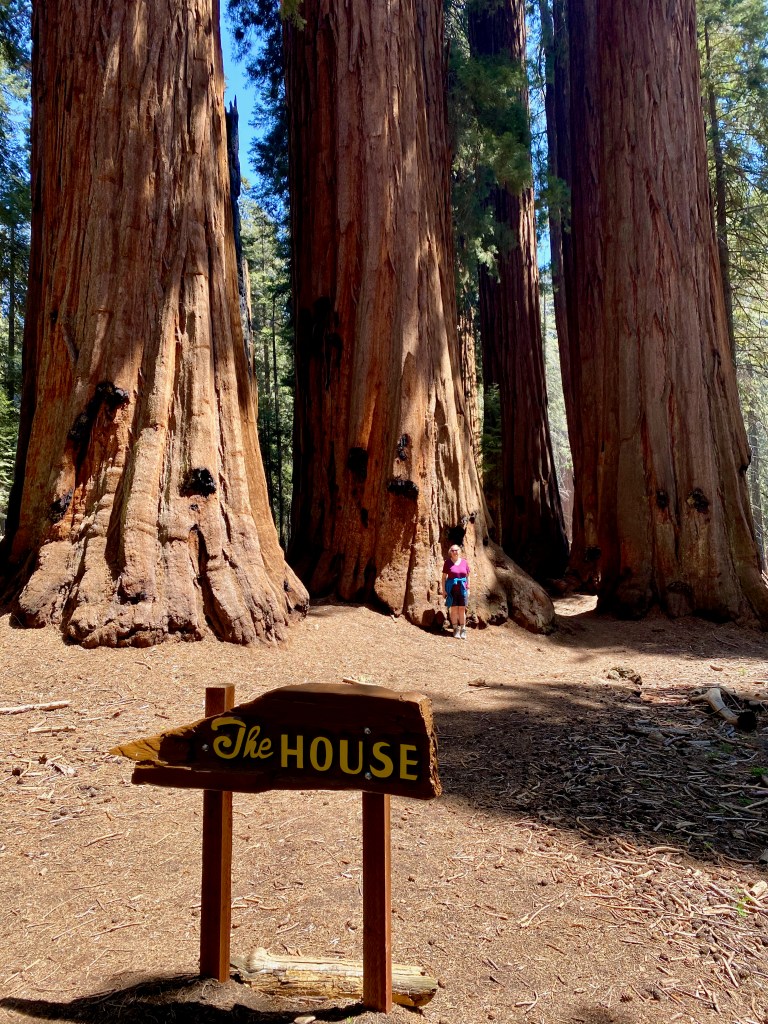
Sequoia, Kings Canyon, and Redwood (California). The main attraction at all three are the towering redwoods. We savored every quiet moment along the pine-needle paths with the trees towering 200-300 feet above us. See “Standing tall with Generals Sherman and Grant” and “Admiring the giant redwoods.”

Other parks:

Hot Springs (Arkansas). The main attraction in this small, urban park is the hot springs, which we thoroughly enjoyed during our 20-minute session in a private bath. See “Soaking in hot springs.”

Saguaro (Arizona). We learned a lot about the desert and its plant life at the park and the nearby desert center. We were only able to tour the west unit. See “Admiring the sentinels of the desert.”

Joshua Tree (California). This park is worth visiting for a full day, but the hiking opportunities are limited. See “Joshua Tree National Park.”

Lassen Volcanic (California). The park’s main road was still closed for snow removal when we visited in May, so we were only able to experience a sulfur-scented mud pot at the entrance. See “Smelling sulfur and feeling the heat.”

North Cascades (Washington). We enjoyed the view of Diablo Lake from the main road, but the hiking opportunities seem to be limited. See “The clouded peaks of North Cascades National Park.”

Badlands and Wind Cave (South Dakota). These two parks are about 70 miles apart. I hiked out onto the Badlands and savored the stark landscape. Wind Cave features some unique formations, but the tours were limited and they only offer same-day reservations. See “A glorious day in the Black Hills.”   

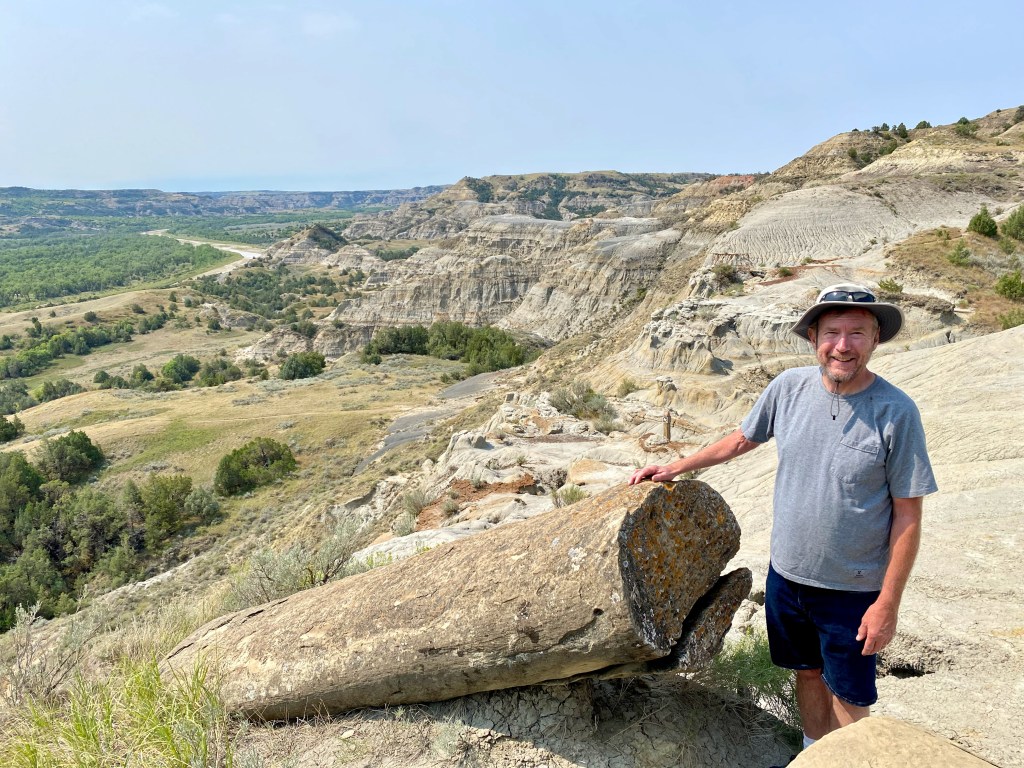
Theodore Roosevelt (North Dakota). This remote park (especially the north unit) offered its own more subtle “badlands” beauty and historical ties to a former U.S. president. See “Following ‘The Little Mo’ and the buffalo.”

New River Gorge (West Virginia). We enjoyed a hike along the ridge 1,400 feet above this picturesque river. If we visit again, we might try rafting. See “Gazing down on West Virginia’s New River Gorge.”  

***

Along our journey there were at least six parks that we could have visited but for various reasons we weren’t able to: The Grand Canyon (Arizona) was just a bit out of the way and we could not find a campsite reservation nearby; the rim road around Crater Lake (Oregon) was still snowed in when we arrived in southwest Oregon in mid-May; Mount Rainier (Washington) was also a bit out of the way as we made our way from Washington to Montana in June; we passed near the Grand Tetons (Wyoming) in July but there were no available campsites when we got around to inquiring; Voyager (Minnesota) in Northern Minnesota was also a bit out of the way for us; and Isle Royale (Michigan) was only a three-hour ferry ride away when we were in Copper Harbor, MI, but I had left the reservations too late and the ferry and lodge were all booked up.

Oh well, we’ll just need to plan another trip one of these years, Lord willing!

Book notes: Looking for a good read? My favorite authors and titles on history, theology, fiction, and political economy

People occasionally ask me for book recommendations. I’m happy to oblige! Below are books I’ve read over the years that I would heartily recommend to anybody who hasn’t had the opportunity to read them yet.

They’re grouped into four categories: History and Biography; Fiction; Religion and Theology; and Political Economy. Most recommendations come with a sentence or two about the work.

History and Biography

At the top of my list:

Alexander Hamilton and Grant by Ron Chernow. Both books are masterful at painting their subjects and their times, capturing the sweep of history as well as the telling detail.

Anything by David McCullough. Truman is at the top of the list, followed by The Wright Brothers, John Adams, The Path Between the Seas: The Creation of the Panama Canal, 1870-1914, and The Johnstown Flood. I just finished Mornings on Horseback, the story of Theodore Roosevelt’s early years, including his time in the Badlands of North Dakota.

Anything by Erik Larson. My favorite is Isaac’s Storm: A Man, a Time, and the Deadliest Hurricane in History, a vivid account of the Galveston hurricane of 1900, still the deadliest natural disaster in American history. Other favorites are The Devil in the White City, about a devious serial murderer operating on the fringes of the 1893 Chicago world’s fair; and Dead Wake: The Last Crossing of the Lusitania.

The Gulag Archipelago by Alexander Solzhenitsyn. I first read this in my 20s and it had a profound effect on my view of the socialist experiment. I recommend the one-volume, abridged version, published with the author’s approval and input.

The Storm of War: A New History of the Second World War and Churchill: Walking with Destiny by Andrew Roberts. Roberts plumbs new sources and weaves a compelling narrative to illuminate these two well-covered subjects. My favorite story from the Churchill biography is the speech Harry Hopkins gave in Glasgow in January 1941, quoting the book of Ruth. It made Churchill weep.

Unbroken: A World War II Story of Survival, Resilience and Redemption by Laura Hillenbrand. The movie was good, but the book is even better. The story of Louis Zamperini’s conversion was as compelling to me as his survival and imprisonment in the Japanese POW camp.

Undaunted Courage: Meriwether Lewis, Thomas Jefferson, and the Opening of the American West by Stephen E. Ambrose. Compelling story of the Lewis and Clark expedition.

Battle Cry of Freedom by James M. McPherson. A one-volume history of the Civil War, not just the battles but also the economic and cultural forces that stoked the conflict.

More History

The English and Their History by Robert Tombs. This one-volume history is a heavy lift at 900 pages but my reward was a much deeper appreciation for English history and how it has shaped their and our own culture and politics today.

The Rise and Fall of the Third Reich: A History of Nazi Germany by William L. Shirer. A one-volume history of the regime by an American reporter who witnessed much of it from inside Germany.

Night by Elie Wiesel. The dark night of the Nazi death camps was broken by American tanks.

Gulag: A History by Anne Applebaum. A more comprehensive companion to Solzhenitsyn’s work.

To round out the tour of 20th century totalitarianism, I recommend Mao’s Great Famine: The History Of China’s Most Devastating Catastrophe, 1958-62 and The Cultural Revolution: A People’s History, 1962-1976 by Frank Dikötter.

On the other world war, I recommend The First World War by John Keegan and A Storm in Flanders: The Ypres Salient, 1914-1918: Tragedy and Triumph on the Western Front by Winston Groom.

The Last Stand of Fox Company: A True Story of U.S. Marines in Combat by Bob Drury. My son Paul recommended this one. It’s the story of a band of outnumbered Marines who held out against waves of Chinese attacks under brutal winter conditions during the Korean War. I’ll never forget the scene when relief finally arrived on a distant ridge.

Two books by Candice Millard: Destiny of the Republic: A Tale of Madness, Medicine and the Murder of a President tells the story of how the admirable President Garfield died at the hands of an assassin and an incompetent doctor; and The River of Doubt: Theodore Roosevelt’s Darkest Journey recounts the ex-president’s almost fatal adventure down an unexplored tributary of the Amazon.

Nothing Like It in the World: The Men Who Built the Transcontinental Railroad 1863-69 by Stephen E. Ambrose. This book made me appreciate the work of Chinese immigrants in building the difficult section through the Sierra Nevada mountains.

Mayflower: A Story of Courage, Community, and War; and In the Heart of the Sea: The Tragedy of the Whaleship Essex by Nathaniel Philbrick. The former expanded my meager knowledge of 17th-century America, including the beautiful image of the “praying Indians.” The latter begins with an encounter with a whale that would inspire Herman Melville to write Moby Dick.

Lone Star: A History of Texas and The Texans by Fehrenbach, T.R. A rich, one-volume history of the state that captures its culture and “brooding immensity.” (I read it during our month of travel through Texas in May 2021.

More Biography

Margaret Thatcher: The Authorized Biography by Charles Moore. This is another commitment, but if you admire Mrs. Thatcher and have an interest in British and Cold War politics, all three volumes are magnificent: Volume One: From Grantham to the Falklands; Volume Two: At Her Zenith: In London, Washington and Moscow; and Volume Three: Herself Alone. (Based on Moore’s impeccable scholarship, I was well equipped to expose the inaccurate and unfair caricature of Mrs. Thatcher in the fictional drama “The Crown” in this essay.)

The Last Lion: Winston Spencer Churchill: Visions of Glory, 1874-1932 by William Manchester. Another masterful portrait of a man and his time.

Gladstone: A Biography by Roy Jenkins. Gladstone is perhaps my favorite politician of all-time. He was right on the major issues of his time, including free trade, and he was a serious Christian who practiced his faith in public and private.

The Dawn Watch: Joseph Conrad in a Global World by Maya Jasanoff.

Johnny Cash: The Life by Robert Hilburn.

Narrative of the Life of Frederick Douglass by Frederick Douglass.

Man on the brink

My friend Mac Olson would appreciate this sub-category. These are all riveting stories of people confronting circumstances that both defy and capture the imagination.

Endurance: Shackleton’s Incredible Voyage by Alfred Lansing. Nothing I’ve read in the genre tops this incredible story of survival.

Into Thin Air: A Personal Account of the Mount Everest Disaster by Jon Krakauer. Once I started reading this book, I could not put it down.

The Perfect Storm: A True Story of Men Against the Sea by Sebastian Junger. You know the cliche, but here is the real thing. Unforgettable descriptions of mammoth waves and what it’s like to drown.

Unsinkable: The Full Story Of The RMS Titanic by Daniel Allen Butler. The true story behind the blockbuster movie, comprehensively and expertly told.

Fiction

Two novels and a novella by Alexandr Solzhenitsyn: Cancer Ward; In the First Circle: The First Uncensored Edition; and One Day in the Life of Ivan Denisovich. These are all technically fiction, but based on the author’s experience in the Soviet prison camp system. All are filled with unforgettable characters living under circumstances that we thankfully can only dimly imagine. I discuss the first two works and The Gulag Archipelago in this blog post in May.

Anything by Tom Wolfe. Of his fiction books, I enjoyed The Bonfire of the Vanities, A Man in Full, and I am Charlotte Simmons. [Among his non-fiction works, let me sneak in plugs for The Right Stuff and The Kingdom of Speech, the latter a fascinating tour of the development of human of language, in particular how the theory of evolution struggles to explain this human faculty.]

Crime and Punishment, The Brothers Karamazov, The Idiot, and The Possessed by Fyodor Dostoevsky. No author I’ve read plunges the depths of the human soul like the 19th-century Russian. The Possessed offers an all-too-modern look into the mentality of violent political fanatics. His short story White Nights is captivating.

Quo Vadis by Henryk Sienkiewicz. My daughter Emily read this in high school and recommended it. It tells the story of Christian conversion, love and survival in the pagan Roman empire.

A River Runs Through It by Norman McLean. A beautiful memoir of growing up in Montana.

Frankenstein by Mary Shelley. This is nothing like the the popular perception based on movie adaptations. It’s a haunting story of human pride and an inhuman desire for revenge.

A Town Like Alice by Nevil Shute.

The Catcher in the Rye by J.D. Salinger.

Moby Dick and Billy Budd, Sailor by Herman Melville.

Heart of Darkness, Typhoon and Lord Jim by Joseph Conrad.

The Ox-Bow Incident by Walter Van Tilburg Clark.

Religion and Theology

Institutes of the Christian Religion by John Calvin. Systematic in explaining and defending the reformed faith, and also devotional in its warm-hearted appeal to Christians to live out their faith. I recommend either (or both!) the final 1559 version, a two-volume set edited by John T. McNeill, and/or the 1541 “Essentials” Edition, translated by Robert White, which is a few hundred pages shorter.

The Pilgrim’s Progress by John Bunyan. An unforgettable journey to the Celestial City.

Knowing God by J.I. Packer. I learned a lot about the Holy Spirit from this book.

Confessions by Augustine. Written 1,600 years ago but modern in its personal and confessional style.

Christianity and Liberalism by J. Gresham Machen. Machen said later that this would have been better titled Christianity and Modernity. In critiquing the liberal church of his day, he lays out in clear and learned prose the essentials of the Christian church and faith.

Anything by C.S. Lewis. Beyond the usual favorites, such as Mere Christianity and The Screwtape Lertters, I would recommend Miracles, The Abolition of Man, and God in the Dock: Essays on Theology and Ethics.

A Severe Mercy: A Story of Faith, Tragedy and Triumph by Sheldon Vanauken. A beautiful story of how losing what you love most in this world can lead to finding eternal joy in Christ.

The Peacemaker: A Biblical Guide to Resolving Personal Conflict by Ken Sande. Biblical, practical lessons in making and keeping peace with your neighbor.

Foxe’s Book of Martyrs by John Foxe.

Confessing the Faith: A Reader’s Guide to the Westminster Confession of Faith by Chad B. Van Dixhoorn.

Tortured for Christ by Richard Wurmbrand. Heart-wrenching ordeal of a pastor serving the Lord faithfully under the especially cruel communist regime of Romania.

Political Economy

The Constitution of Liberty by Friedrich Hayek. His The Road to Serfdom is more widely read, but this longer work lays out in a powerful and comprehensive way the rules for a free society.

Capitalism and Freedom and Free to Choose: A Personal Statement by Milton Friedman. You can’t beat Friedman for stating the case for a free economy and society in a civil and engaging way.

The Box: How the Shipping Container Made the World Smaller and the World Economy Bigger by Marc Levinson. A must read if you want to understand today’s headlines about ports, container ships, and supply chains.

Clashing over Commerce: A History of US Trade Policy by Douglas A. Irwin. If you are into trade policy, this is THE definitive history of how our nation escaped from protectionism to a more open and interconnected economy.

The Worldly Philosophers by Robert L. Heilbroner. An engaging tour of the great economic thinkers of the past few centuries.

A Random Walk Down Wall Street: The Time-Tested Strategy for Successful Investing by Burton G. Malkiel. This book, along with Stocks for the Long Run: The Definitive Guide to Financial Market Returns & Long-Term Investment Strategies (5th edition) by Jeremy Siegel and The Little Book of Common Sense Investing by John C. Bogle, taught me how to manage our retirement portfolio without paying high fees to “active fund” managers. (I distilled what I learned into this essay, Saving for Retirement — What Every Millennial Should Know.)

Mad about Trade: Why Main Street America Should Embrace Globalization by Daniel Griswold. This book is last and arguably least in this august list, but how could I not recommend my own work? Seriously, although it was written a decade ago, this is a clear and comprehensive explanation why Donald Trump and the AFL-CIO are wrong about trade and globalization, and how trade makes our lives better every day.