It’s a been while since I’ve posted on this website. One reason is that Elizabeth and I have been traveling a lot since last September. We sold our home in the Washington DC suburb of Vienna, Virginia, a year ago, and since last fall we’ve been on the move visiting family and seeing sights across the United States and abroad.
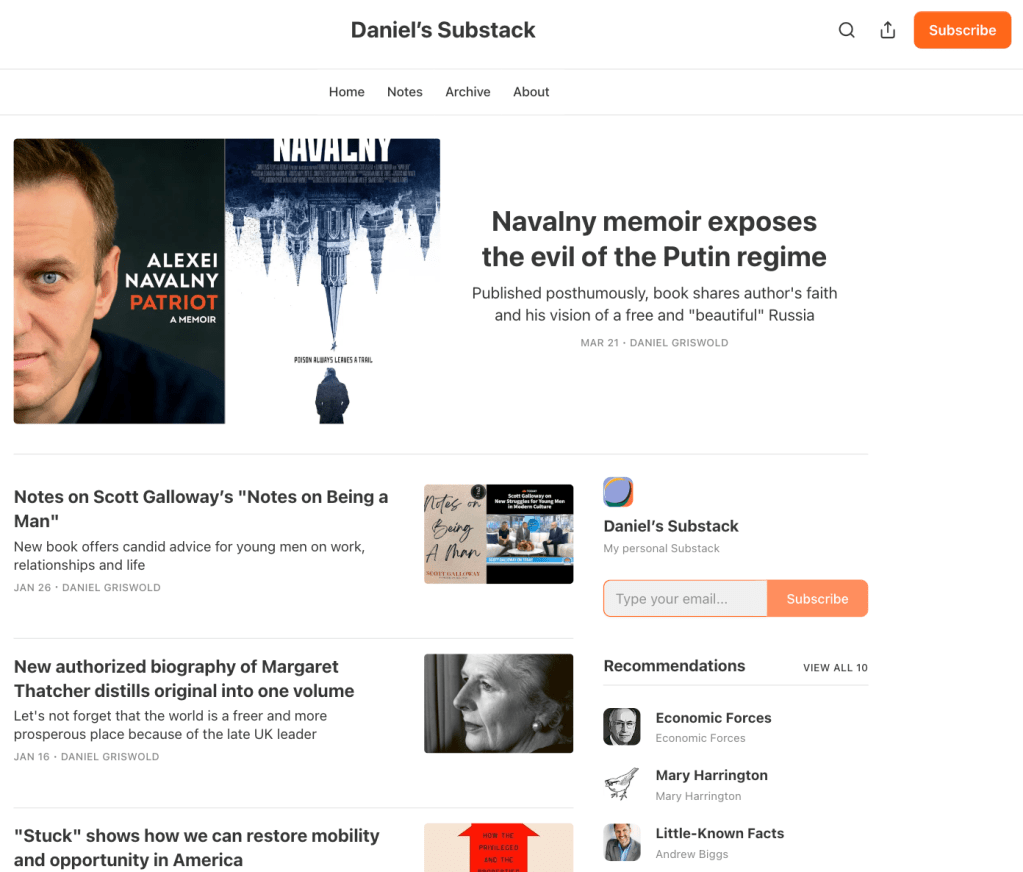
Another reason I haven’t posted lately is that I’ve established a new blog site on Substack, which I’ve cleverly titled “Daniel’s Substack.” (See a fresh screenshot of the page below.) Substack has become a popular blogging platform for discussing big and controversial topics. We’ve explored plenty of meaty subjects on this website, but it’s a bit of an island in cyberspace, while my blog site on Substack is more of a storefront in a bustling and growing city with a lot more foot traffic.
If you haven’t already, please check out the recent posts on my Substack site–and please click the free “Subscribe” button. Here are a few offerings on the site that may pique your interest:
Last week I shared my thoughts about the book Patriot, the posthumous memoir by the Russian opposition figure Alexei Navalny, who was imprisoned and murdered for exposing corruption in the Putin government. As I note, “The corruption in Russia emanates from the very top. Besides wielding unchecked power over a huge population and land mass, Putin has used that power to indulge his desires for wealth and other pleasures.”
In another post, I discuss the recent book Notes on Being a Man, by business professor Scott Galloway. While I quibble with a few minor points, I find a lot of wisdom in the author’s observations about why so many young men today are struggling. He tackles the hot-button issues of social media, relationships, sex and pornography, and marriage and monogamy. Among my observations, “Galloway dismisses the notion that being a male is a social construct assigned at birth. Manhood is a physical reality driven by genes and testosterone. We should embrace this biological fact, not deny it.”
The last post I’ll highlight is “My failed effort to reform the real-estate industry.” It tells my personal story of how little has changed despite the multi-million dollar settlement against the industry over stubbornly high commissions for both buyer and seller agents. As I concluded, “In today’s real estate market, despite the big settlement, you can come to any arrangement you want when buying or selling a home–as long as you pay the buyer’s agent an non-negotiable 2.5 percent!”
In coming weeks and months, I plan to post about other topical books I’m reading, a potential follow-up to the real-estate blog when we get around to buying a house in our new home of Colorado Springs, and my keen interest in the nexus between political economy and religion, or what you could call the moral underpinnings of our market democracy. All that and more is in the mental pipeline!
Please stay subscribed to my WordPress site, “Daniel Griswold’s Blog,” where I plan to keep posting about our travels and other more personal subjects. But please also check out and subscribe to my new Substack blog. I would love to see you come in the front door for an engaging discussion!
You may not have heard of Jimmy Lai, but he is the world’s most famous Catholic and former billionaire serving time in a Chinese prison for committing no other crime than peacefully defending freedom and democracy. With Pope Leo now in office, it’s my hope that the Vatican will take a more sympathetic interest in Lai’s plight than under the previous pontiff.
Jimmy Lai was born in Mainland China in the late 1940s, just as Mao Zedong and the communists took over the country. Lai escaped to nearby Hong Kong when he was about 12 and through pluck and hard work became a successful textile and clothing entrepreneur. He used his wealth in the 1990s to launch the popular Chinese-language Apple Daily newspaper, which combined aggressive journalism with a feisty editorial voice challenging the encroaching power of the communist authorities. He was arrested on trumped-up national security charges in 2020 and has been wrongly imprisoned since then.
Throughout his life, Lai has been an exponent of free markets and classical liberalism, with Milton Friedman and Friedrich Hayek as his intellectual guides. He became a serious Catholic later in life. Through his media outlets and his personal actions, Lai staunchly defended the civil freedoms of the people of Hong Kong. Those freedoms were supposed to be guaranteed for 50 years under the 1997 UK-China handover agreement, but they have been ruthlessly suppressed by the central government in Beijing since 2020.
I pray regularly for Jimmy Lai. I pray that he would be released from prison, and until then that he would persevere and be a witness to his jailers. I learned from the book that he is not embittered or discouraged as he sits in isolated confinement. Lai sees himself as suffering on behalf of all those who sacrificed their lives in Tiananmen Square and who have given up their own freedom since then to defend the inherent rights of the Chinese people.
In an interview with Rev. Robert Sirico of the Acton Institute before he was arrested, Lai described the positive legacy of Great Britain’s 150-year colonial rule of Hong Kong:
We inherited Western culture and values and institutions. The British did not give us democracy, but they gave us rule of law, private property, freedom of speech, of assembly, of religion. This is why China is very afraid of us. The values we share with the West are very dangerous to Chinese in China. That’s why they want to clamp down on us. We are a small island but we have big ideas. (from The Troublemaker, p. 116)
Lai had the means and the opportunity to escape from Hong Kong before the crackdown, but he chose to stand with his fellow Hong Kongers and face the consequences. Clifford quotes Lai in the book on why he refused to flee:
A young prison guard asked me, when no one was around: “Why didn’t you leave before they arrested you, for surely everybody knew that it was coming to you?” “No, I could not leave, otherwise I could not raise my head and walk tall again. I must face the consequences of my actions, just or unjust. It is also a way to uphold the dignity of Hong Kong people, as one of the leaders for the fight of freedom. Also, if I shirk my responsibility and run away, I would be setting a very bad example for my children, [encouraging them to] run away from trouble and their responsibilities-indirectly I would destroy them. Besides while my colleagues and Apple Daily are holding the fort of press freedom and I run away from my responsibility, what kind of captain of the ship am I? No, there was no option for me but to face it.” (p. 190)
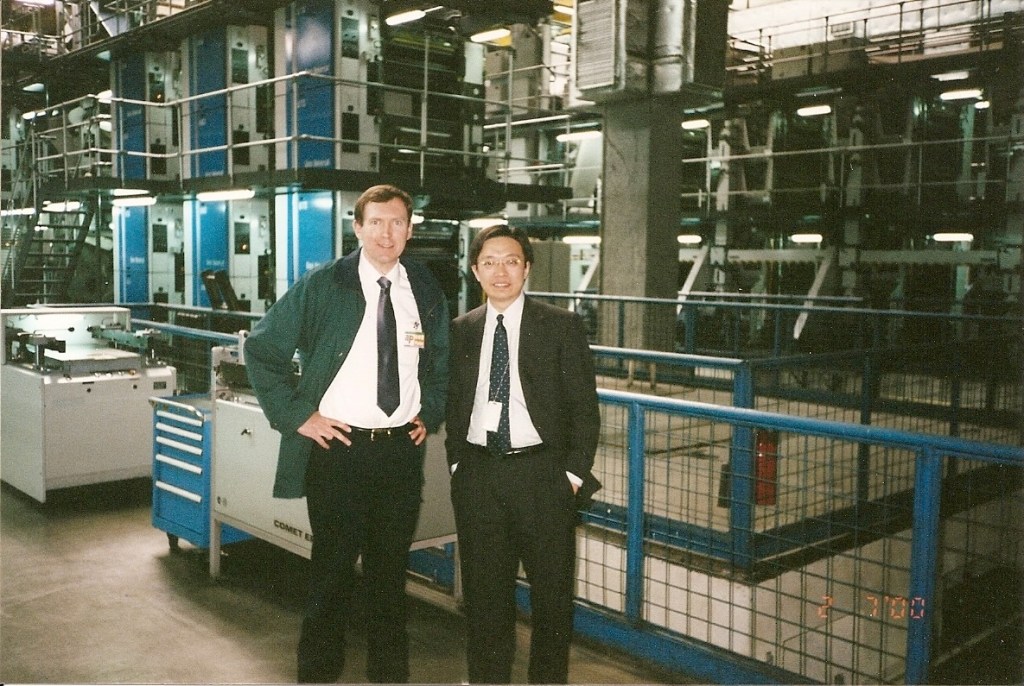
In my time at the Cato Institute in Washington, DC, I had the privilege of interacting in a tangential but meaningful way with Jimmy Lai and the Apple Daily staff. In 2000, during a visit to Hong Kong, I was invited to visit the Apple Daily headquarters by its opinion-page editor, Kin-ming Liu. I’d met Kin-ming before then when he visited the Cato offices. We naturally hit if off not only because of our libertarian leanings but because I had spent 12 years as an opinion-page editor myself at the Colorado Springs Gazette. (The photo shows us in front of the Apple Daily presses.)
After that visit I was asked occasionally to write articles for Apple Daily on US-China trade relations. Boxed away in my archives are a few treasured clippings of those articles as they appeared in the paper translated into Chinese. (Apple Daily was shut down permanently by the Mainland authorities in 2021.)
In a return trip to Hong Kong in December 2004, I was invited to Jimmy Lai’s home in Hong Kong to join him and a small group for lunch. Sometime before then I’d heard the story that one of Lai’s motivations to flee Mainland China for Hong Kong as a boy was his discovery of chocolate. (See the story below from Clifford’s book.) With this anecdote in mind, as I was getting ready to depart on my flight from Washington, I bought a chocolate figure of then US President George W. Bush as a gift. When I arrived at Lai’s house, I gave him the present as a token of friendship and a nod to his personal history. He was delighted, and I can still picture him eating a few pieces of the president’s bust after lunch with a contented look on his face!
Contrast that sunny memory to the reality today of Jimmy Lai sitting alone in his sparse prison cell. While I grieve for what has happened to Lai and pray for his release, the book made me see his confinement in a more positive light. In his faith and his love for the people of Hong Kong, Jimmy Lai has found meaning in his suffering. As his wife Teresa says of his time in prison: “He doesn’t see it as punishment. He is living in complete freedom.” (p. 211)
May all of us, including the new pope, never forget the unjust imprisonment of Jimmy Lai.
***
From The Troublemaker (pp. 16-17):
A bar of chocolate marked a turning point. One day, after carrying baggage for a disembarking passenger [at the Guangzhou train station], the man reached into his pocket and gave Lai a half-eaten Bar Six chocolate. Wrapped in foil with a bold orange paper wrapping, the Cadbury’s candy was unlike anything produced in China. Lai, feeling shy, turned away from the man to take a bite. “I was so hungry. It was so tasty. It was amazing. I turned and asked him ‘What is this?’ He said, ‘Chocolate.’ I said, ‘Where are you from?’ He said, ‘Hong Kong.’ I said, ‘Hong Kong must be heaven because I never tasted anything like that.’ That triggered my determination to go to Hong Kong.”
That taste of chocolate probably occurred in 1960, a year of famine in China. So desperate was the food shortage that Lai remembers grilled field mice as a delicacy he savored in those lean years. His childhood was marked by hunger and sadness. “The wound is deep and the scar is deeper,” he later wrote of his childhood. After he tasted the promise of another world, Lai begged his mother for permission to go to Hong Kong. “It took me a year to convince her.”
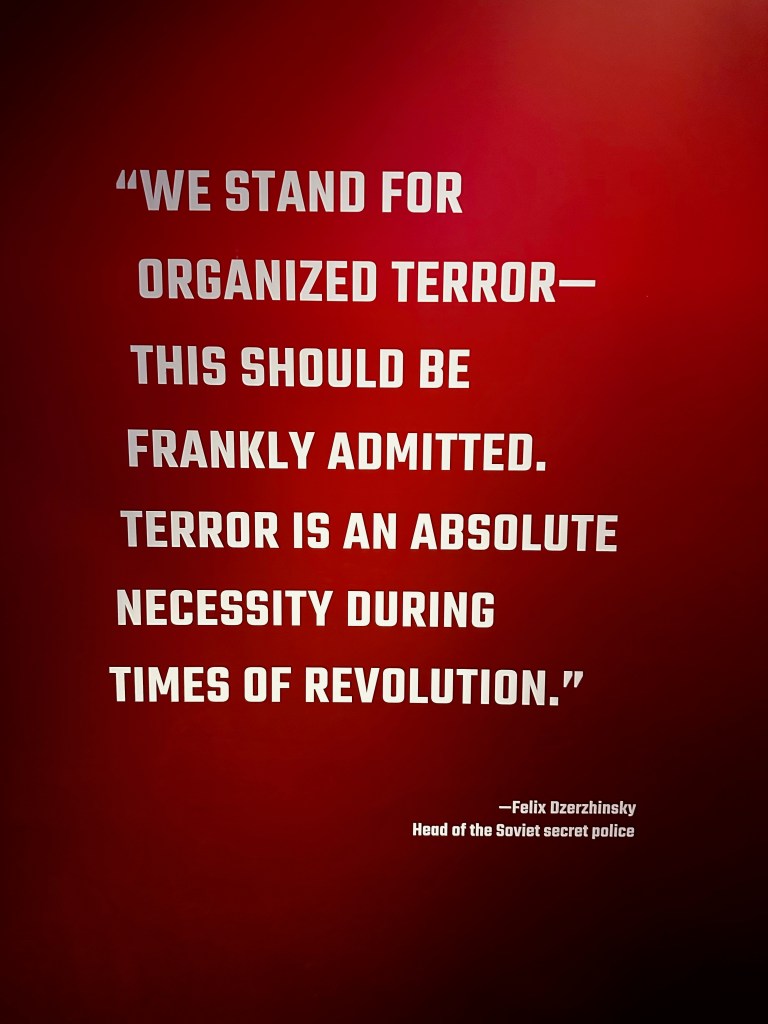
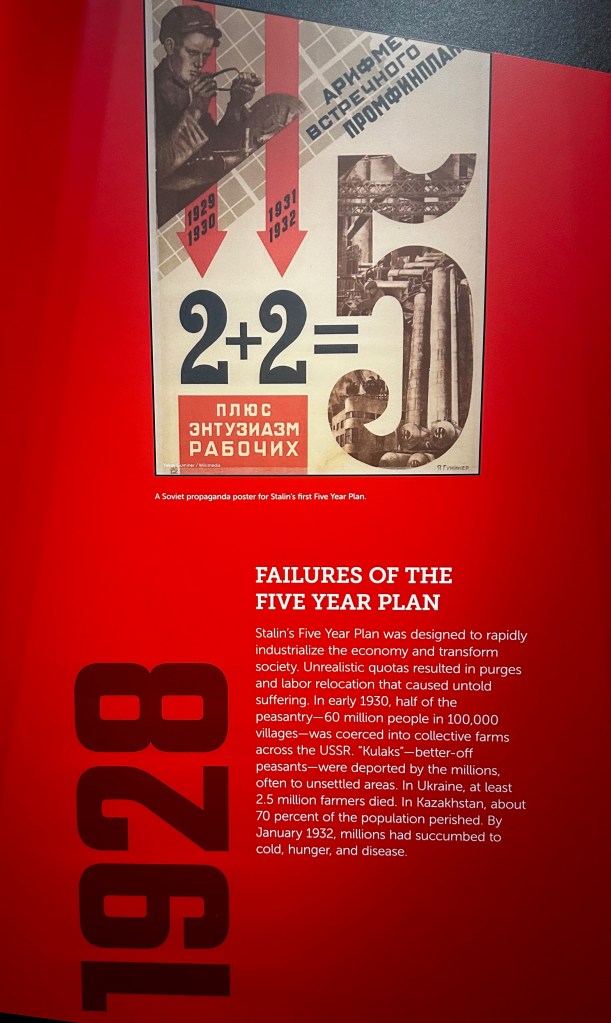
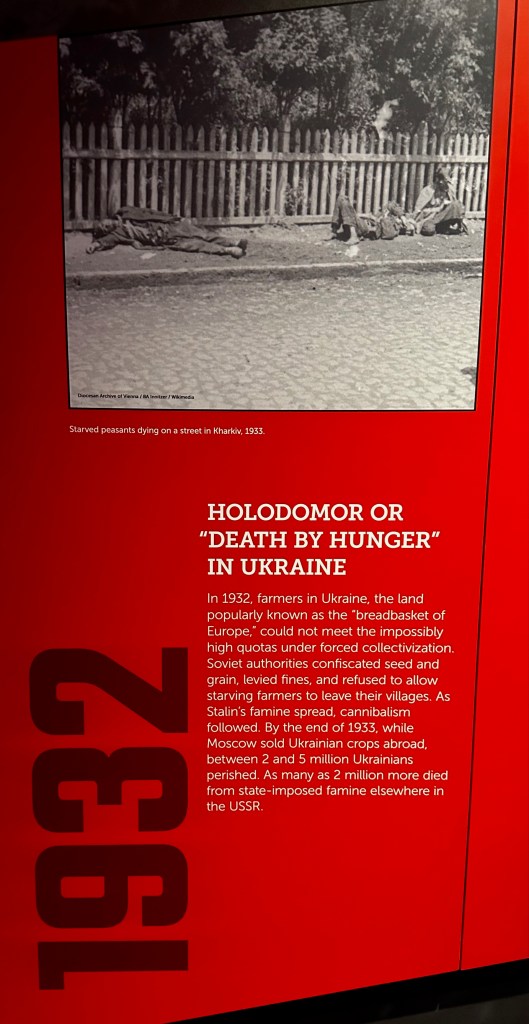
In my final trip into Washington, DC, last month before our move, I visited a place that’s been on my bucket list—the Victims of Communism Museum. The museum opened three years ago and it’s located in an old, marbled office building a few blocks northeast of the White House. I spent an engrossing if somber two hours there viewing the exhibits dedicated to preserving public memory of the century of horrors visited on humanity by communist ideology.
The museum features panel displays with key facts about the origins and the bloody and oppressive record of communism—not only in Russia, but in Poland, Ukraine, the Baltic Republics, China, North Korea, and Cuba. Short videos throughout the museum show interviews and historical film footage. One hallway displays photos and short biographies of East Germans who died between 1961 and 1989 while trying to get around the Berlin Wall to freedom.
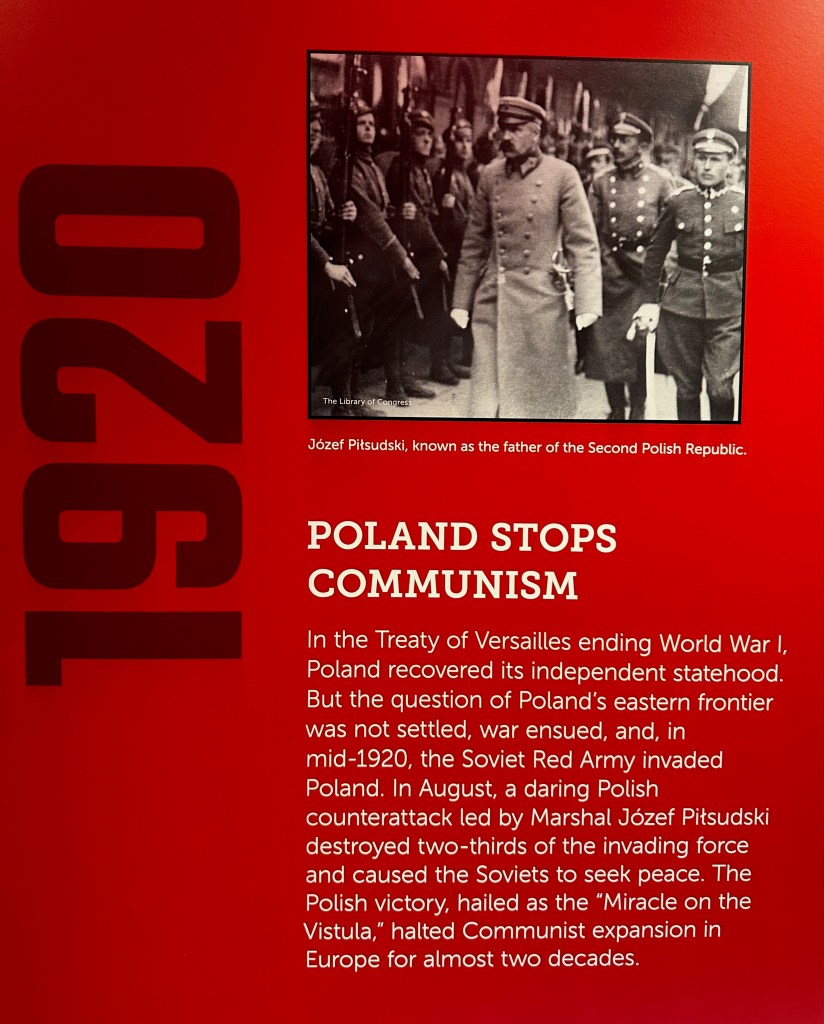
Among the interesting facts I learned is that in 1920 a newly independent Poland repelled an invasion by the Red Army. The military victory under Marshal Józef Pitsudski secured Poland another two decades of freedom before being carved up again by Nazi Germany and the Soviet Union in 1939. One more reason to admire the Poles!
Here are some of the panels at the museum that I found most informative:
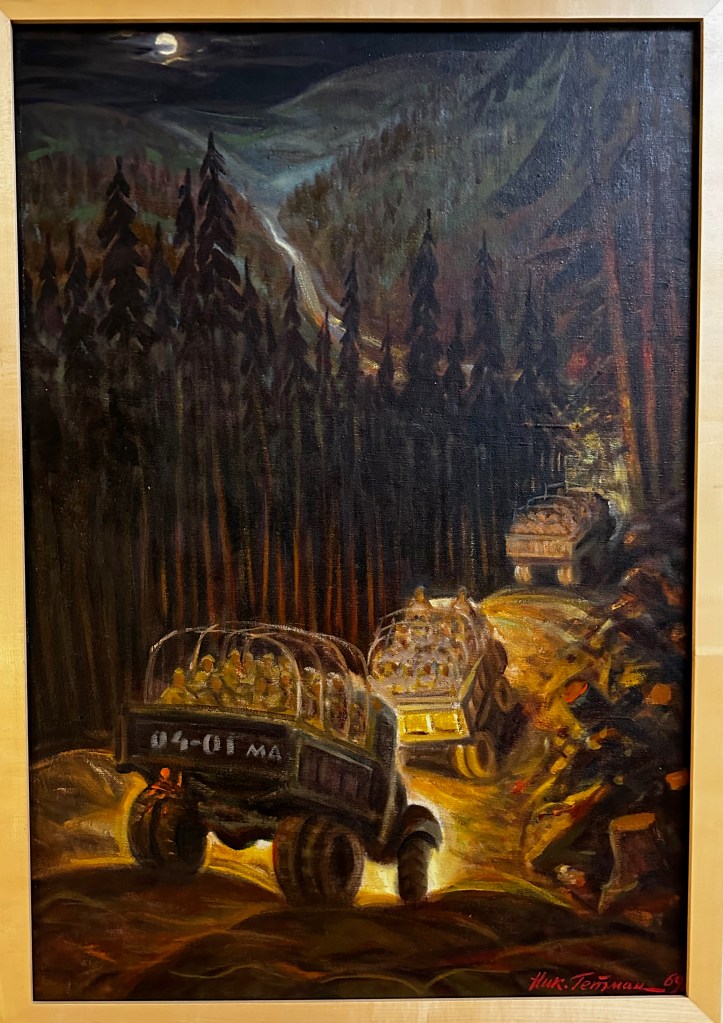
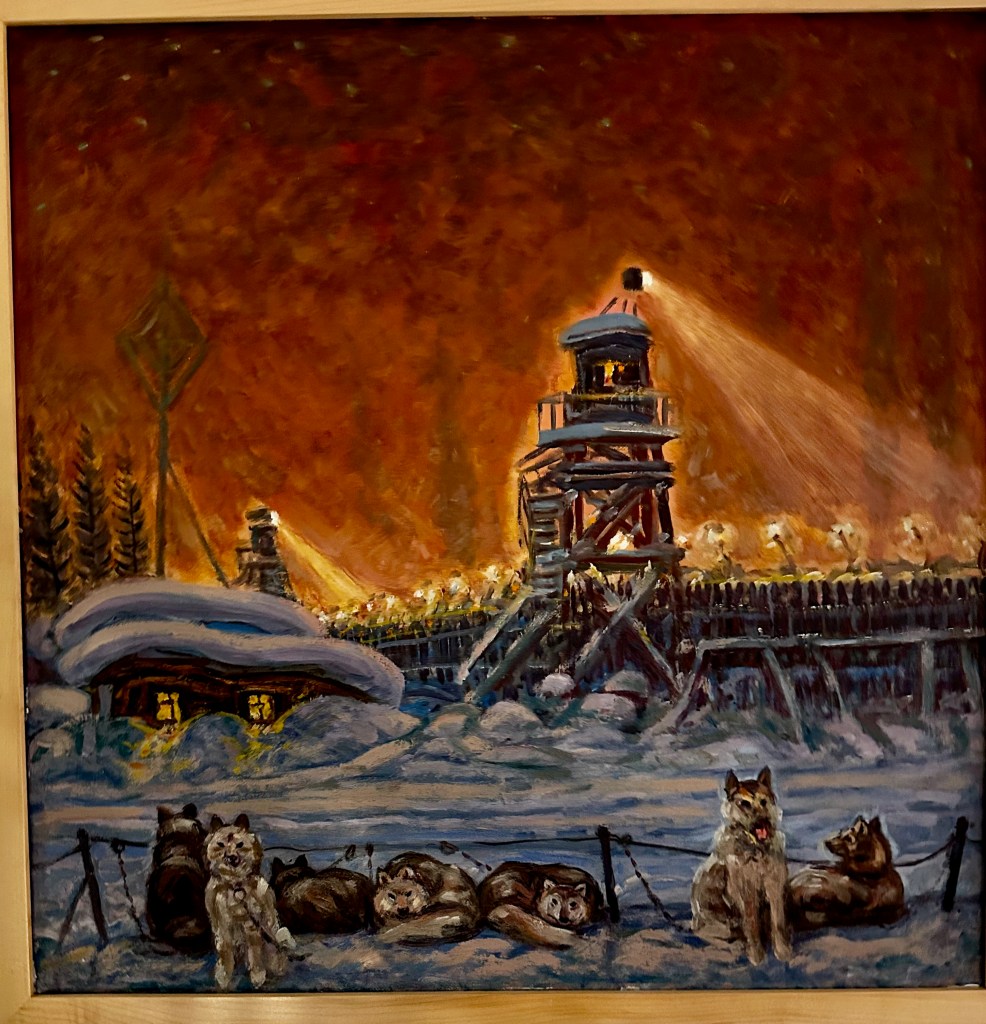
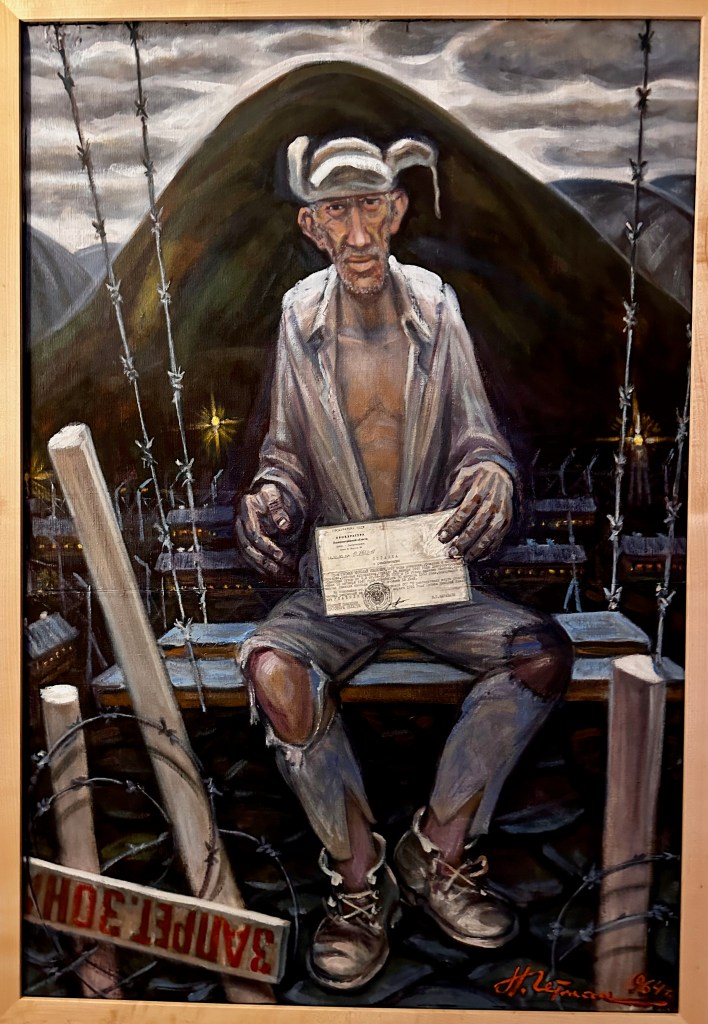
At the heart of the museum are the paintings of the Ukrainian artist Nikolai Getman. Getman was born in 1917 in the Ukrainian city of Kharkiv, a major city near the frontlines of the current Russian invasion. In 1945, not long after his discharge from the Red Army, he was arrested along with a small group of artists after one of them drew a mocking picture of Stalin on cigarette paper. Getman was sentenced to eight years in the Gulag (1945-53), which happen to be the same years served by Alexander Solzhenitsyn. (See this post for my reflections on his work.)
While Solzhenitsyn painted life in the Gulag with words, Getman painted it with an artist’s brush. After his release he produced 50 paintings of his experiences in the Soviet prison-camp system. He hid the paintings for decades, until they were finally revealed to the public in 1997 after the fall of the Berlin Wall and the Soviet Union and seven years before his death. (Here’s a short biography of Getman with many of his Gulag paintings.)
Below are three of the paintings that affected me the most, with the descriptions that were posted nearby:
“Headed for Kolyma,” 1969, Oil on canvas. “Prisoners being transported to forced labor camps often had to brave extreme elements without adequate food, water, or clothing. The uncovered vehicles for transportation made the journey unbearable and deadly in the freezing winters.”
“The Guards’ Kennel,” Oil on canvas. “Guard dogs, often fed more than the prisoners themselves, were trained to catch runaway workers. Getman believed that the way the Soviets trained dogs to be vicious killers reflected the mentality and inhumanity of the Gulag system.”
“Rehabilitated,” Oil on canvas. “Upon their ‘release,’ Gulag prisoners were often forced to live in certain permitted areas under heavy restrictions. After his release from the Gulag, Nikolai Getman endured for decades the stigma that prevailed in Soviet society against former prisoners. His rehabilitation letter is depicted in the hands of the prisoner in this painting.”
The young man at the museum’s reception desk told me that the museum draws a steady if modest flow of visitors each week, including school groups. I wish millions of my fellow Americans, especially the younger generations, could spend an our or two in the Victims of Communism Museum.
Like the U.S. Holocaust Memorial Museum located a mile south, the Victims of Communism Museum tells a story that is sadly relevant today.
Communism remains the ruling ideology in China, North Korea, Vietnam and Cuba. Xi Jinping, the party ruler in China, seems determined to turn China back to the days of Mao Zedong, whose murderous reign is recounted in the museum.
Vladimir Putin, the top dog in Russia, is no longer a professing communist, but he served the former Soviet Union faithfully for years. As the self-appointed ruler of Russia for life, he longs to restore what he sees as Russia’s past glory through the domination of its neighbors–currently Ukraine, but it’s easy to imagine Poland and the Baltic Republics coming into his cross hairs.
The museum makes it clear why the people of Ukraine are fighting so hard to resist the return of Russian domination. Ukraine suffered horribly under the Soviet government. In the 1930s, between 2 and 5 million of Nikolai Getman’s fellow Ukrainians were intentionally starved to death by Stalin and his minions in the Kremlin. In what Ukrainians call the Holodomor, Moscow forced collectivization on its farms, and when the people resisted, they confiscated their food to feed the army and export to other nations, while denying people the minimal food needed for survival. The result was mass starvation.
We live in a complicated world, and the U.S. government needs to deal with China and Russia in ways that promote our national interest and preserves the peace. But please spare us the moral dissonance of praising leaders who are the unapologetic heirs to those with the blood of 100 million people on their hands.
Most of my time working in Washington has been devoted to helping my fellow Americans understand the many benefits of keeping the U.S. economy open to the world. That includes openness to trade, international investment, and legal immigration. With a long paper trail of articles, talks, and studies, it should be plain that I don’t support much of what the new Trump administration is trying to implement on trade.
In fact, I wrote three studies or essays in recent years that speak directly to what I would argue are President Trump’s misguided policies on trade. One challenges the president’s idea of imposing “reciprocal tariffs” on U.S. trading partners. In early April, the president is expected to announce plans to raise U.S. tariffs to match those imposed by other countries on what we export. In short, he wants the United States to raise its tariffs on specific goods to match the tariffs that other countries impose on those same goods exported from the United States. For example, if a trading partner imposes a 10 percent tariff on U.S. automobiles (as the European Union does), then the United States will raise its tariff on automobiles imported from that trading partner to 10 percent, up from the 2.5 percent we normally impose.
“Reciprocal tariffs” may sound fair, but if implemented the president’s idea would cost Americans dearly in higher prices for consumer goods, lost export opportunities for producers, and a weaker overall economy. In a 2019 study for the Mercatus Center, “Mirror, Mirror, on the Wall: The Danger of Imposing ‘Reciprocal’ Tariff Rates,” I found that implementing reciprocal tariffs against our ten largest trading partners would boomerang back to damage American producers and households. As the abstract of the study states,
Applying reciprocal rates would exponentially complicate the US tariff code, lead to higher duties on a range of imports important to US consumers and producers, and invite retaliation from major trading partners. Specifically, if applied to the United States’ top 10 MFN trading partners, reciprocal tariffs would result in a nearly 10-fold increase in the number of duty lines in the US tariff code. The average US duty on imports from those nations would more than double, from 2.1 to 5.4 percent. Imposing reciprocal duties would ultimately threaten to unravel a postwar global trading system that has reduced tariffs worldwide while protecting US exporters from discrimination.
A more recent essay I wrote for the Cato Institute argues that free trade agreements the United States has signed in recent decades have been good for America’s productive capacity and the living standards of American workers while enhancing our influence around the globe. The August 2024 essay was titled, “How Trade Agreements Have Enhanced the Freedom and Prosperity of Americans,” and was co-written with Clark Packard. The essay provides an antidote to criticism of such trade pacts as the North American Free Trade Agreement with Canada and Mexico and the multilateral agreement among the more than 160 members of the World Trade Organization.
And finally, to the argument that those trade agreements have caused a decline in living standards for American workers, I showed in a September 2023 essay for Cato that the opposite is true. The average American worker is better off today that 50 years ago by a range of measures, and one of the main reasons is an expanding economy driven by globalization. You can read the essay, “The Misplaced Nostalgia for a Less Globalized Past: The ‘Great Again’ Economy Wasn’t so Great,” at Cato’s “Defending Globalization” website.
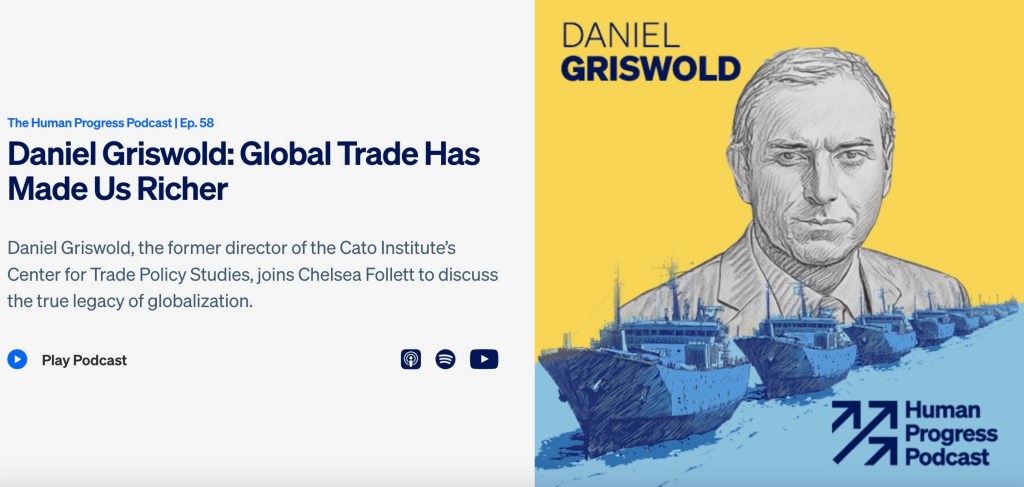
You can hear me talk about both of the Cato essays in a just-released podcast, “Global Trade Has Made Us Richer,” hosted by Chelsea Follett of the institute’s Human Progress project. The podcast provides an important fact-check of all the negative things President Trump has been saying about trade agreements and their impact on American workers.
The bottom line in all three of these works is that it is protectionism and higher tariffs that threaten the well-being of American workers, not our freedom to trade with the rest of the world.
Can you practice the Christian faith while rarely if ever attending a church service? It’s a question worth asking because I know a few people I consider friends who profess the faith but do not attend church in person. And I believe there are millions of Americans who sincerely identify as Christians who seldom set foot in a church.
My answer to the question is a heavily qualified yes. I can’t say with total confidence that a person who doesn’t go to church can’t be saved, but I also think that non-church-going Christians are misreading their Bible and missing out on the full plate of blessings God intends for his children.
Let’s start with what the Bible says. Throughout the New Testament, it’s assumed that believers are meeting regularly for teaching and worship. When Paul wrote his epistles, he was not just writing to Christians in general, but to specific churches meeting in Corinth, Ephesus, Thessalonica, and other cities in the Roman world. It’s plain from his letters that believers were gathering regularly for preaching, teaching, prayer, worship, singing, giving, and communion. His letters were full of instructions about how we should conduct ourselves in these regular meetings.
Nowhere is communal worship more obvious than in the sacrament of communion. When Jesus established communion with bread and wine at the Last Supper, he said, “Do this in remembrance of me.” In 1 Corinthians 11, Paul instructs us to examine ourselves before taking the bread and the wine. I’m not sure how a Christian can “do this” as the Lord commands if he or she is never in church. Communion by definition is a communal act with other believers, with a minister presiding over the sacrament. It can’t be done alone at home in front of a screen.
The Bible also teaches about accountability and church discipline. The writer of Hebrews (13:17) admonishes us that we should respect the elders of the church as those who must give account: “Obey your leaders and submit to them for they are keeping watch over your souls, as those who will have to give an account. Let them do this with joy and not with groaning, for that would be of no advantage to you.” Submitting to the authority of church leaders as they teach the Bible isn’t possible if we are all worshipping on our own outside the visible church.
In other places in the New Testament, the word is even more direct. In Hebrews 10:24-25 we read, “And let us consider how to stir up one another to love and good works, not neglecting to meet together, as is the habit of some, but encouraging one another, and all the more as you see the Day drawing near.” Again, I’m not sure how we can stir one another up to love and good works if we’re neglecting to meet together.
As one of my brothers in the Lord puts it, we are embodied beings who God created to enjoy fellowship in each other’s company. We are part of a larger church body, where we work together in a divine division of labor, each bringing our own talents for the benefit of the church. A Christian who is physically detached from the church body is like a foot or an ear standing on its own.
Zoom and livestreaming played an important role during Covid and can still open up valuable lines of communication–but they cannot substitute for worship and fellowship in the physical presence of others. Sharing an encouraging word, admiring a new-born baby, serving coffee, greeting a stranger – none of these touchpoints in the life of the church are possible if we are sitting home on Sunday morning.
One of the great blessings of public worship is singing together. It’s something that’s becoming less common in our secular age. But what a joy it is to join with 50 or 200 or 500 other people under the same roof singing “A Mighty Fortress is Our God” or one of those other wonderful hymns. As Paul reminds believers in Colossians 3:16, “Let the word of Christ dwell in you richly, teaching and admonishing one another in all wisdom, singing psalms and hymns and spiritual songs, with thankfulness in your hearts to God.”
Another great blessing from gathering on a Sunday is that we mix with people we probably wouldn’t normally associate with during the week. In secular society, we may socialize with co-workers, neighbors, or fellow members of a volunteer organization. But throughout the centuries meeting on the Sabbath has been one of society’s great levelers. While churchgoers share a common faith, they come in a wide variety of personality types and backgrounds—trust me on this! Church is a place where the laborer shares a pew with the lawyer, the elderly couple with the single mother, the independent voter with the Trump supporter. In church, we are all equal before the Lord.
No church is perfect. The pews are populated by imperfect people, recovering sinners just like you and me. The important thing is to find a church that preaches the word and practices the faith. They are out there, and not that hard to find if you spend some time searching. If one church doesn’t meet your expectations, visit another until you find one that meets the biblical standard. You and your faith will be rewarded, and God will be pleased.
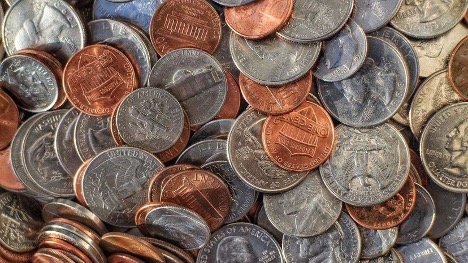
President Trump has put forward some good ideas in the first few weeks of his presidency, and some very bad ones, such as imposing “reciprocal tariffs” and ending birthright citizenship. But one of his good ideas that I hope comes to reality is eliminating the next to worthless U.S. penny.
The penny is more trouble than it’s worth for the individual consumer. When I was a kid, I could actually buy a piece of candy for a penny or two at Joe Bracco’s Variety Store in West Salem, WI. But today the value of a penny has been so eroded by inflation that there is virtually nothing you can buy for one or two pennies. Pennies are only used to make precise change in a cash transaction, and even then I often find myself saying to the cashier, “Keep the pennies!”
For the U.S. government the penny is not just an inconvenience but a significant money loser. According to the U.S. Mint, the cost of producing a penny in fiscal year 2024 was 3.7 cents. The mint reports that it lost a total of $85 million on the approximately 3.2 billion pennies it minted last year. (It reminds me of the joke I heard from a college accounting professor that, “Sure, we may be losing money on each sale, but we can make up for it in volume.”)
A story in the New York Times Magazine last year, “America Must Free Itself from the Tyranny of the Penny” by Caity Weaver, laid bare the absurdities of the U.S. penny. Because the penny is such a nuisance, the article notes, Americans don’t even bother to use the pennies they acquire. Instead, they pile up in mason jars and piggy banks. Estimates are that 240 billion pennies are lying idle and out of circulation in the United States. That’s $2.4 billion of dead capital.
Defenders of the penny raise fears that it will lead to price increases as retailers round prices up to the nearest 5-cent increment. This may happen on a one-time, limited basis. But I could see it going the other way, as something for sale at $2.99 drops to $2.95 to accommodate cash sales and still retain the appeal of being $2 and something. More than 80 percent of U.S. retail transactions are electronic, anyway, and wouldn’t be affected.
Canada, Australia, and New Zealand all ditched their versions of the penny years ago and saw no general increase in prices. A study mentioned in the New York Times article found that, when the penny was eliminated in Canada, retailers were as likely to round cash prices down to the nearest nickel as up.
One final pet peeve on coinage: While President Trump is issuing a directive to eliminate the penny, I wish he would sign something to promote creation of a usable U.S. $1 coin. The U.S. Mint tried introducing the Susan B. Anthony and Sacagawea one-dollar coins years ago, but they didn’t catch on. My theory is they were too close in size and weight to the U.S. quarter. When people fumble in their pockets for change, they want to be able to quickly sort one coin from another.
It’s time to go back to the drawing board for a new, distinct $1 coin. Canada and the United Kingdom have one-dollar and one-pound coins, respectively, that are widely used. In my many years of visiting the UK, I have always appreciated the small, thick one-pound coin that I could easily identify by feel in my pocket. Unlike at home, I could buy a sandwich and coffee with the coins in my pocket. Both Canada and the UK eliminated the paper-equivalent of the coins, saving millions from not having to print bills that wear out in a few years.
If in his second term President Trump could swap out the penny in exchange for a usable $1 coin, the U.S. government could save tens of millions of dollars a year and Americans could carry coins in their pocket that are a far more convenient match for how they actually spend their cash.
During a stay with family Out West this month, we took a week to visit four national parks and a national monument in Utah and Colorado. The late-fall weather was perfect and the experience reminded me of the wonders we enjoy in this country of God’s handiwork.
Earlier this month, Elizabeth and I embarked from Colorado Springs with our daughter-in-law and grandson to explore Dinosaur National Monument, and Capitol Reef, Arches, Canyonlands, and Mesa Verde national parks. I won’t load up this post with a lot of facts about the parks, which you can find online, but I will share a few personal highlights and favorite photos. If you haven’t seen these places, I hope this will inspire you to make the time to enjoy these special places.
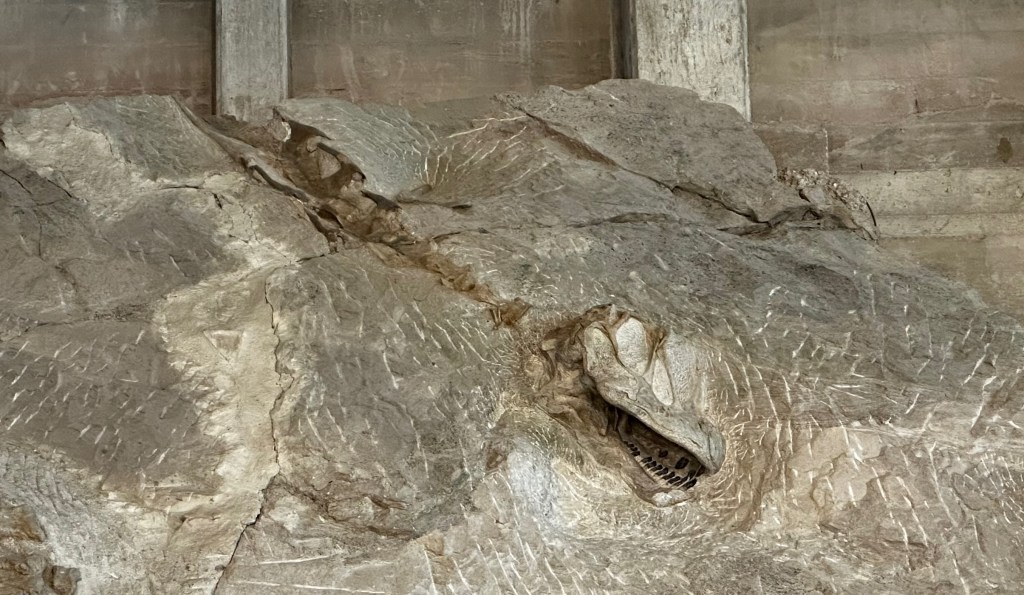
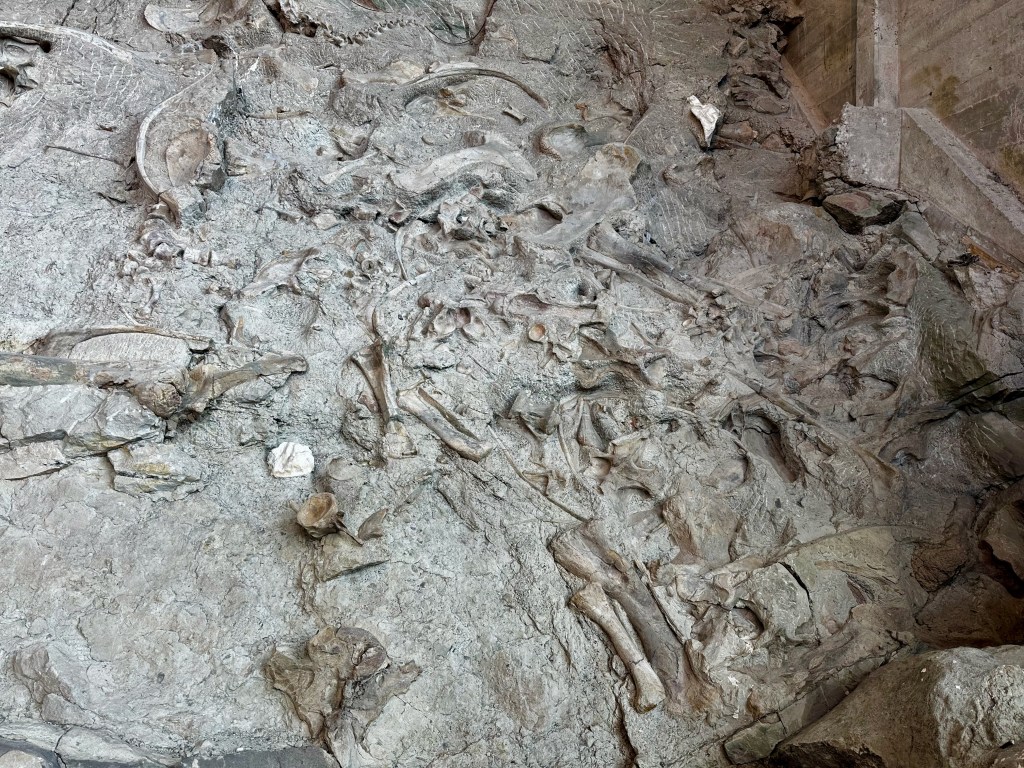
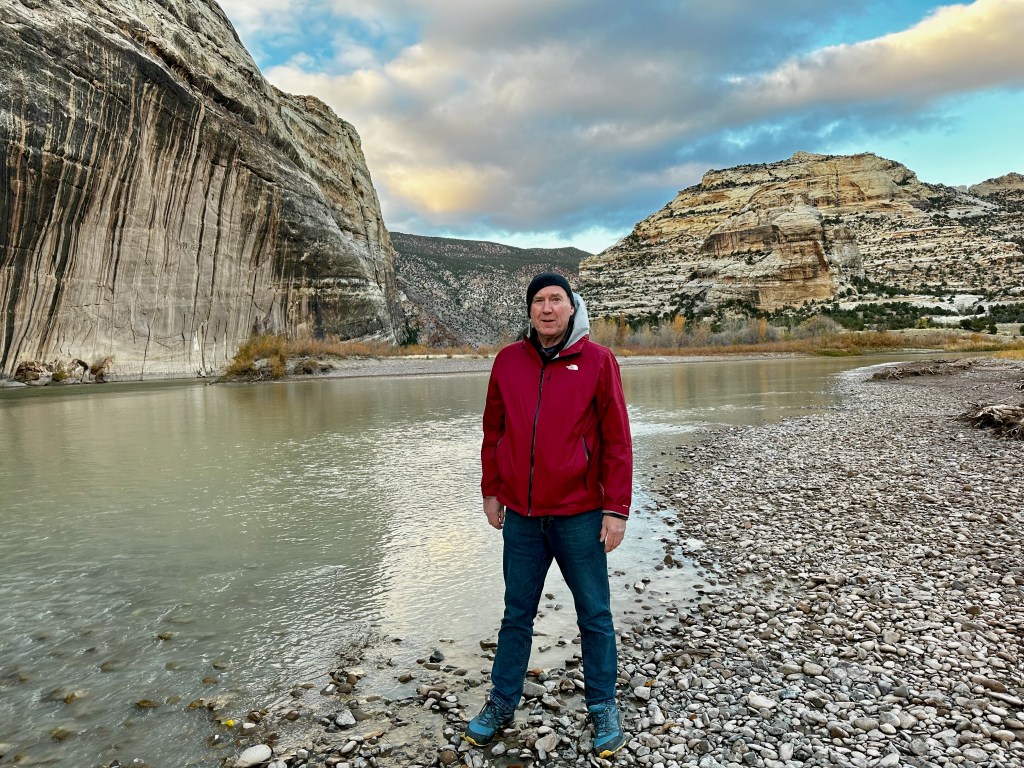
On Wednesday, November 6, we visited Dinosaur National Monument. The monument occupies the far northwest corner of Colorado and a slice of Utah. At the Utah entrance, we saw what is called a “logjam” of dinosaur bones embedded in a hillside. The fossils date back to 149 million years ago. Outside the museum and visitor center, we stopped to view flocks of Canadian geese and sandhill cranes gathering on the Green River, and a large herd of elk feeding in an irrigated field beyond the river. Later that afternoon, on the Colorado side of the monument, we drove our F-150 pickup truck 12 miles and 2,000 feet down an unpaved road to the confluence of the Green and Yampa rivers. It was at this meeting point in 1869 that the explorer John Wesley Powell and his team beached their rafts for a rest after shooting rapids in the upper Green River. We viewed unusual petroglyphs on the Utah side and on our way to the confluence.
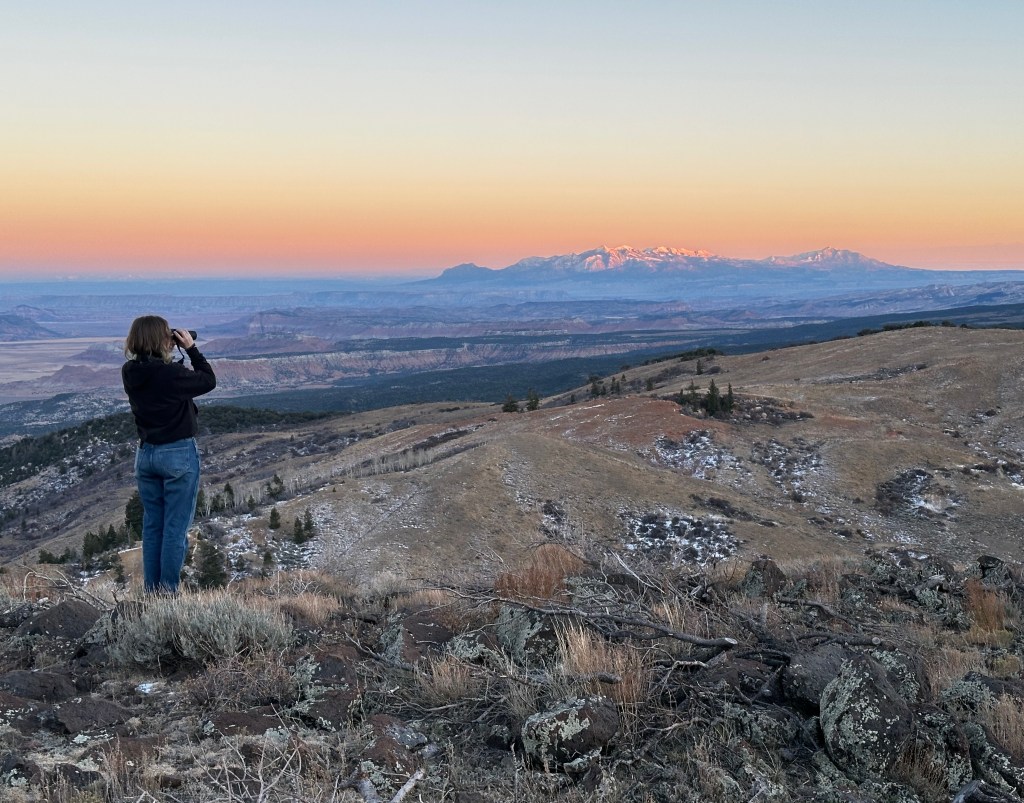
The next day we drove from Vernal, Utah, to Torrey, Utah, stopping to spend a couple of hours in the Dinosaur Museum State Park in Vernal. Our grandson enjoyed the exhibits. Later in the afternoon we stopped along Highway 10 to watch the orange-red rays of dusk fall on the Henry Mountains to the east.
On Friday, we explored a section of Capitol Reef National Park, which encompasses a 100-mile escarpment known as the Waterpocket Fold. We weren’t able to drive the nine-mile scenic road along the fold because of ongoing road improvements that had kept that section closed since May. We spent most of the day near the visitor center and the historic Morman settler community known as Fruita. Using irrigation from the nearby Freeman River, the settlers grew apples, peaches, pears, walnuts, almonds and other produce. The four of us hiked about 2.5 miles roundtrip to Hickman Bridge, a soaring arch up the escarpment and north of the river. For lunch, we enjoyed a small but delicious apple pie sold at the Gifford House and Museum Store. Along a boardwalk, we viewed yet more petroglyphs. We also spotted an orange-breasted bird that my amateur ornithologist friend Bill Evans told us has only recently been spotted in Utah. Later that day we drove on to Moab, Utah, stopping at Green River for dinner, where I enjoyed a local brew called “Polygamy Porter.”
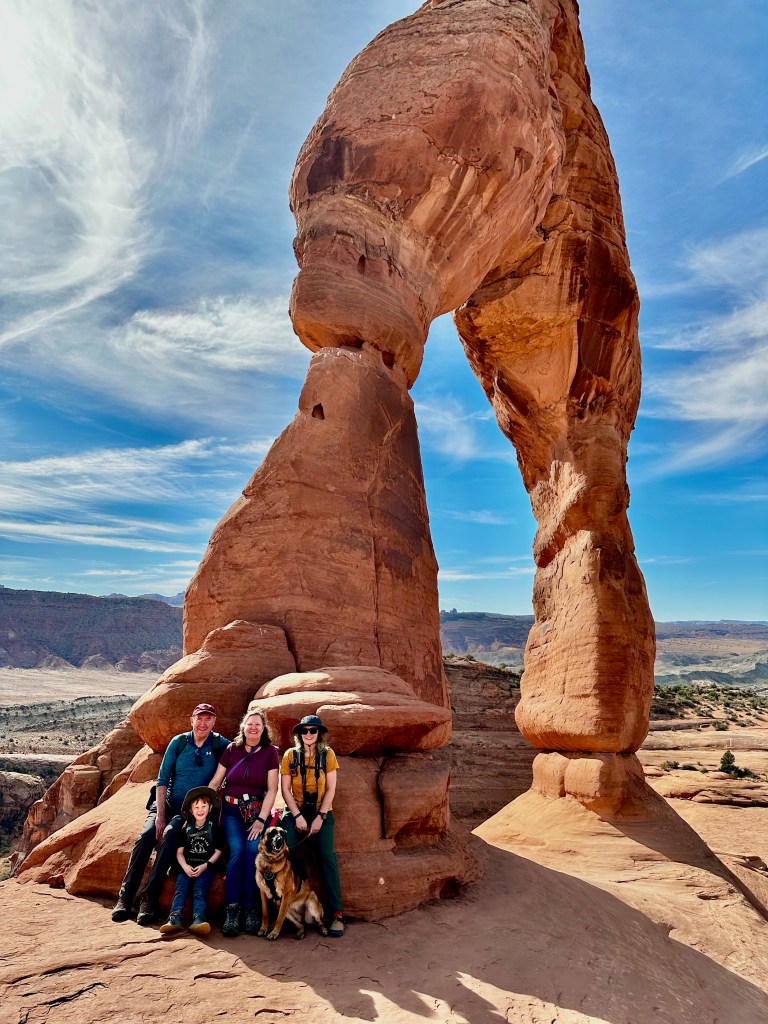
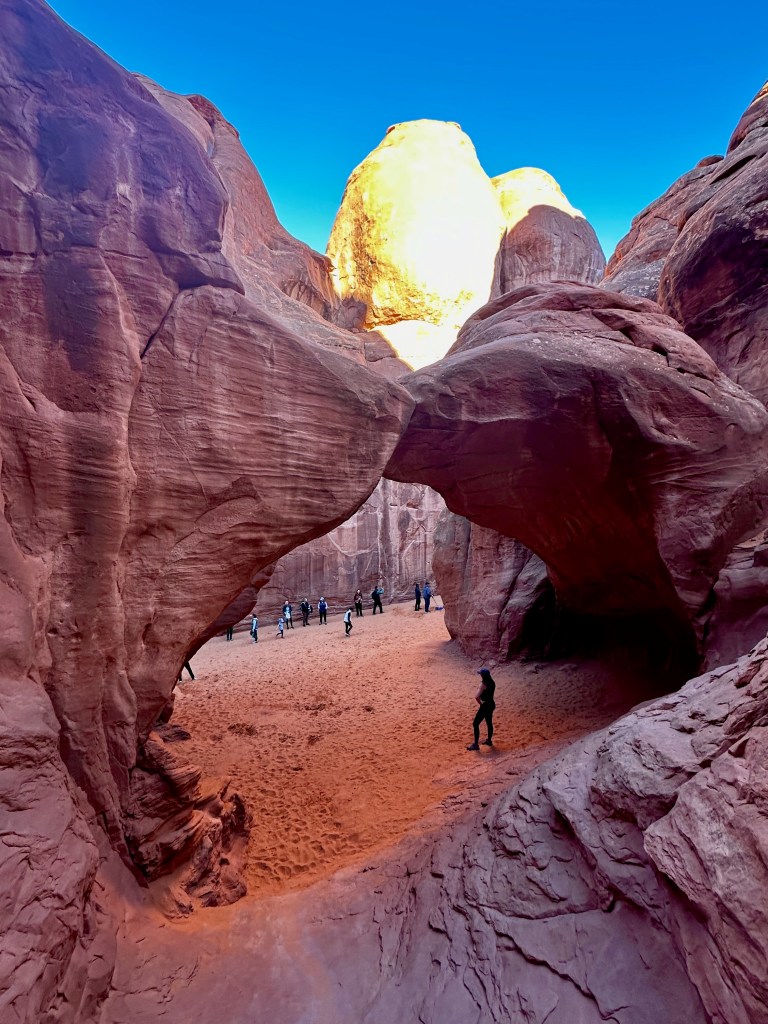
On Saturday, we explored parts of Arches National Park. All of us hiked more than three miles round trip to the famous Delicate Arch, the iconic formation that can be seen on the Utah license plate. We enjoyed our snacks and drinks near the arch and waited our tuns to have our photo taken alongside and underneath it. On the way back from the Delicate Arch hike, we viewed more petroglyphs, including some showing what appears to be Indians on horseback. I was taught growing up that horses only came to America with the European settlers, so these were either post-Columbus petroglyphs or, as some maintain, certain breeds of horses actually existed in America before 1492. (Dear readers, feel free to weigh in with a comment!) Further down the road our grandson enjoyed the cool sand and the shade of Sand Dune Arch. We saw a few of the parks 2,000 other arches from a distance.
In anticipation of our trip, I read Edward Abbey’s book from the 1960s, Desert Solitaire. The book is based around a summer season he spent as a park ranger at Arches N.P. I didn’t agree with his occasional and mercifully brief rants against modernity, cars, cities, and people, but I did relish his descriptions of the Utah desert landscape, flora, and fauna. Here’s what he said about the object of our main hike in the park:
“If Delicate Arch has any significance it lies, I will venture, in the power of the odd and unexpected to startle the senses and surprise the mind out of their ruts of habit, to compel us into a reawakened awareness of the wonderful—that which is full of wonder. A weird, lovely, fantastic object out of nature like Delicate Arch has the curious ability to remind us—like rock and sunlight and wind and wilderness—that out there is a different world, older and greater and deeper by far than ours, a world which surrounds and sustains the little world of men as sea and sky surround and sustain a ship.”
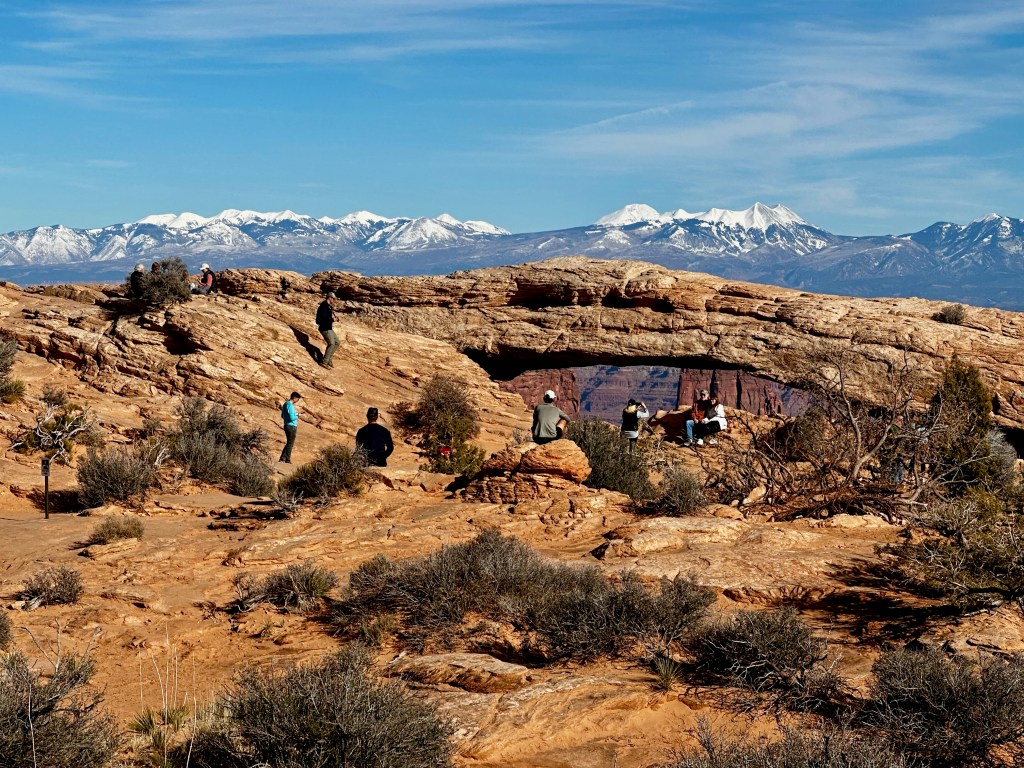
On Sunday, from our base in Moab, we explored Canyonlands National Park. The park surrounds the confluence of the Colorado and Green rivers, which naturally divides it into three districts. On the first day Elizabeth and I drove into the northern Island in the Sky district, driving to the Grand View Overlook. From there we hiked about a mile out and back along a trail that skirts the upper rim of the canyon wall. On the drive back I took a short hike to Mesa Arch, which beautifully framed the snow-capped La Sal Mountains to the east. We ended the day by giving the F-150 another workout, this time on the 4WD, high-clearance Schaefer Canyon Road that snakes down the canyon-side in a series a switchbacks, stalking the Colorado River back to Moab. As we drove along the paved Potash Road on the final stretch, we viewed more petroglyphs on the left side of the road and the rays of the setting sun over the Colorado River on the right.
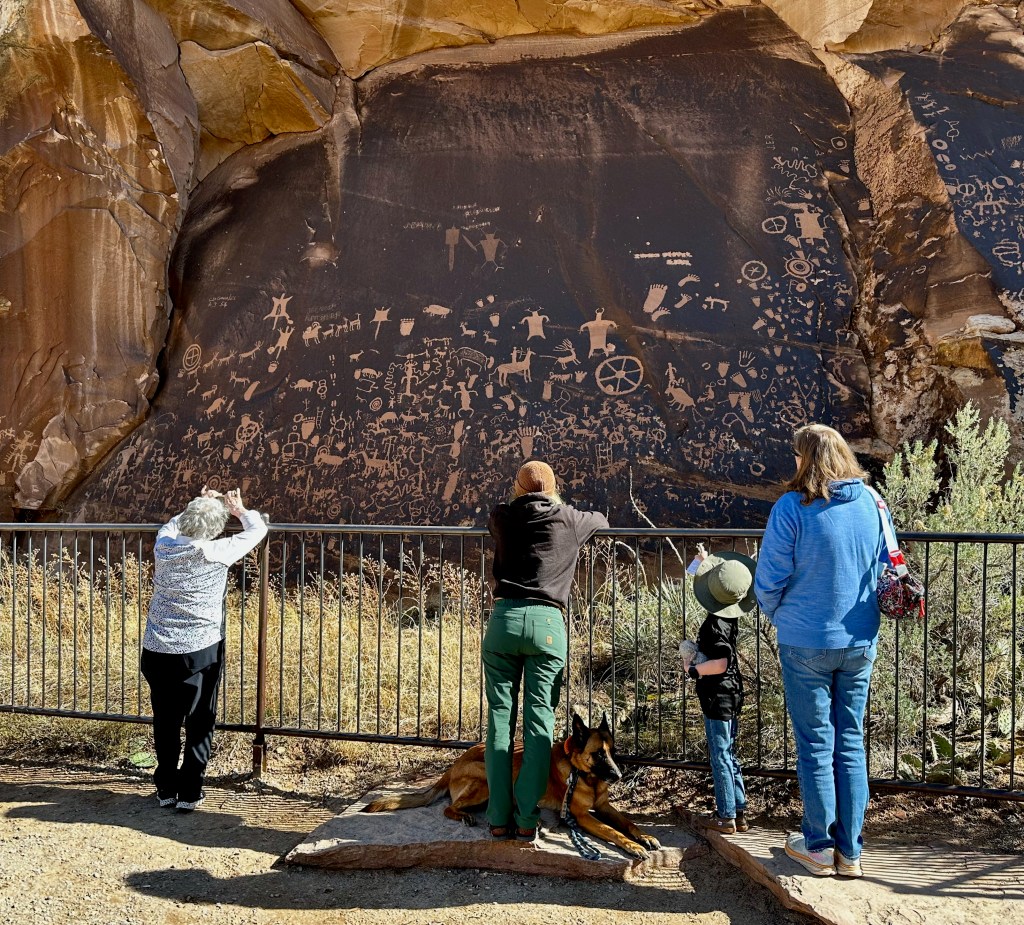
On Monday, we decamped from Moab and stopped to visit the Needles district of the park, which lies to the east of the Colorado River. Along the road to the visitor center, we saw the “Newspaper” petroglyphs. The adorned rock face got its name from the busy mosaic of some 650 images. After stopping at the visitor center, our daughter-in-law drove the truck a few miles down the unpaved Elephant Hill Road. From there we could see in the distance the Needles, a forest of chimney-like rock formations. Our final activity of the day was a short hike on the Cave Spring Trail. The trail follows a series of coves, one containing the remnants of a cowboy camp and another a shallow spring coming out of the rockface. Our grandson enjoyed climbing the two ladders provided by the park service to reach an upper rock ledge, and the series of cairns that directed us back to the trailhead.
On Tuesday, after driving the evening before to Cortez, Colorado, we joined two friends of mine from Durango for a few hours in Mesa Verde National Park. The park was partly closed for the winter season, so there were no guided tours into the cliff dwellings. Instead we experienced the dwellings from a distance, learning more about them at the visitors center and the excellent museum inside the park and viewing them from the overlooks. I only came to appreciate in the past few years that the more elaborate houses built under the cliff overhangs were erected in the 1200s, relatively late in the time period that the Pueblo Indians inhabited Mesa Verde. I had visited this park several times in the past, most recently in 2017 when my son and I took one of the climbing tours into the dwellings.
On Wednesday, our adventure drew to a close when we drove from Durango through the San Luis Valley and up Interstate 25 to Colorado Springs. The highlights of that day were stopping in the valley to buy a couple of fruit pies from the Amish-run “Worth The Drive Bakery” outside Monte Vista and driving slowly by the Chuck Asay Boyhood Home in Alamosa. The National Park Service is awaiting final approval from the incoming Trump administration to install the appropriate plaque on the modest brick home.
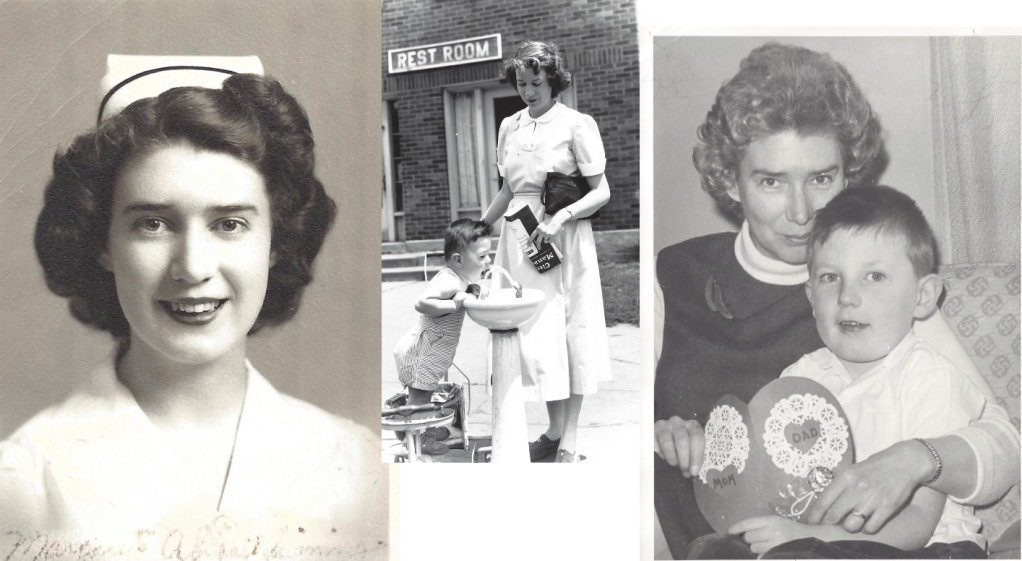
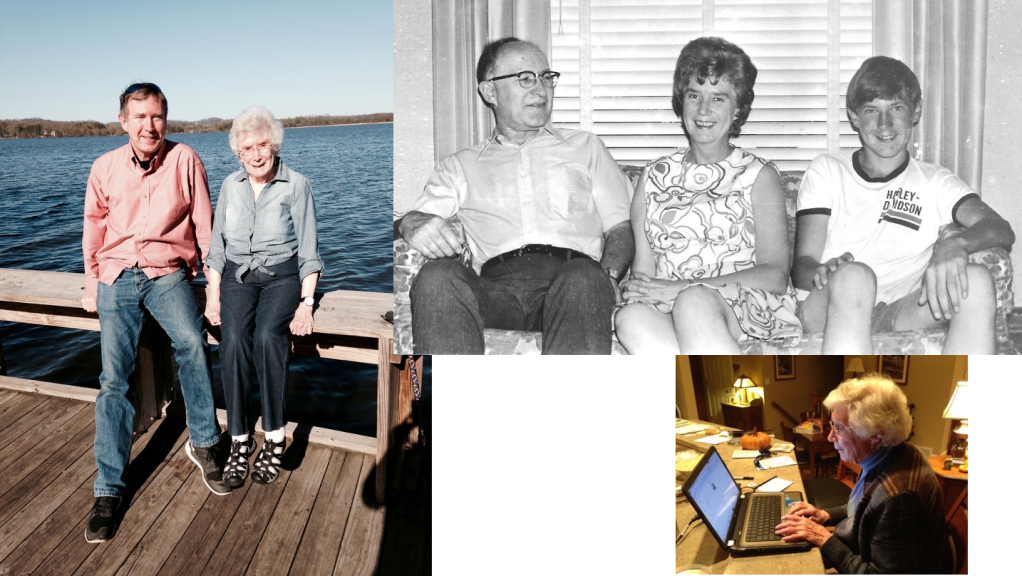
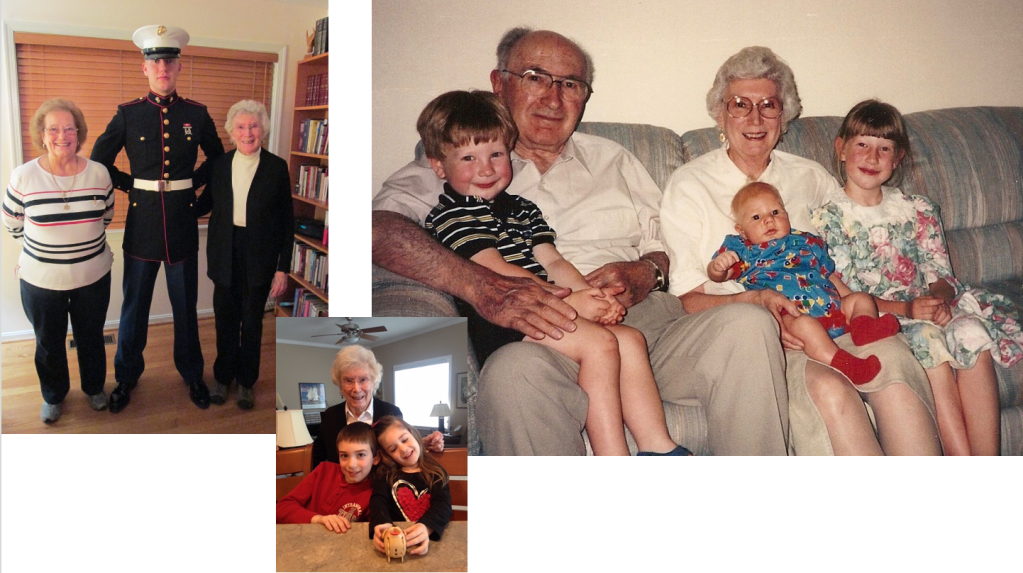
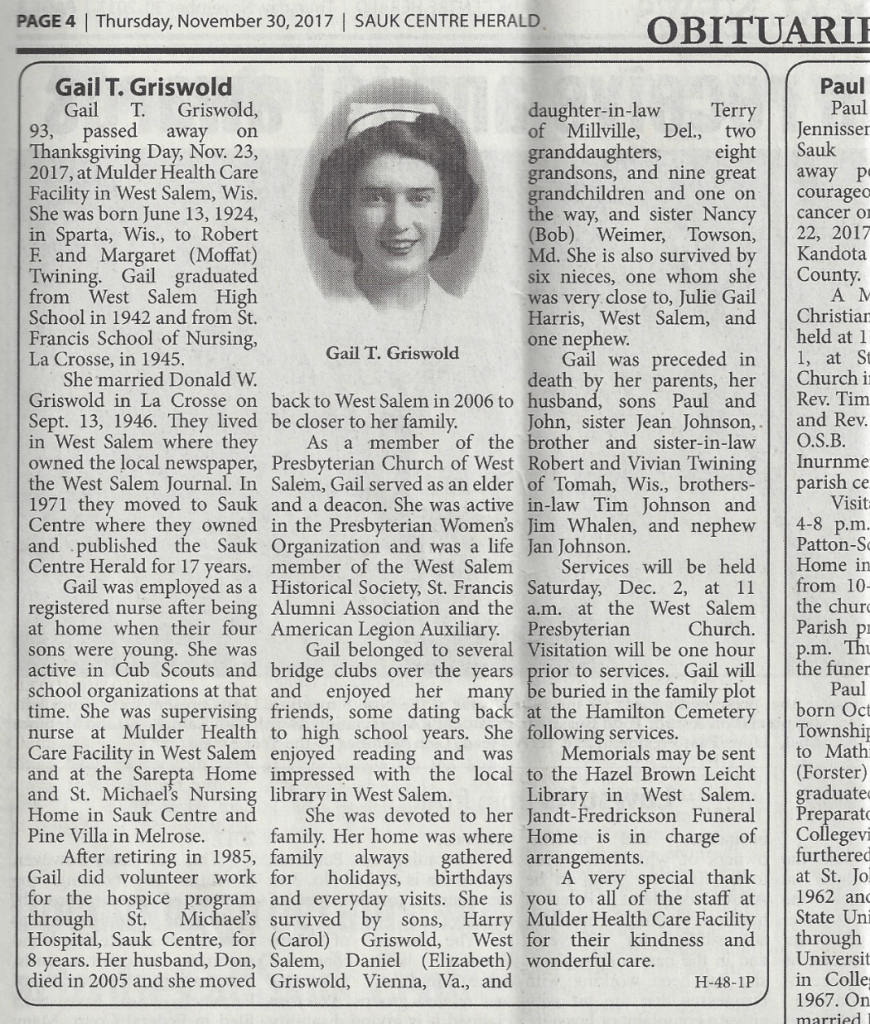
Today would be my mother’s 100th birthday. Gail Griswold was born on June 13, 1924, in Sparta, WI, and she passed away on Thanksgiving Day, November 23, 2017, in West Salem, WI, age 93. She lived a life full of friendships, love of family, and service to her church and neighbors.
She and my Dad, Donald Griswold, were good parents and set an example for our entire extended family. They were truly part of “the Greatest Generation.” Among their legacies are three granddaughters, eight grandsons and 16 great grandchildren!
In honor of Mom, I’m posting favorite photos, the eulogy I gave at her funeral, an obituary from the Sauk Centre Herald, and a bonus anecdote about my Mom’s one shining moment in cribbage.
***
Eulogy for Gail Griswold, West Salem Presbyterian Church, December 2, 2017, delivered by her son, Daniel Griswold:
Gail was the best mom, the best wife, the best sister, the best aunt, the best grandmother, and the best great grandmother.
Mom came from a humble background, but despite that or maybe because of that she appreciated the finer things in life. She was always well dressed and she kept a beautiful and hospitable home. She exposed me to things that I wouldn’t have naturally gravitated toward such as Russian literature and classical music.
She and Dad supported my education through college and graduate school. She gave us cars and furniture. I was always kind of afraid to mention a need to Mom because she would want to give us what she had.
She was a faithful wife to our dad. She cared for him in his final years and gave him the best home health care a man could have. As my dad said, she was his “phantom of delight.”
Mom gave us a great example of Christian service and humility. She served people through her work at the church, the nursing home, and as a hospice volunteer.
When I was a kid there were days when I would come home from the old West Salem Elementary School to our house on Youlon Street to find a young handicapped woman named Judy Berra sitting on our living room floor. Judy had a severe disability and was a resident at Mulder Nursing Home where Mom worked. Mom would bring her home so she could enjoy a few hours in a family home. She adored my mom. I’m told that Judy would be seen sitting on the floor at the nurses’ station hanging on my mom’s skirt.
Mom’s home was always our home whenever we had family gatherings. I know I speak for Harry when I say how much we enjoyed our gatherings in the summer at a cottage on Fairy Lake outside Sauk Centre, Minnesota. Like so many good things in life, it all happened kind of by accident.
Mom and Dad and I first rented the cottage when we moved from West Salem to Sauk Centre in the summer of 1971 because the house my parents bought wasn’t ready to move into yet. Mom and Dad rented the cottage every summer after that for 17 years.
We had such good times there with Mom and Dad and our kids. My family would stay in town at Mom and Dad’s, Harry’s family would stay out at the cottage, and John’s family in a local hotel. My dad, always setting a good example of the protestant work ethic, would never come out until 5 p.m. after he’d put in a full day at the newspaper.
Mom was so competent and capable for her entire life up until the last year and a half or so that it was sometimes hard for her to accept not always being able to remember what she wanted to. A couple of years ago we were talking on the phone and she was trying to remember something about me and was getting things confused with my three older brothers.
She said, “Sometimes I think I had one kid too many.”
I said, “Mom, I wouldn’t put it quite like that!”
My Mom was a faithful Christian woman. She read the Bible and prayed and served the church her entire adult life.
There are two passages in the Bible that whenever I read them I think of our dear mother. In Matthew 25, Jesus tells the parable of the talents. The point of the story is not who has the most talents, but who makes the most of the talents their master has given them.
Mom was a woman of ability and accomplishment, but she had to overcome a childhood that was poor even by the standards of the Great Depression. My mom took those talents God gave her and made the most of them. She worked to put herself through nursing school during the war. She and dad created a loving, stable, middle-class home for us four boys.
In the parable of the talents, the master calls on his servant who was given two talents to give an account of what they had done with what God had given them:
And the servant also who had the two talents came forward, saying, ‘Master, you delivered to me two talents; here, I have made two talents more.’ The master said to the servant, ‘Well done, good and faithful servant. You have been faithful over a little; I will set you over much. Enter into the joy of your master.’
The other passage that always makes me think of Mom is Psalm 23. She told me when I was a kid that she loved that Psalm because of the beautiful language, especially the King James Version. It’s also a fitting psalm for my mother’s life–for the challenges she faced, the trust she put in God, and her hope in the life to come.
The Lord is my shepherd; I shall not want. He maketh me to lie down in green pastures; He leadeth me beside the still waters. He restoreth my soul; He leadeth me in the paths of righteousness For His name’s sake.
Yea, though I walk through the valley of the shadow of death, I will fear no evil; For Thou art with me; Thy rod and Thy staff, they comfort me.
Thou preparest a table before me in the presence of my enemies; Thou anoint my head with oil; My cup runs over. Surely goodness and mercy shall follow me All the days of my life; And I will dwell in the house of the Lord Forever.
We love you, Mom. Enjoy your eternal reward in the house of the Lord.
***
***
Mom grew up playing cribbage with her father, my Grandpa Twining. And at some point in my childhood she passed along the rules of the game. We would usually play a few games whenever I came home to visit.
If you’ve never played cribbage, it’s a card game where you keep score by moving pegs along a board. The boards can come in all sorts of styles, but they all have 60 or 120 holes per player. The winner is the first person to cross the finish line at 120 points. A typical hand will score four to eight points, and anything over 20 is worth celebrating.
Mom told me that in one game with her own dad, when she was probably a teen-ager, she scored a 29– the absolute top score possible in cribbage and a very rare hand. According to Google, in the two-person games we typically play, “The odds of getting a perfect 29 hand in cribbage are 1 in 216,580…” * Mom said that her dad was so excited about her feat that he told everybody in town. Spreading of the news probably started downtown in Krome’s Bar.
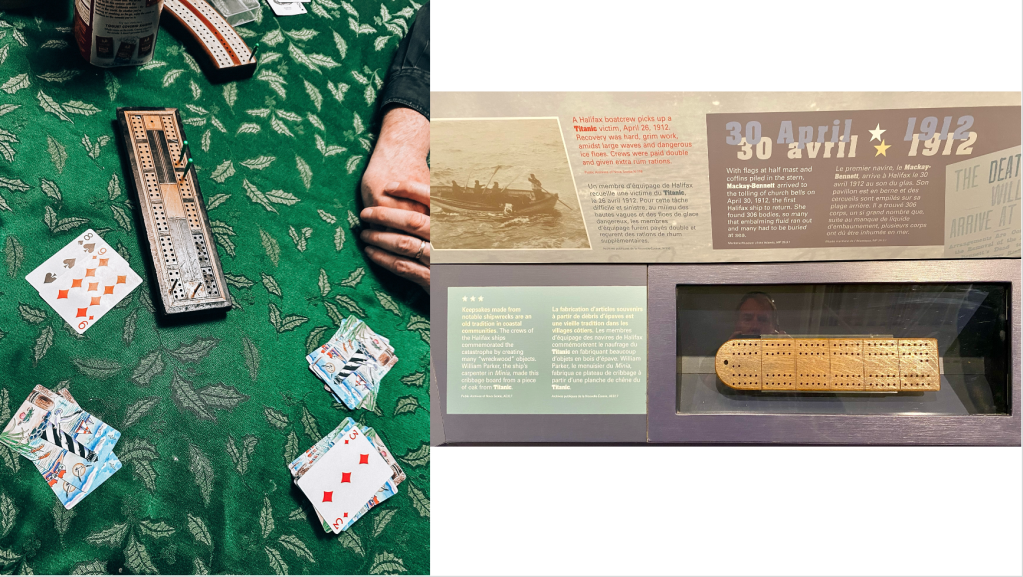
As a postscript, I sometimes play cribbage with my kids when they visit. When my daughter Emily and I played in March, we used the well-worn board my mother passed along to me. I can’t remember if she told me for sure, but I like to think it’s the board on which she counted off her legendary 29!
Left: Emily and I playing cribbage in March on my Mom’s old board. Right: A cribbage board Elizabeth and I saw in September 2022 at the Maritime Museum in Halifax, Nova Scotia. It was fashioned by a ship’s carpenter from a piece of oak from the Titanic.
* Again, from a website turned up by Google: “A perfect hand is 29 points, and it happens when a player holds three fives and a jack, then obtains the other five when the “cut” card is turned over. The final five must be the same suit as the jack.”
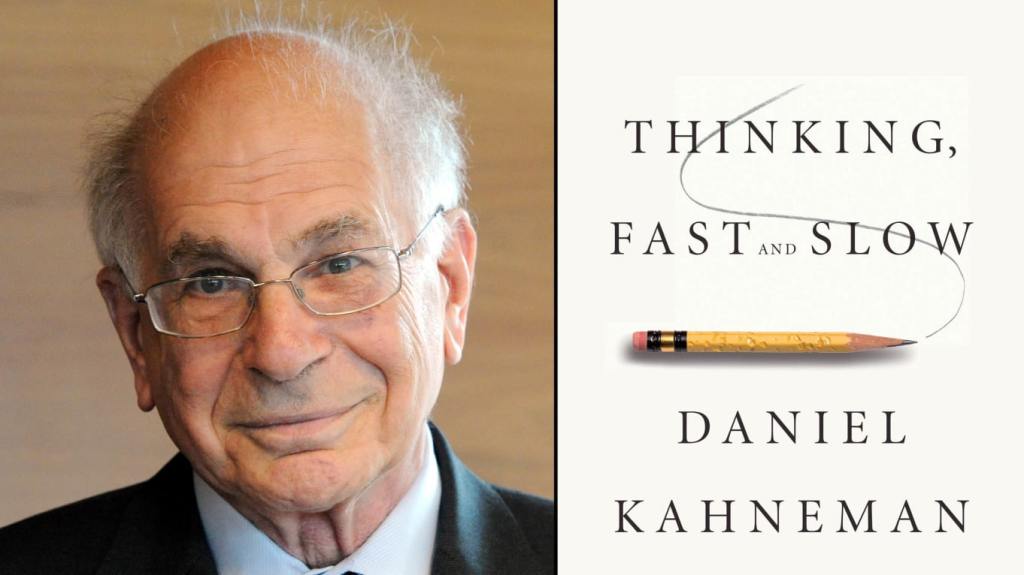
The behavioral economist Daniel Khaneman passed away at age 90 earlier this spring. I finally got around to reading his 2011 bestseller, Thinking, Fast and Slow, last fall and gained a lot of insight from it, both for my personal life and for public policy.
Most of us would consider it more of a compliment to be called a fast thinker than a slow one, but the book helped me understand that we often jump to conclusions too quickly when we should slow down and be more deliberate and methodical in how we make decisions. Our intuitions often lead us astray.
The core theme of the book is what Kahneman calls “a puzzling limitation of our mind: our excessive confidence in what we believe we know, and our apparent inability to acknowledge the full extent of our ignorance and the uncertainty of the world we live in. We are prone to overestimate how much we understand about the world and to underestimate the role of chance in events. Overconfidence is fed by the illusory certainty of hindsight” (p. 13).
This weakness in our human nature gives rise to the phenomenon we often observe in the public arena: that the less people actually know about a subject, the more confident they are in their opinions. (This even has a name: “the Dunning-Kruger effect.”) It explains why the much-derided experts can seem to hedge their opinions. It’s not that they are intentionally waffling, but that they can see better than most that particular circumstances can be complicated and nuanced.
“Paradoxically, it is easier to construct a coherent story when you know little, when there are fewer pieces to fit into the puzzle. Our comforting conviction that the world makes sense rests on a secure foundation: our almost unlimited ability to ignore our ignorance,” the author writes on p. 201. That’s something I need to remind myself of more often.
Kahneman argues that we would be better off, as individuals and as a society, it we relied more on statistical averages and algorithms rather than intuitive judgments. (The dictionary defines an algorithm as “a process or set of rules to be followed in calculations or other problem-solving operations, especially by a computer.”) Statistics can offer a base-line probability for assessing risk, a measure of real-world outcomes as opposed to our preconceived notions.
When we combine the broader frame of reference that statistics allow with an algorithm, we make better decisions. The author agrees with proponents of algorithms who “have argued strongly that it is unethical to rely on intuitive judgments for important decisions if an algorithm is available that will make fewer mistakes. …simple, statistical rules are superior to intuitive ‘clinical’ judgments” (pp. 229-30). To me, this all argues for using artificial intelligence to analyze problems and guide our decision making. No system is perfect, but relying on well-informed algorithms can help us avoid the pitfalls of our own distorted judgments.
Another weakness in our all-too-human judgments is that we tend to exaggerate low-probability outcomes, on the good side and the bad side. That means we can over-insure against risks that have a low enough probability that we could safely ignore them as a practical matter. It also means we tend to exaggerate our chances of winning the lottery. Both assumptions can cost us money and lost opportunities—as individuals and collectively.
Kahneman cites the jurist Cass Sunstein, who’s criticized the European Union’s “precautionary principle” as an example of over-weighting potential risks to society. A strict interpretation of the rule threatens to paralyze potentially beneficial innovations. Sunstein lists a number of accepted innovations that would not have passed the test if it had been enforced in the past, including “airplanes, air conditioning, antibiotics, automobiles, chlorine, the measles vaccine, open-heart surgery, radio, refrigeration, smallpox vaccine, and X-rays” (p. 351).
Kahneman’s insights have a lot of applications in day-to-day life. If you watch sports on TV, you’ve probably heard announces say a certain player who’s made a few shots in a row has a “hot hand.” But the author cites research that shows what we think is a pattern is really just a random variation. Steph Curry can nail five 3-pointers in a row, but that can be just as random as flipping a coin and having it come up heads five times in a row. The next flip (or shot) is no more likely to come up heads (or go in) than any of the last five. Khaneman writes that we “are consistently too quick to perceive order and causality in randomness” (p. 116).
[I tested this idea with a Python program that simulated a basketball player shooting dozens, hundreds, even thousands of shots in a row. If you program in a 40 percent chance of making a 3-point shot, and feed through randomly generated numbers, sure enough it will show the virtual player making five, six, seven shots in a row, but then missing a bunch in a row as well. The strings of makes and misses my program produced were neither hot nor cold, but just random.]
Kahneman applies this insight to the casino. We’re all too prone to the “Gambler’s fallacy,” the belief that after a long run of red on the roulette wheel, black is now “due.” In fact, the odds are still exactly the same. He writes: “Chance is commonly viewed as a self-correcting process in which a deviation in one direction induces a deviation in the opposite direction to restore the equilibrium. In fact, deviations are not ‘corrected’ as a chance process unfolds, they are merely diluted” (p. 422).
The book argues for “broad framing”— considering the total outcomes over multiple events, not just what might happen today. This is why we should buy high-deductible insurance, skip extended warranties, and not check our stock portfolio very often. Regarding stocks, the insights from the book argue for the “random walk” approach of owning a broad portfolio of stocks and holding them for the long run.
We tend to fear the loss of a certain amount more than we desire gaining the same amount—what Kahneman’s profession calls “loss aversion.” To get someone to risk losing $100 if a coin flip comes up tails, studies show you need to offer them at least $200 if it comes up heads. This is why an exhaustive study found that “professional golfers putt more accurately for par than for a birdie” (p. 300). The pain of a bogey outweighs the pleasure of birdie. It’s why consumers will accept a cash discount at the gas station but will rebel at a credit-card surcharge, even if the outcome is the same.
I could go on about the insights from this book. It made me think more deeply and I hope more slowly and methodically about the decisions I make every day. May I be more humble in my judgments as I try to make sense of this complex world we live in.
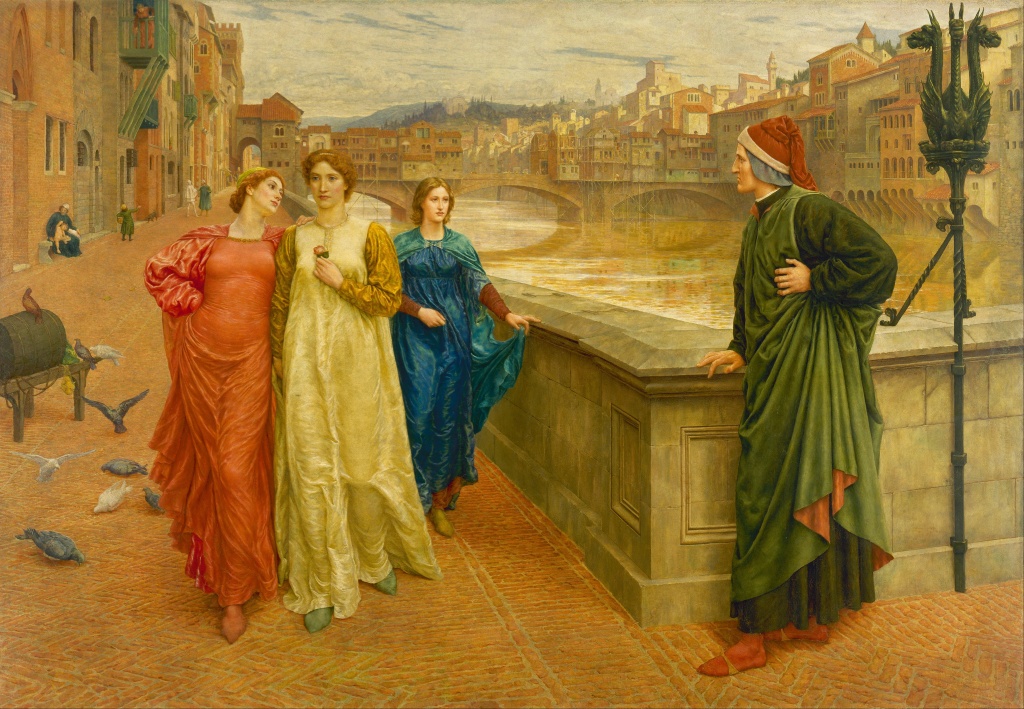
When I was a grade-school kid growing up in a small town in western Wisconsin, my Mom had a picture hanging in our house that showed four figures in a medieval cityscape. I walked past the picture a thousand times without ever asking what it was about.
I did steal a glance at the painting often enough that its general composition etched itself into my memory. The two things that struck me most about the picture back then were their strange footwear–thin sandals and silky tights, even for the man!–and the fact that the three women were rather plain looking in my pre-adolescent male opinion.
Fast-forward more than 50 years later. A few weeks ago, I was watching an excellent two-part PBS special, “Dante: Inferno to Paradise.” In four hours, the special told the story of “The Divine Comedy,” the epic work by the Italian poet Dante Alighieri about a journey through hell, purgatory, and heaven. At one point, the screen flashed with the painting that had been hanging in our living room on Youlon Street.
So that was Dante I was gazing at all those years ago! While I had no idea who he was back then, as an adult I’ve come to admire him and his masterwork. I’ve read the John Ciardi translation (New York: W.W. Norton & Company, 1970), the Rod Dreher book, How Dante Can Save Your Life: The Life-Changing Wisdom of History’s Greatest Poem, and audited the free and engrossing Hillsdale College online course on Dante and his poem.
After the PBS show I learned online that the original was painted by Henry Holiday in 1882-84 and hangs in the Walker Gallery in Liverpool, England. It depicts Dante encountering his love interest Beatrice (wearing the white dress) in Florence, Italy, back in the late 1200s. He was infatuated with Beatrice, but she and her companions rebuffed him because of unfavorable rumors about Dante. Beatrice married another and died young, but Dante could never forget her.
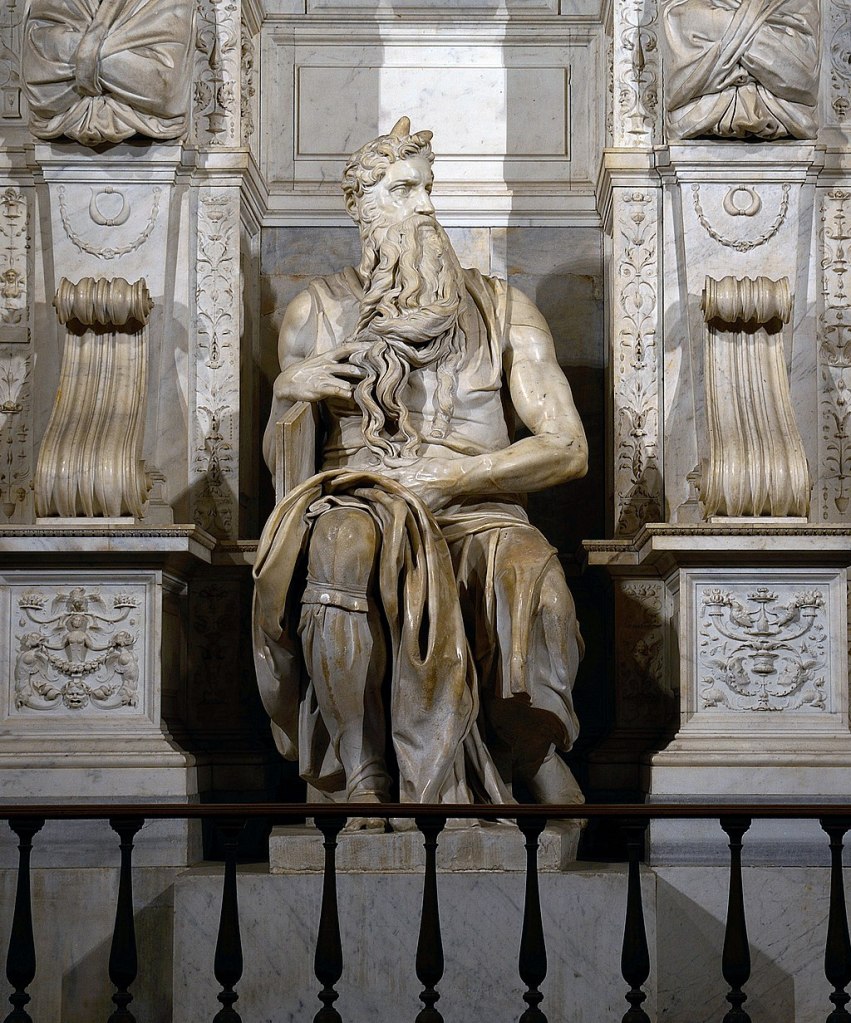
Connecting that picture in our house to Dante after all these years makes me appreciate my dear and late mother, Gail Griswold, all the more. She had an appreciation for the finer arts that were lost on me as a kid. The big wooden stereo box in our living room featured a two-foot-high replica of Michelangelo’s statue of Moses, with those funny little horns on his head that my Mom told me were rays from heaven. When she wasn’t busy raising four boys or working at the nursing home, she would read 19th century Russian novels and listen to Bolero and other works of classical music on the stereo.
How sweet it would be to go back in time to a quiet afternoon and ask my mother to explain to her 11-year-old son just who were those eccentric figures in the painting. She would have been equally surprised by the question and delighted to answer.




















 Daniel Griswold's Blog