Can you practice the Christian faith while rarely if ever attending a church service? It’s a question worth asking because I know a few people I consider friends who profess the faith but do not attend church in person. And I believe there are millions of Americans who sincerely identify as Christians who seldom set foot in a church.
My answer to the question is a heavily qualified yes. I can’t say with total confidence that a person who doesn’t go to church can’t be saved, but I also think that non-church-going Christians are misreading their Bible and missing out on the full plate of blessings God intends for his children.
Let’s start with what the Bible says. Throughout the New Testament, it’s assumed that believers are meeting regularly for teaching and worship. When Paul wrote his epistles, he was not just writing to Christians in general, but to specific churches meeting in Corinth, Ephesus, Thessalonica, and other cities in the Roman world. It’s plain from his letters that believers were gathering regularly for preaching, teaching, prayer, worship, singing, giving, and communion. His letters were full of instructions about how we should conduct ourselves in these regular meetings.
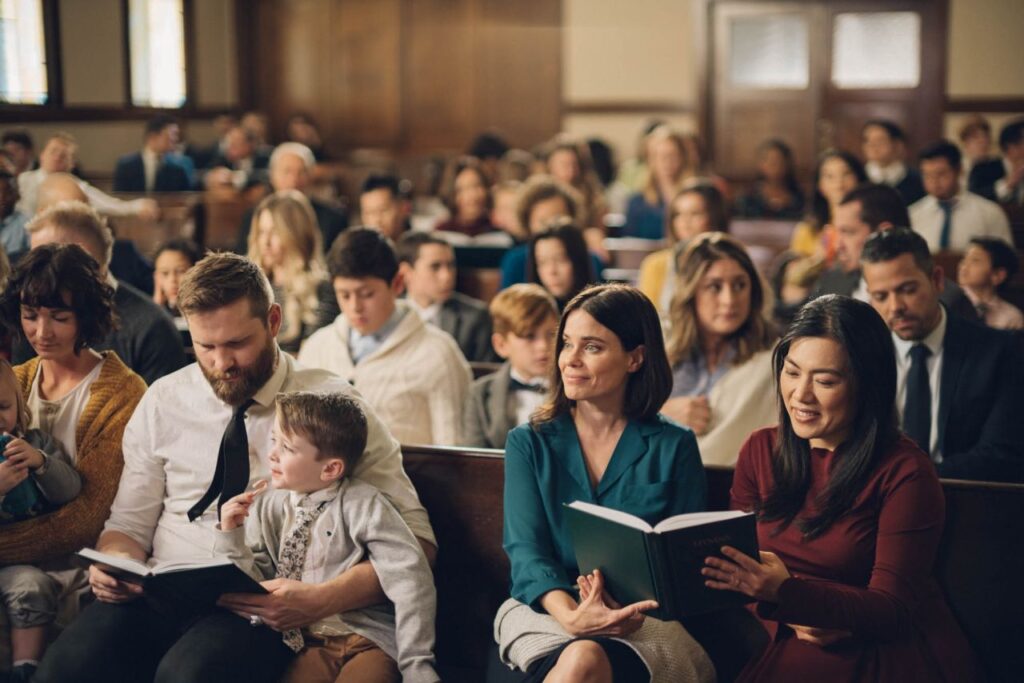
Nowhere is communal worship more obvious than in the sacrament of communion. When Jesus established communion with bread and wine at the Last Supper, he said, “Do this in remembrance of me.” In 1 Corinthians 11, Paul instructs us to examine ourselves before taking the bread and the wine. I’m not sure how a Christian can “do this” as the Lord commands if he or she is never in church. Communion by definition is a communal act with other believers, with a minister presiding over the sacrament. It can’t be done alone at home in front of a screen.
The Bible also teaches about accountability and church discipline. The writer of Hebrews (13:17) admonishes us that we should respect the elders of the church as those who must give account: “Obey your leaders and submit to them for they are keeping watch over your souls, as those who will have to give an account. Let them do this with joy and not with groaning, for that would be of no advantage to you.” Submitting to the authority of church leaders as they teach the Bible isn’t possible if we are all worshipping on our own outside the visible church.
In other places in the New Testament, the word is even more direct. In Hebrews 10:24-25 we read, “And let us consider how to stir up one another to love and good works, not neglecting to meet together, as is the habit of some, but encouraging one another, and all the more as you see the Day drawing near.” Again, I’m not sure how we can stir one another up to love and good works if we’re neglecting to meet together.
As one of my brothers in the Lord puts it, we are embodied beings who God created to enjoy fellowship in each other’s company. We are part of a larger church body, where we work together in a divine division of labor, each bringing our own talents for the benefit of the church. A Christian who is physically detached from the church body is like a foot or an ear standing on its own.
Zoom and livestreaming played an important role during Covid and can still open up valuable lines of communication–but they cannot substitute for worship and fellowship in the physical presence of others. Sharing an encouraging word, admiring a new-born baby, serving coffee, greeting a stranger – none of these touchpoints in the life of the church are possible if we are sitting home on Sunday morning.
One of the great blessings of public worship is singing together. It’s something that’s becoming less common in our secular age. But what a joy it is to join with 50 or 200 or 500 other people under the same roof singing “A Mighty Fortress is Our God” or one of those other wonderful hymns. As Paul reminds believers in Colossians 3:16, “Let the word of Christ dwell in you richly, teaching and admonishing one another in all wisdom, singing psalms and hymns and spiritual songs, with thankfulness in your hearts to God.”
Another great blessing from gathering on a Sunday is that we mix with people we probably wouldn’t normally associate with during the week. In secular society, we may socialize with co-workers, neighbors, or fellow members of a volunteer organization. But throughout the centuries meeting on the Sabbath has been one of society’s great levelers. While churchgoers share a common faith, they come in a wide variety of personality types and backgrounds—trust me on this! Church is a place where the laborer shares a pew with the lawyer, the elderly couple with the single mother, the independent voter with the Trump supporter. In church, we are all equal before the Lord.
No church is perfect. The pews are populated by imperfect people, recovering sinners just like you and me. The important thing is to find a church that preaches the word and practices the faith. They are out there, and not that hard to find if you spend some time searching. If one church doesn’t meet your expectations, visit another until you find one that meets the biblical standard. You and your faith will be rewarded, and God will be pleased.

 Daniel Griswold's Blog
Thanks for the sharing, Brother! Got to do the interpretation as volunteer the coming Sunday!
Thanks for this valuable reminder. I believe that the Church is the place where our economy, family, inner-life, spiritual power is revived and visited significantly. If one wants a big change in life, then serving and being served in the Church is the best alternative because God’s hand can easily pass through His servants for our good. But the very important thing to remember is the virtues of humbleness and love in times of egotistic temptations are mandatory in Church. This is because, as one grows in power, spirit of scrutinizing and judging the very leaders of the Church might tempt the saint.
God Bless You