BRIMLEY, Mich. – We’ve been traveling along the southeastern shore of Lake Superior, admiring the beautiful sandstone cliffs while learning more about why this stretch is called “The Shipwreck Coast of Lake Superior.”
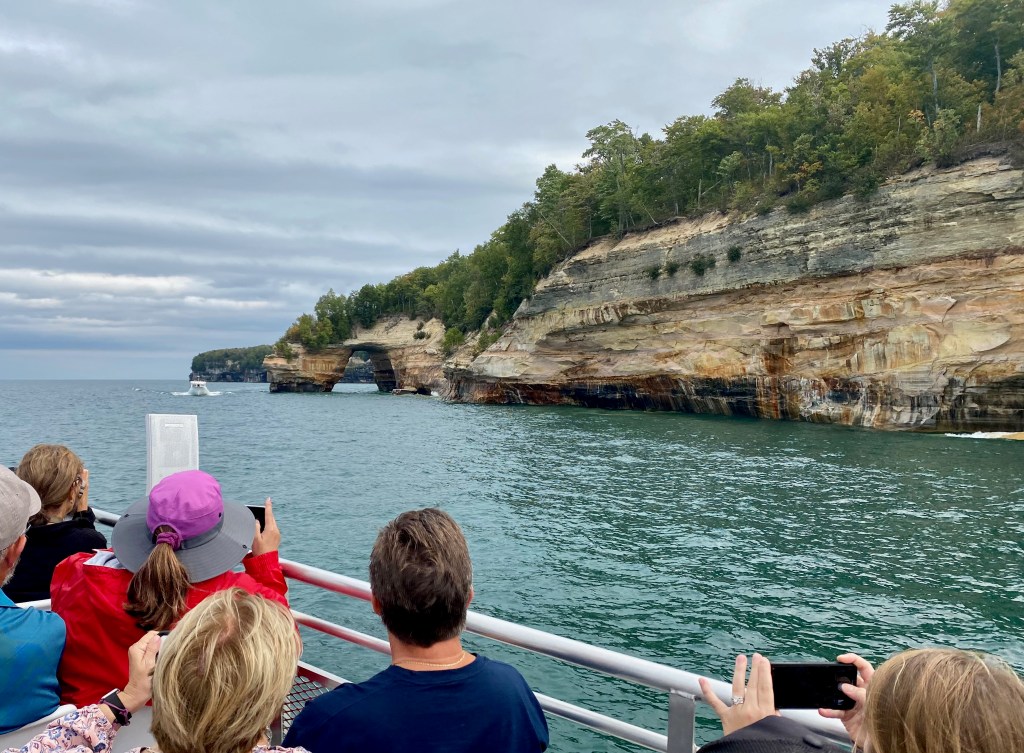
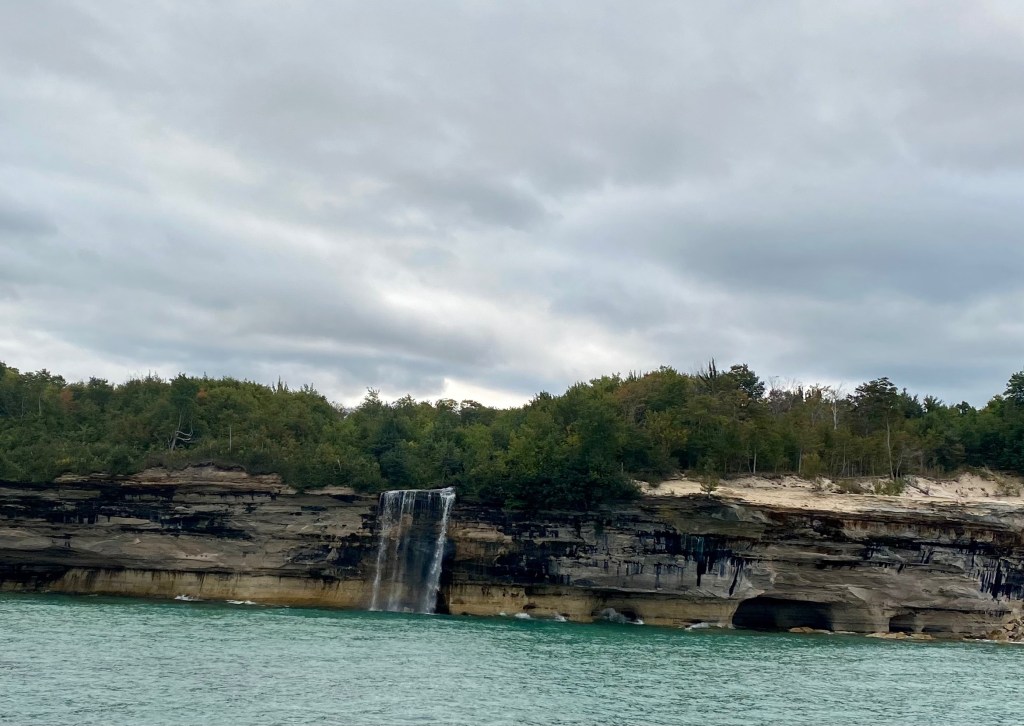
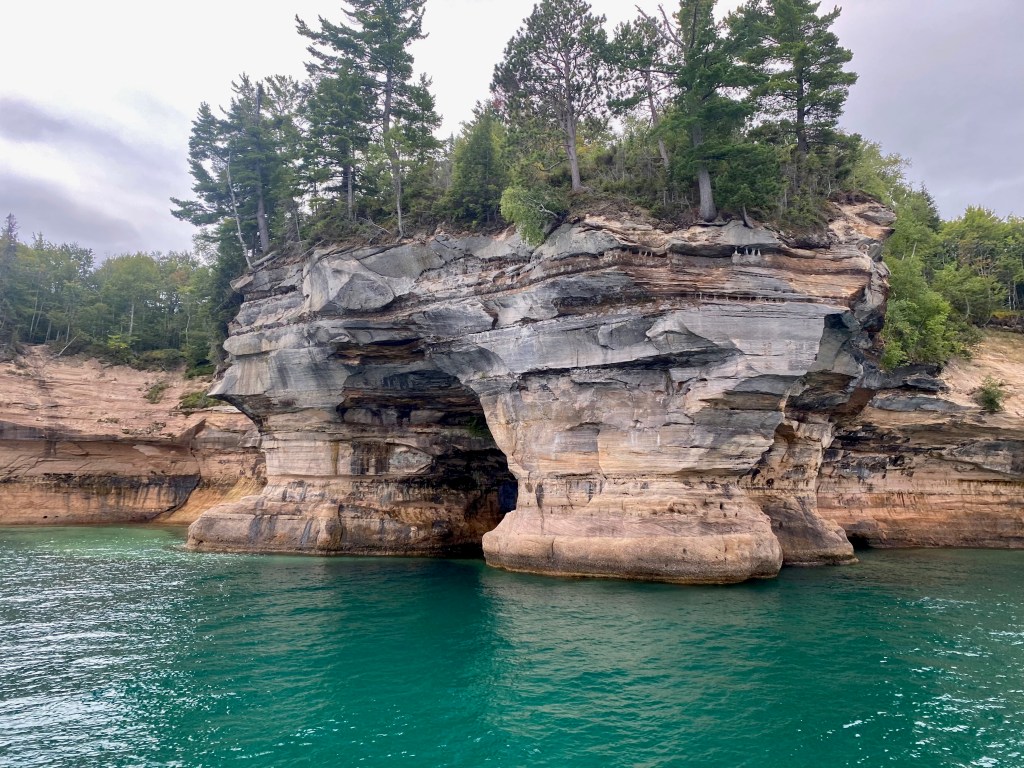
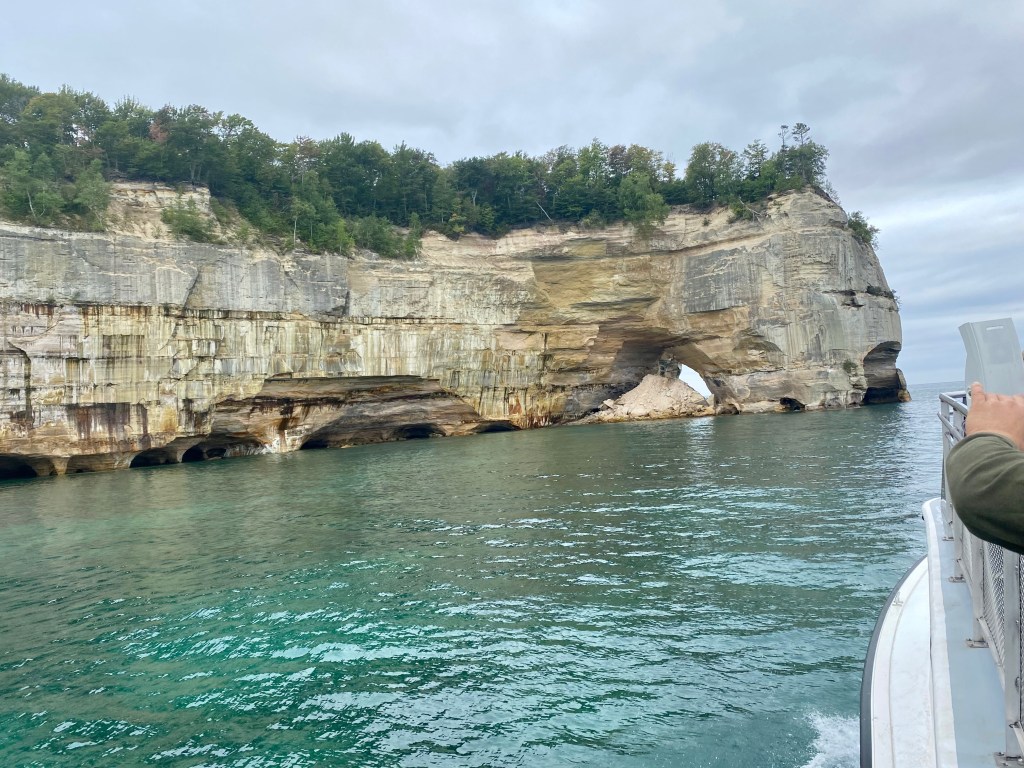
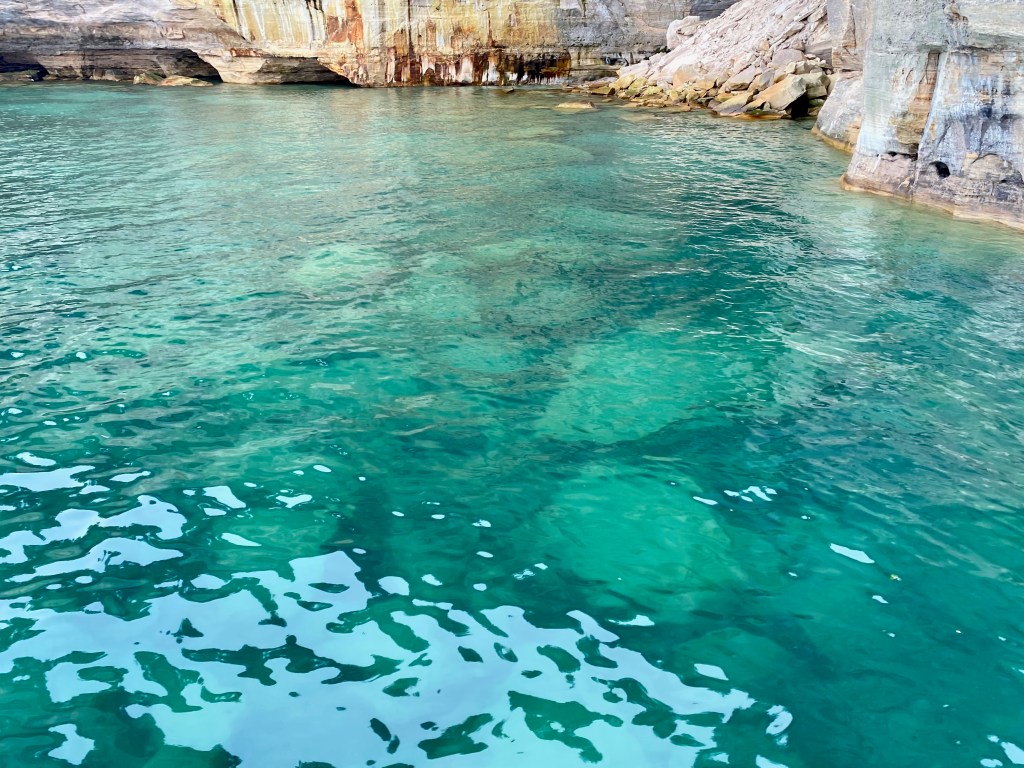
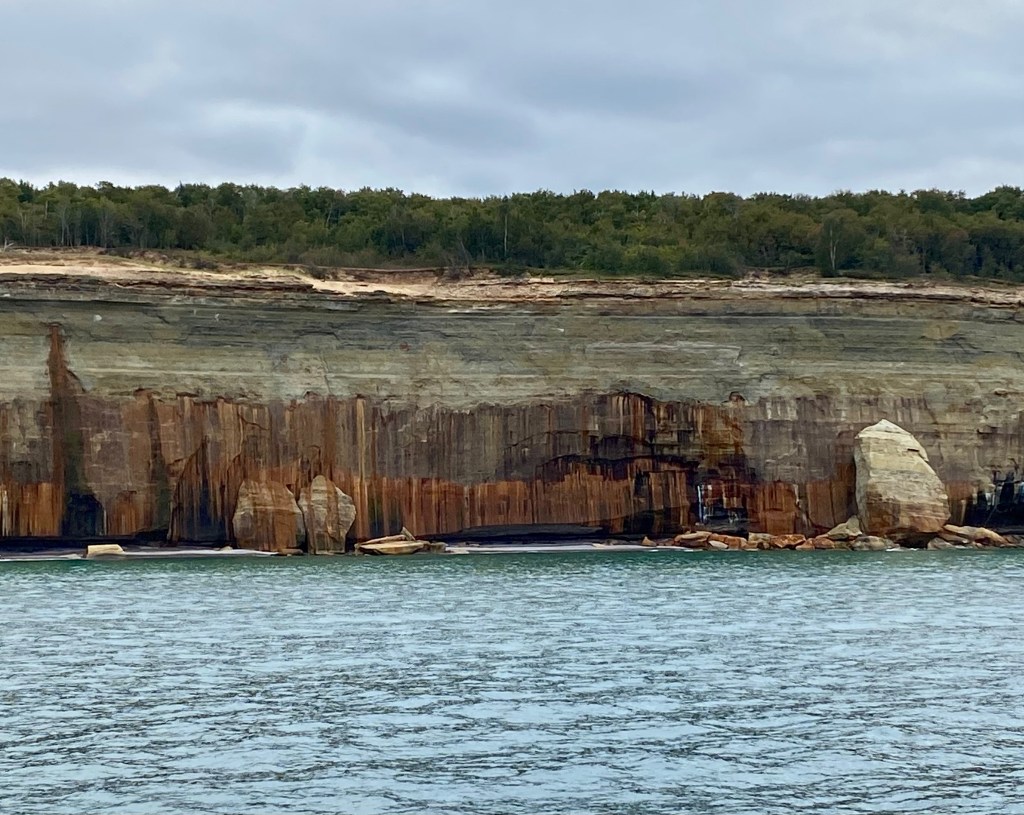
On Saturday, from the marina in Munising, Mich., we joined a two-hour boat cruise along the beautiful Pictured Rocks National Lakeshore. The boat’s captain gave a lively description of the shoreline, including how the seepage of minerals give the rocks their distinctive color. The cliffs soar up to 200 feet above the water. In some places the wind, waves, and rain have carved odd shapes, caves, and even archways in the relatively soft rock. We waved to hikers at the top of the cliffs and saw kayakers plying the waters below.
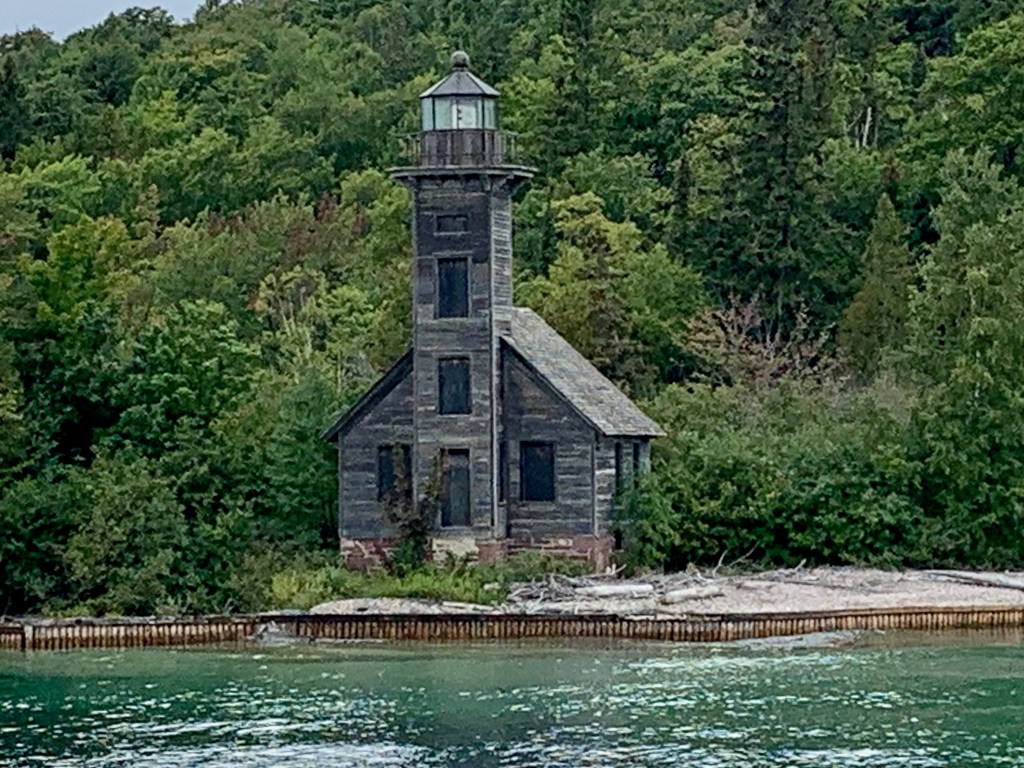
A 19th-century lighthouse on Grand Island near Munising, Mich.
The next afternoon and evening, I returned on my own to the national lakeshore to enjoy one of the best hikes of our entire trip. The trail loop covered about 10 miles–through the woods, past Mosquito Beach, along the cliffs above the lake, to Chapel Beach, and then back through the woods to the trailhead and parking lot. The weather was ideal—sunny, mid-60s, with a mild breeze off the lake. I have a good tolerance for heights, but there were a few spots along the edge of the cliffs, looking down 150 feet to the pounding surf below, that made me wince!
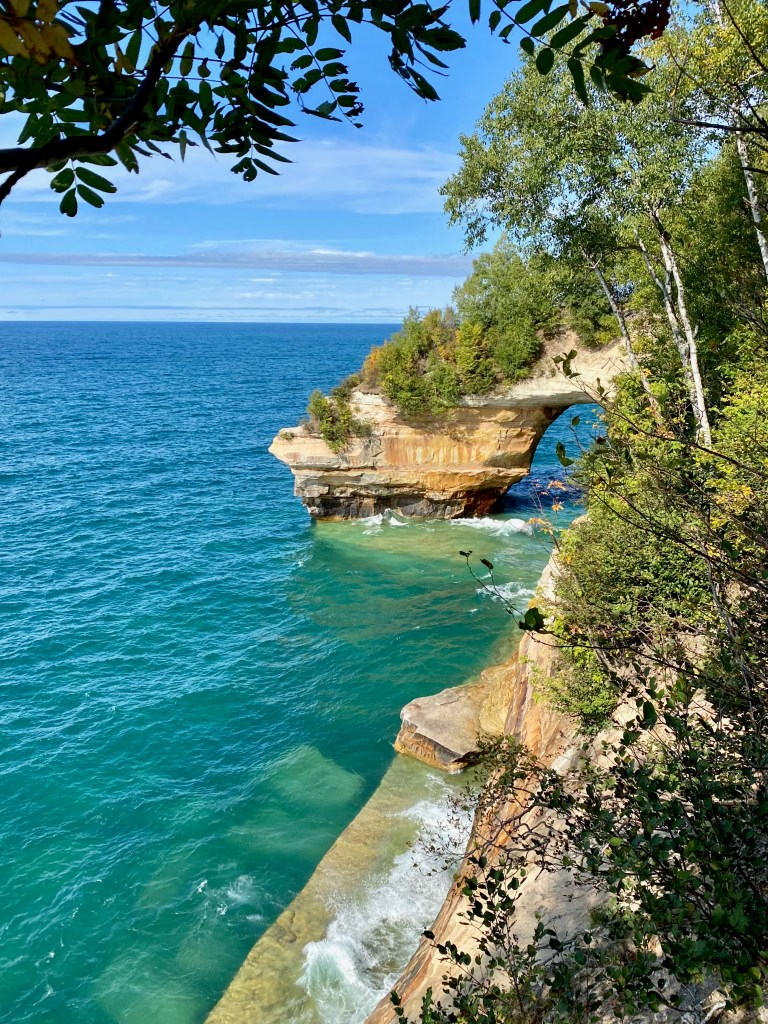
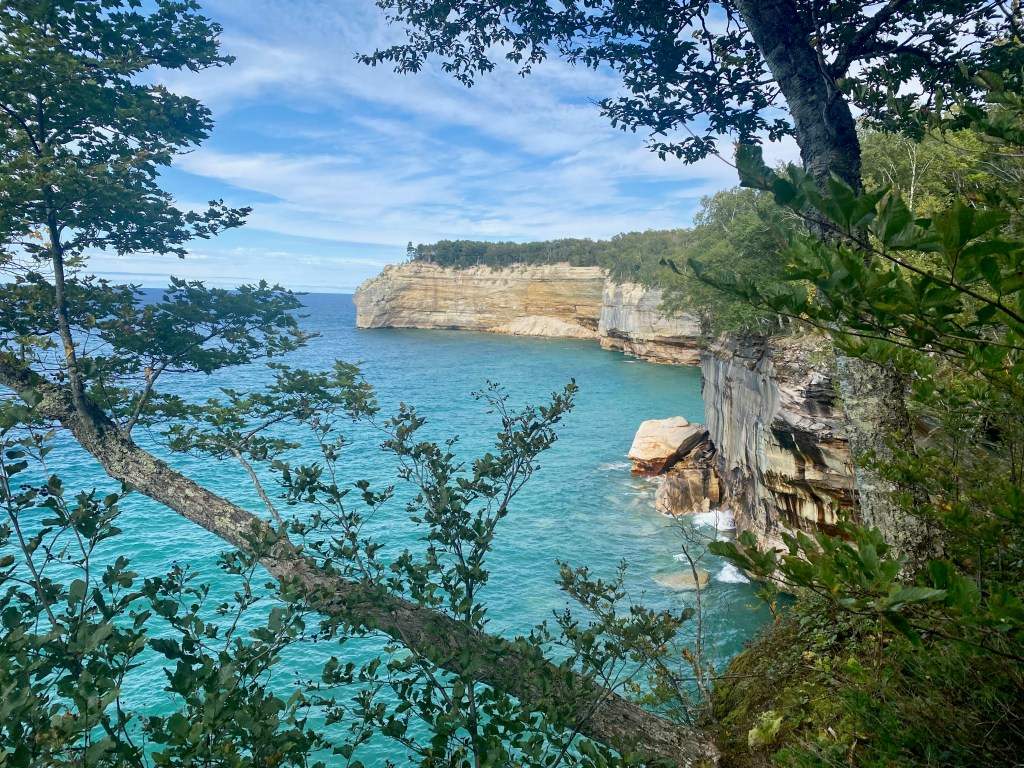
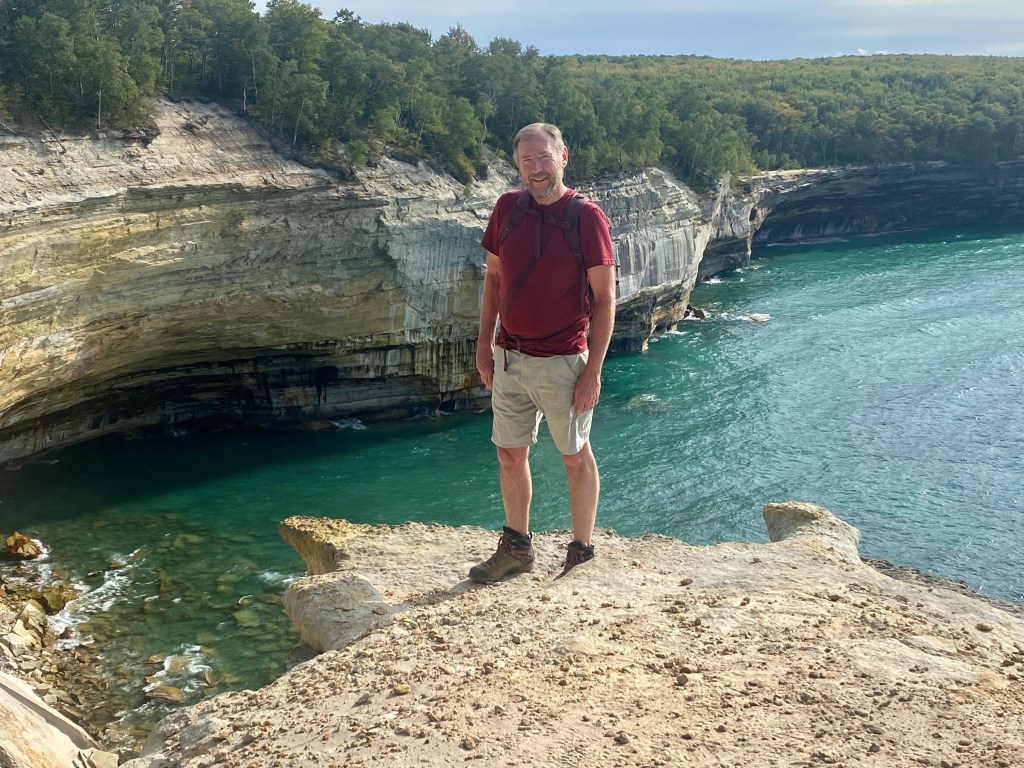

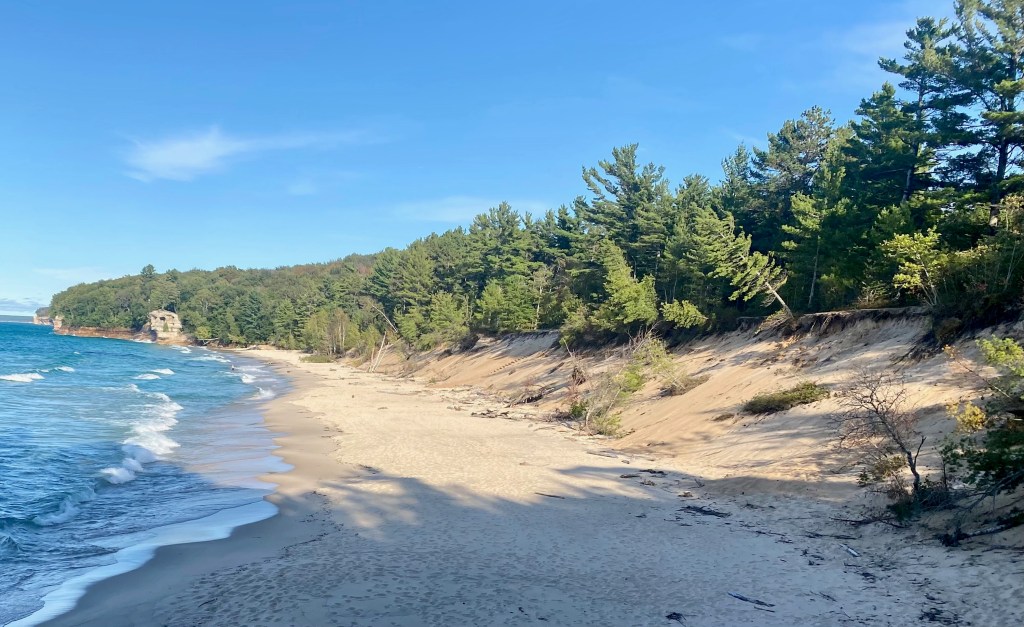
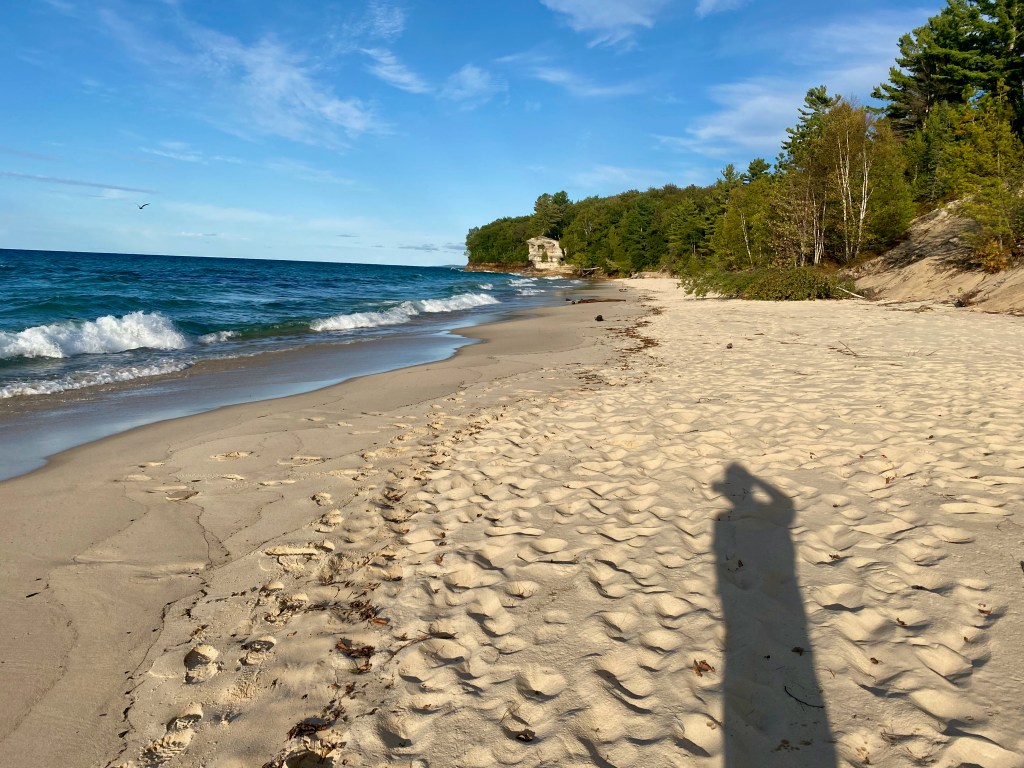
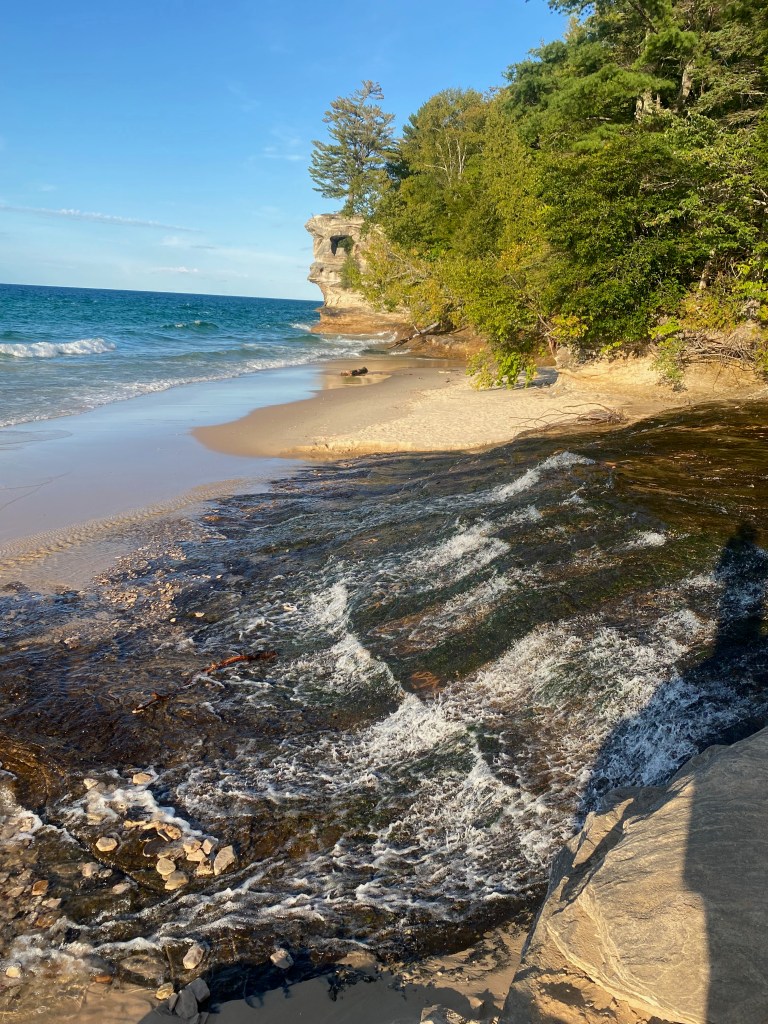
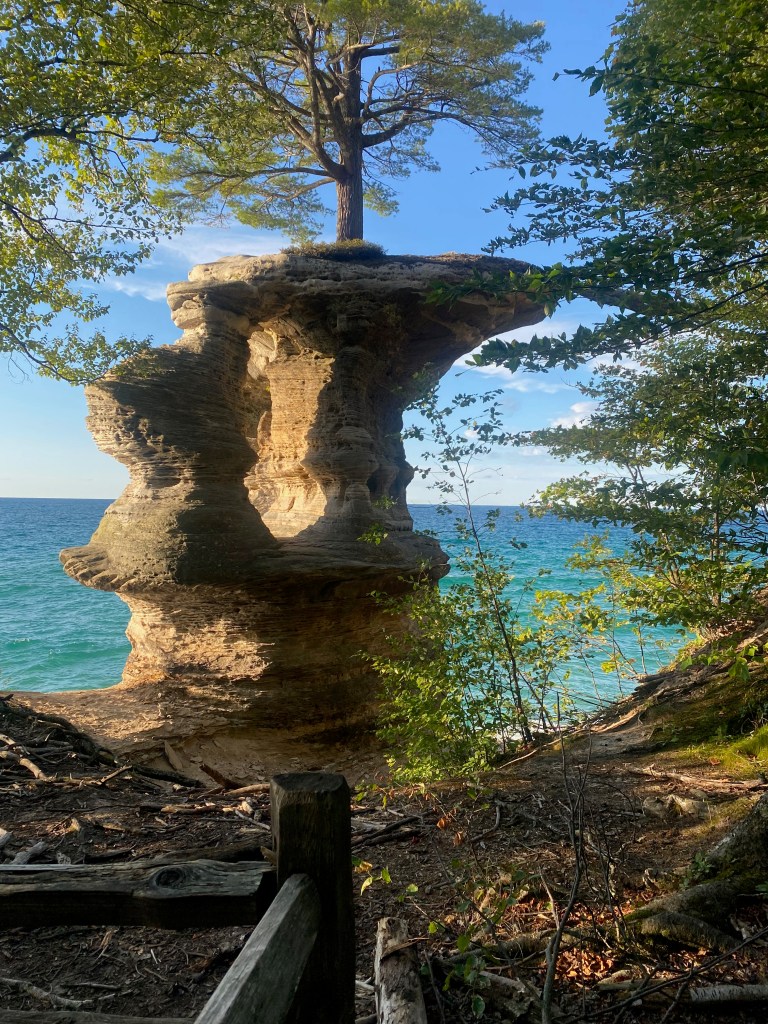


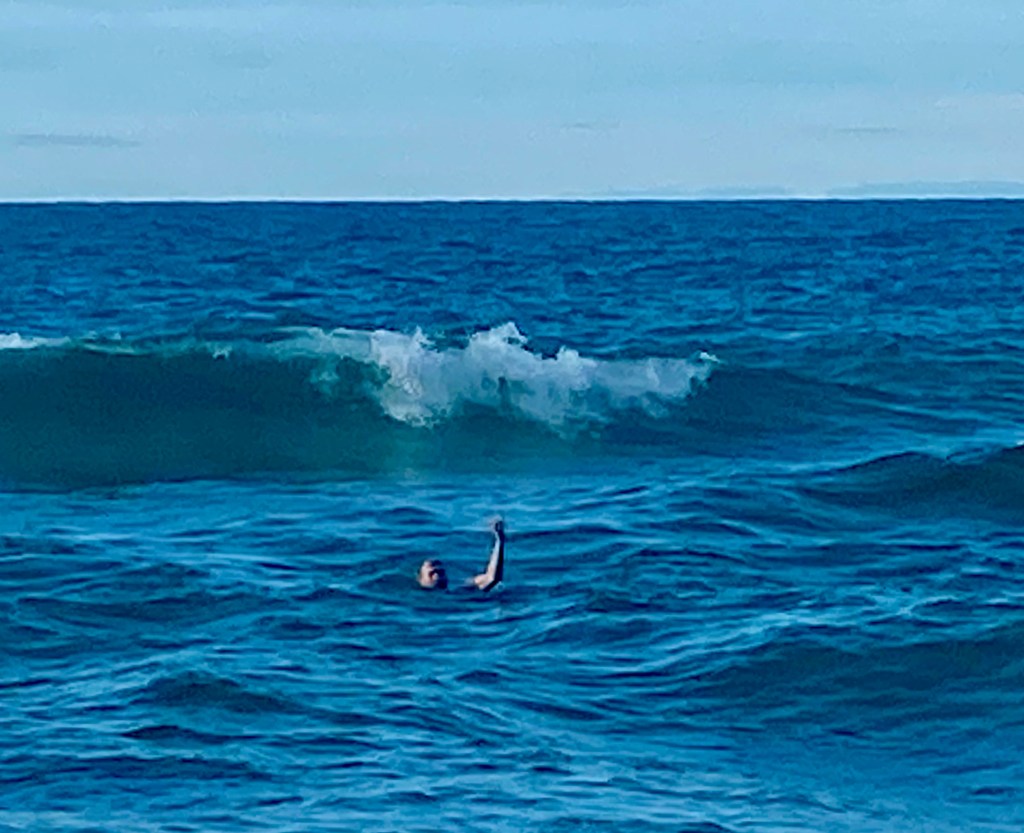
A highlight of the hike was a swim at Chapel Beach. The waves were three to four feet high, just enough to create excitement without any real danger. And the water was just right. The lake’s water can feel very cold in the middle of the summer, but by September it’s absorbed enough heat to offer a comfortable swim. The only other person on the beach was a middle-aged man named Tim who was camping on his own nearby. He lives in the Chicago area with his wife and kids and they are frequent visitors to the area. By mutual agreement, he and his wife occasionally take their own vacations, and Tim chose to hang out for a few days at this wonderful spot. He kindly agreed to take a few photos and a video of me enjoying the surf just so I could share them with all of you!


***
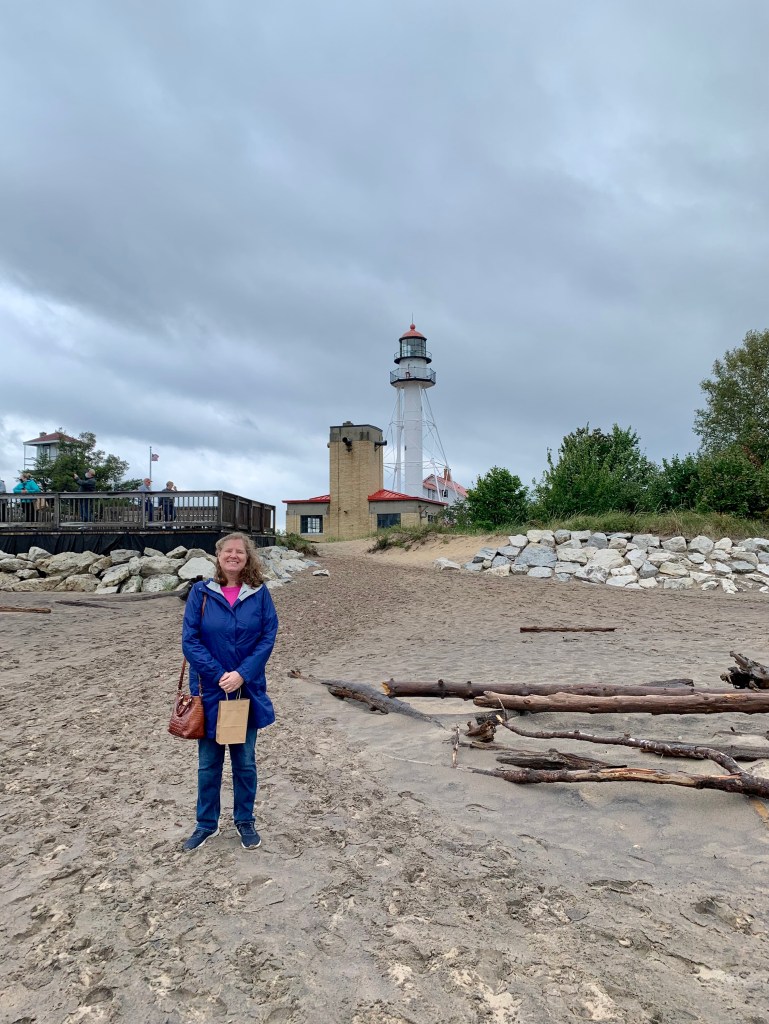
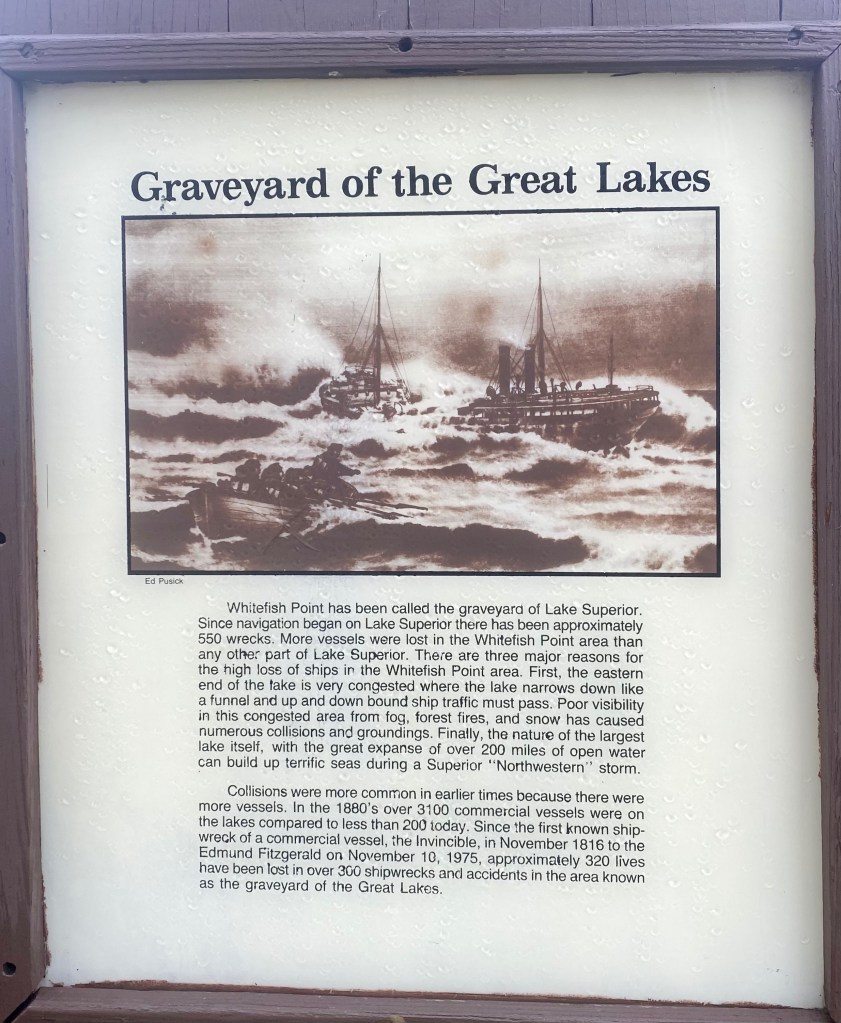
On an appropriately windy and rainy day, Elizabeth and I drove an hour up the coast yesterday from our current campground in Brimley to the Great Lakes Shipwreck Museum at Whitefish Point. The museum is located on a picturesque point separating Whitefish Bay from the main body of the lake. The area has proven dangerous for ships, in part because of the weather but also because it serves as a funnel channeling ships to and from the locks at Sault Ste. Marie that lead to Lake Huron. Many of the shipwrecks described at the museum occurred when ships collided with each other near the point, often at night and in fog.

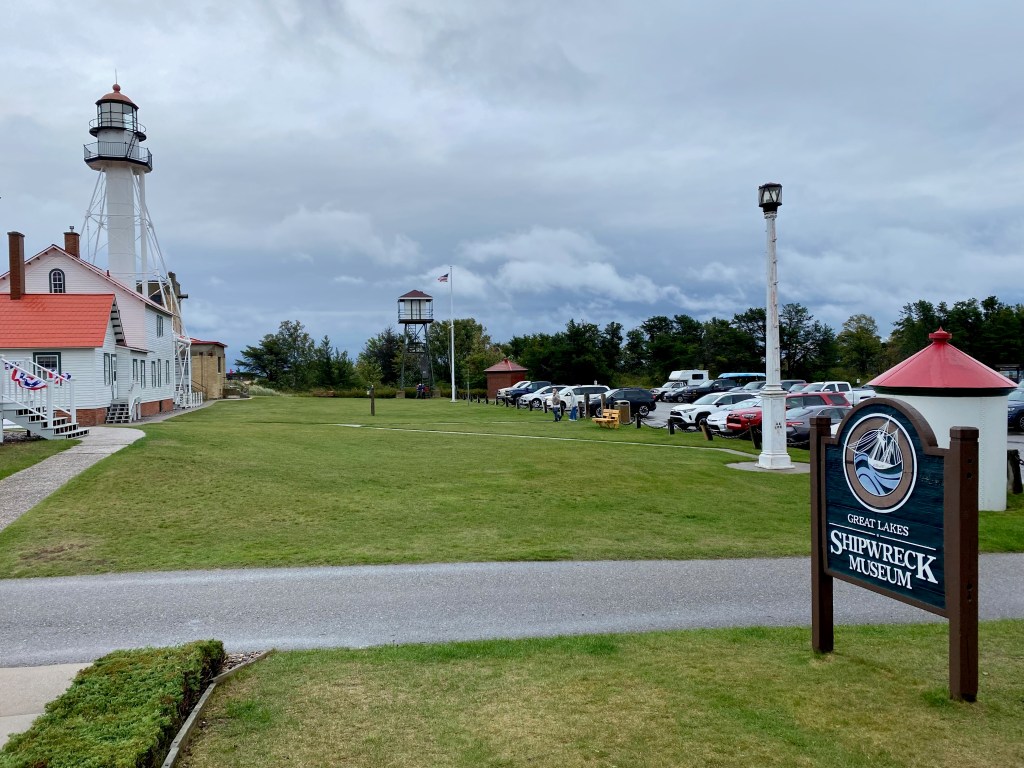
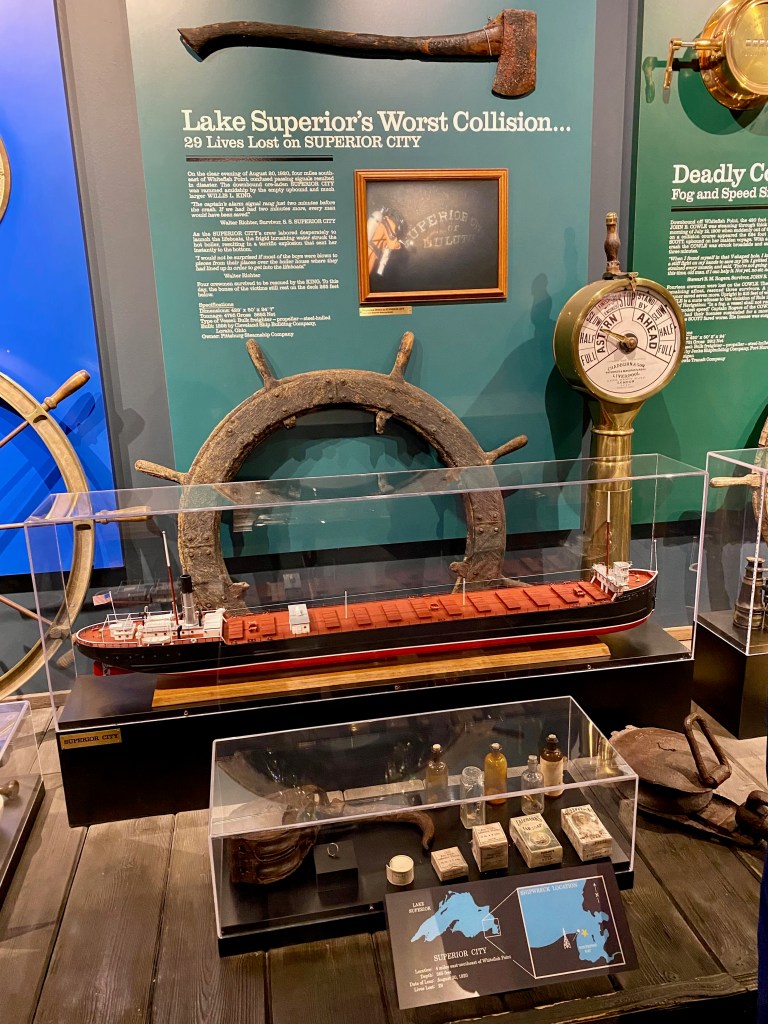
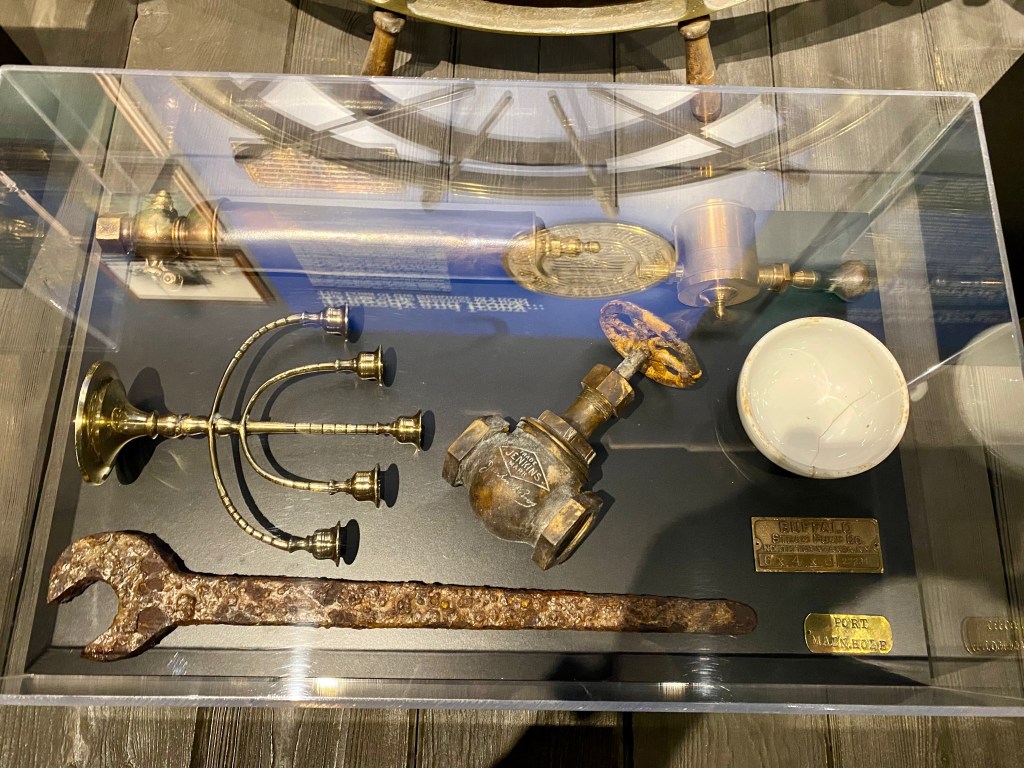
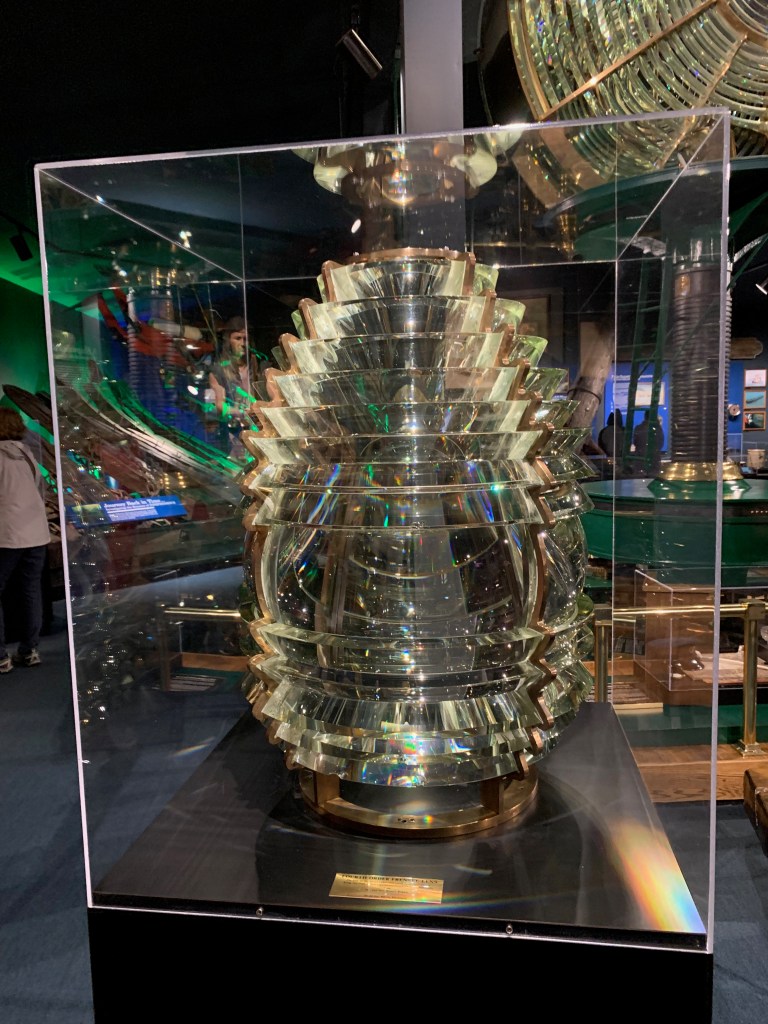
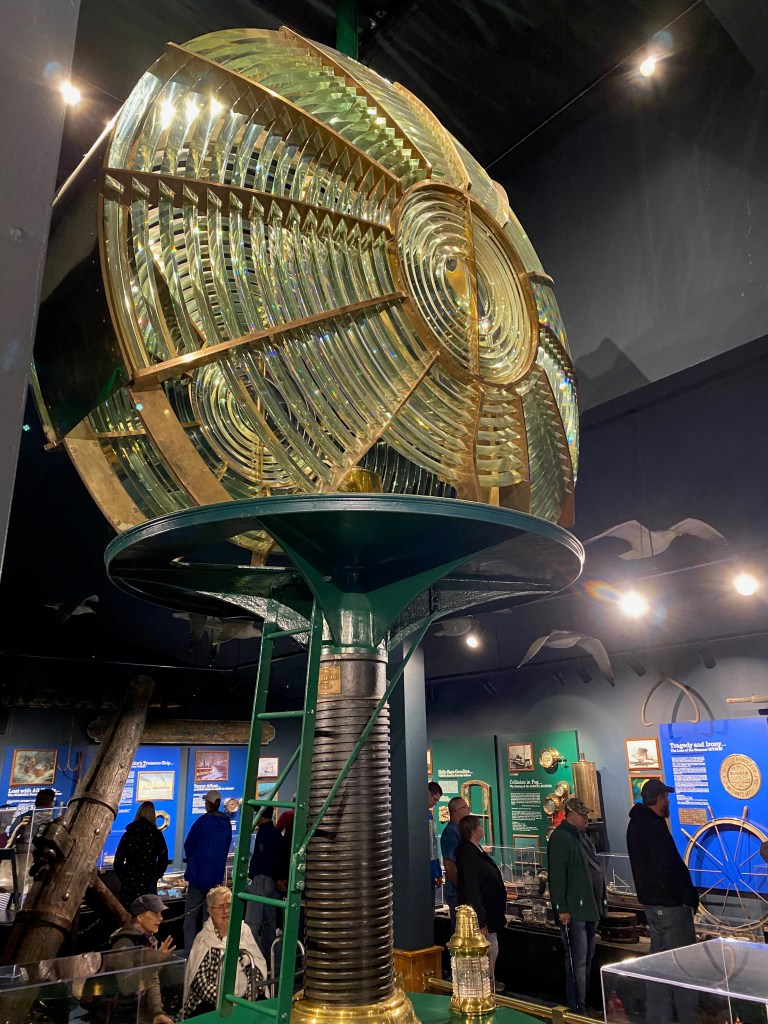
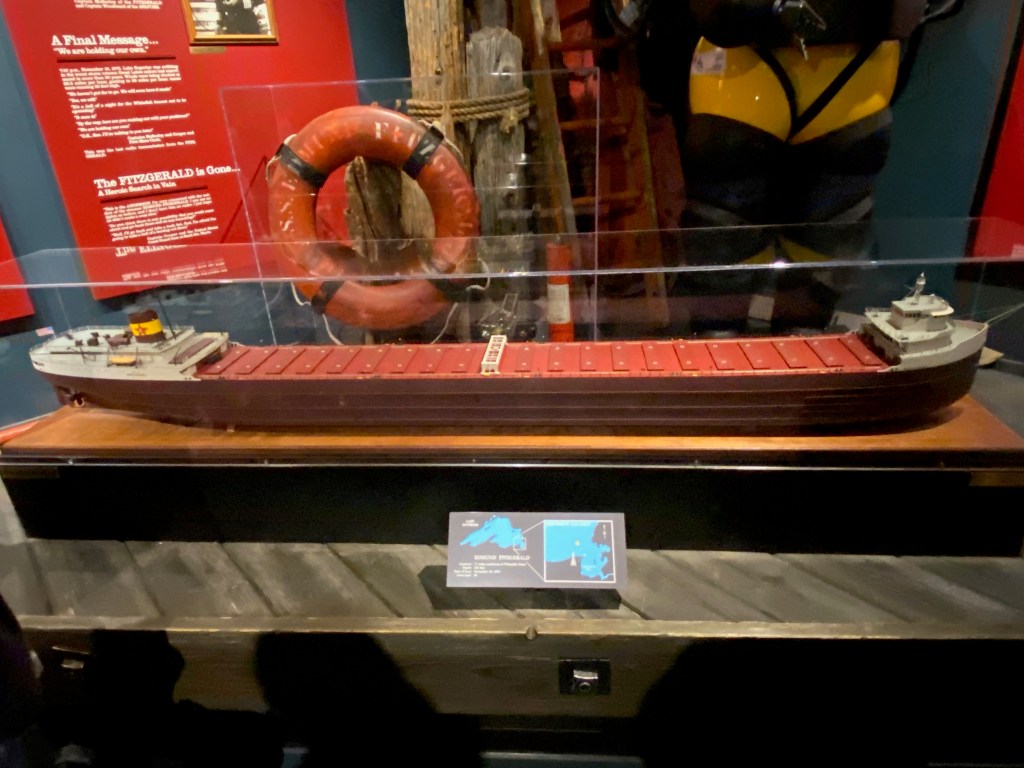
Exhibits at the museum are very well done. About 10 shipwrecks are highlighted, with each exhibit featuring a description of the disaster, a painting that dramatizes the event, a model of the ship, and in many cases artifacts recovered from the ship’s wreckage hundreds of feet below the waves. The museum also displays two Fresnel lenses, developed in the early 1800s, that allowed lighthouse beams to be seen more than 20 miles from shore.
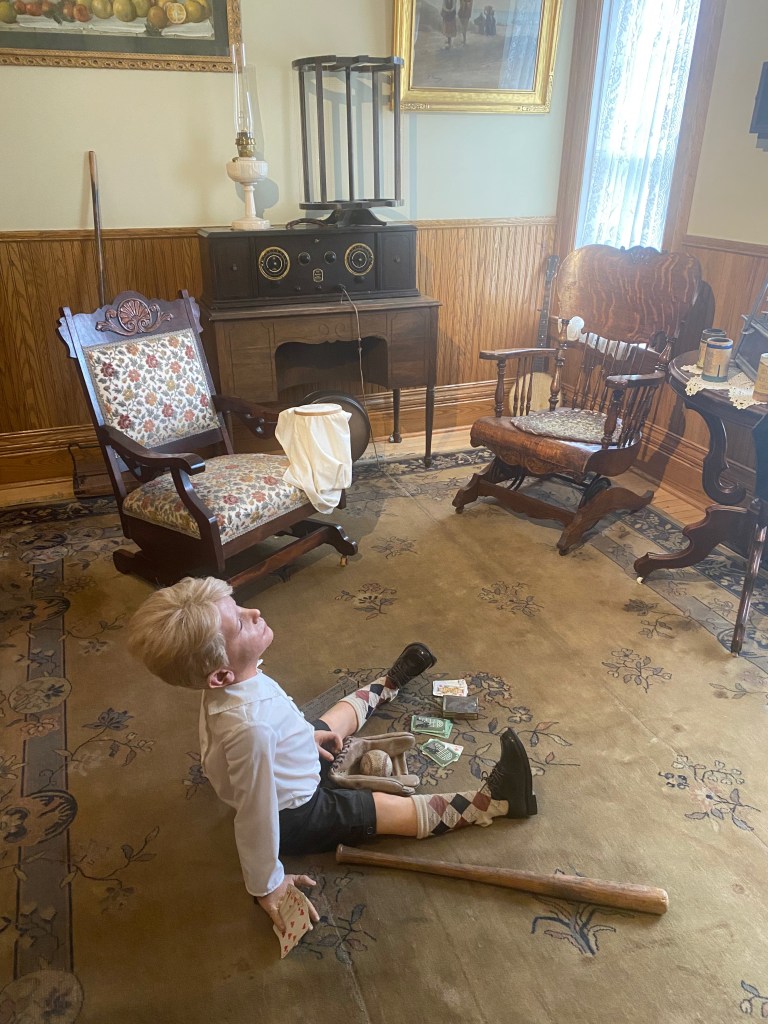
A boy playing cribbage in the lighthouse keeper’s quarters.
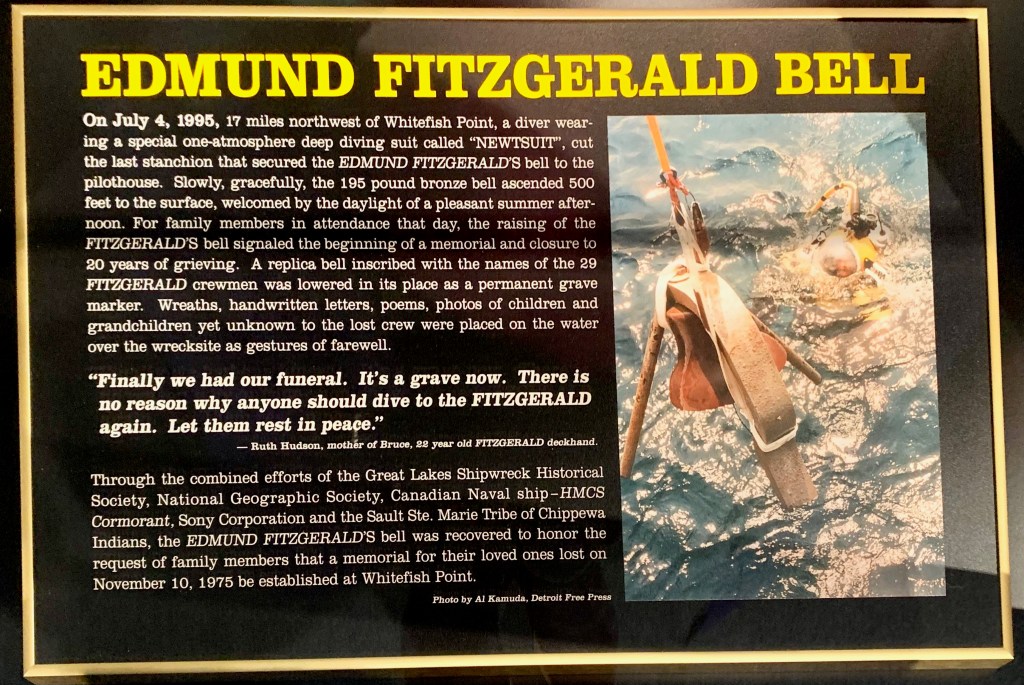
Background music for our time on Lake Superior has been Gordon Lightfoot’s haunting ballad, “The Wreck of the Edmund Fitzgerald.” It’s always been a favorite of mine, and I’ve listened to it a few times as we’ve followed the lake’s shoreline. The museum features a special exhibit on the tragedy and is home to the ship’s 195-pound bell, recovered during a dive to the wreck in 1995. The ship lies 17 miles north of Whitefish Point under more than 500 feet of water. If you want to learn more details of the November 10, 1975, tragedy, here’s the museum’s web page on the Edmund Fitzgerald, and here’s an informative blog post I found annotating the lyrics of Gordon Lightfoot’s ballad. (The song is quite accurate in its details.)
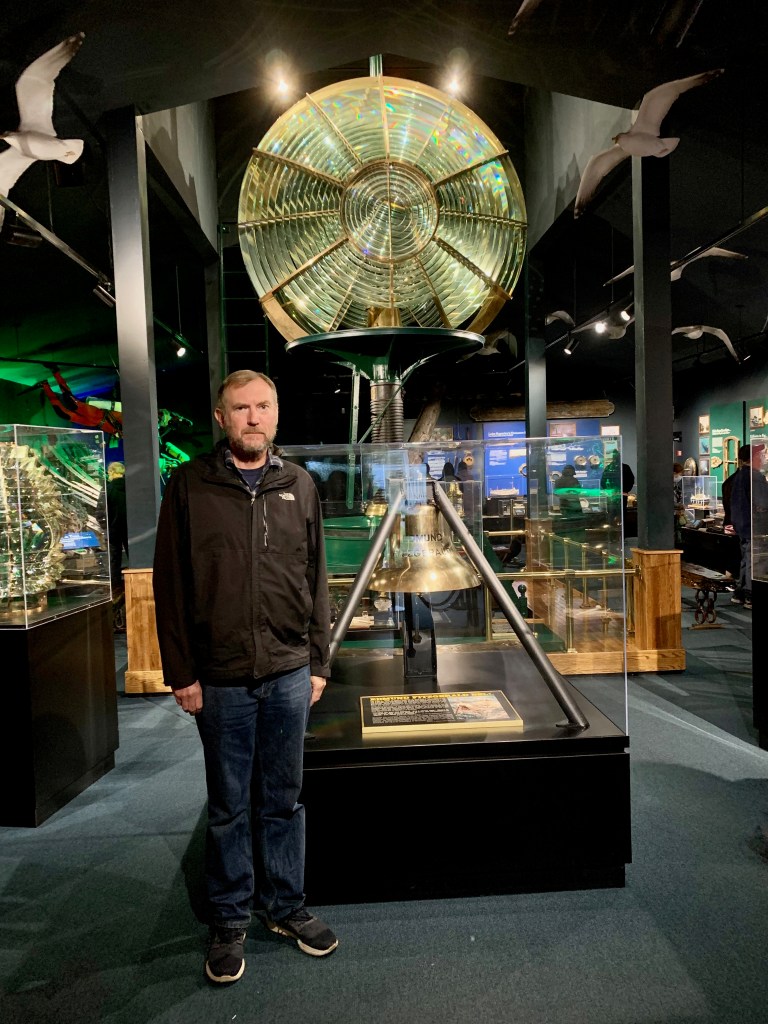
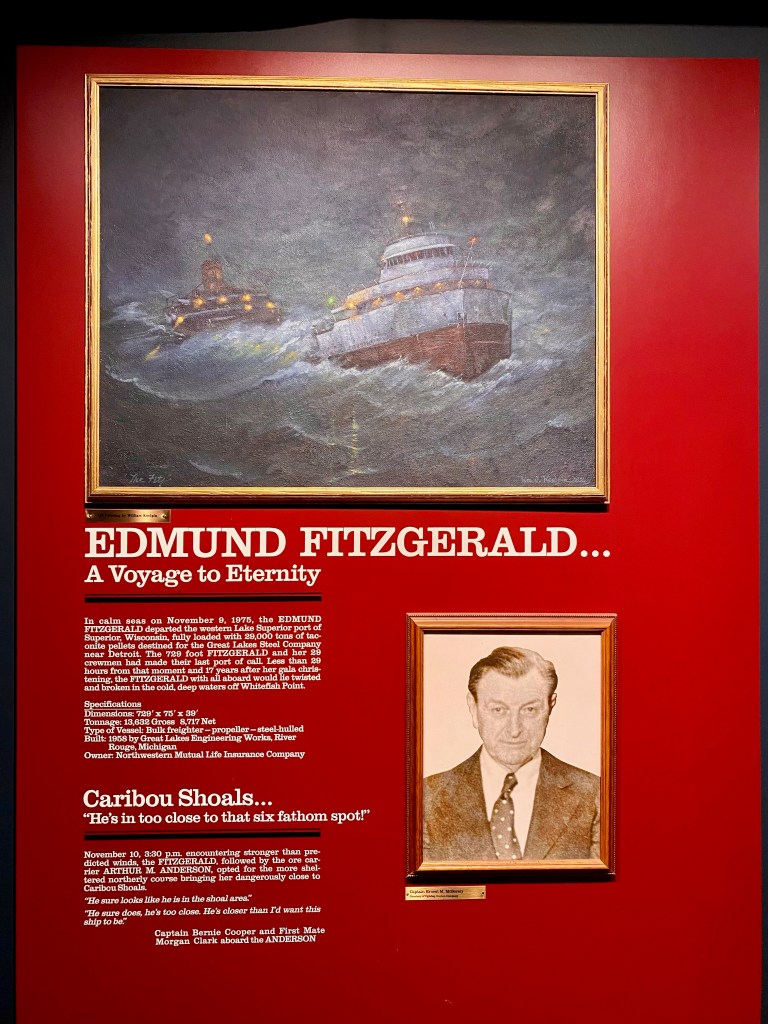
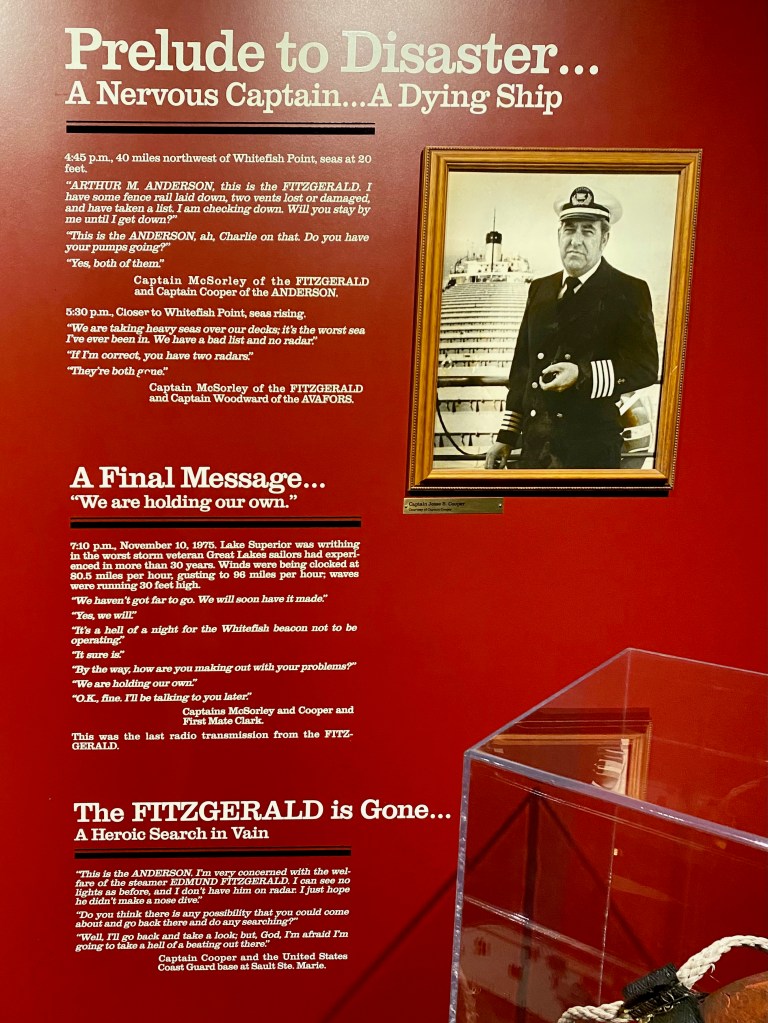
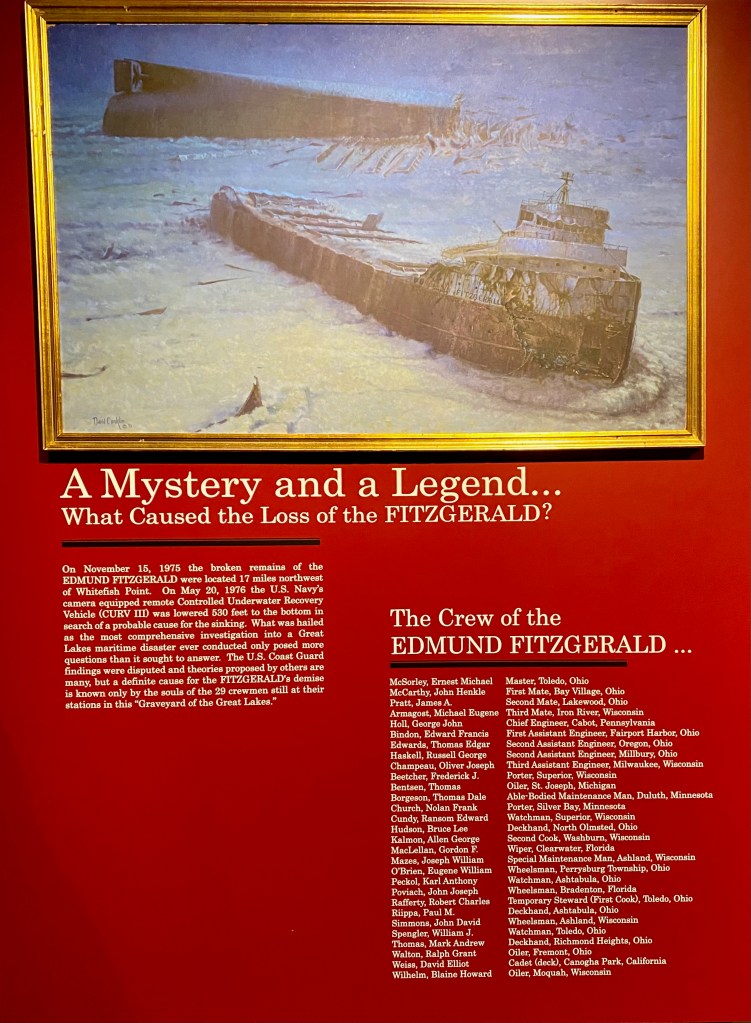
A couple of details about the Edmund Fitzgerald that stuck with me: The captain of the ship, Ernest M. McSorely, had recently turned 63 when the ship met its end, almost exactly my current age. My life seems pretty carefree compared to the responsibilities of a captain of a big ship and crew sailing into freezing rain and 30-foot waves. And minutes before the Edmund Fitzgerald sank, at 7:10 p.m., McSorely had this exchange with the first mate on the freighter Arthur M. Anderson, which was trailing them by about 10 miles.
“By the way, Fitzgerald, how are you making out with your problems?” asked Clark.
McSorely responded: “We are holding our own.”
This was the last radio transmission from the Fitzgerald.

 Daniel Griswold's Blog