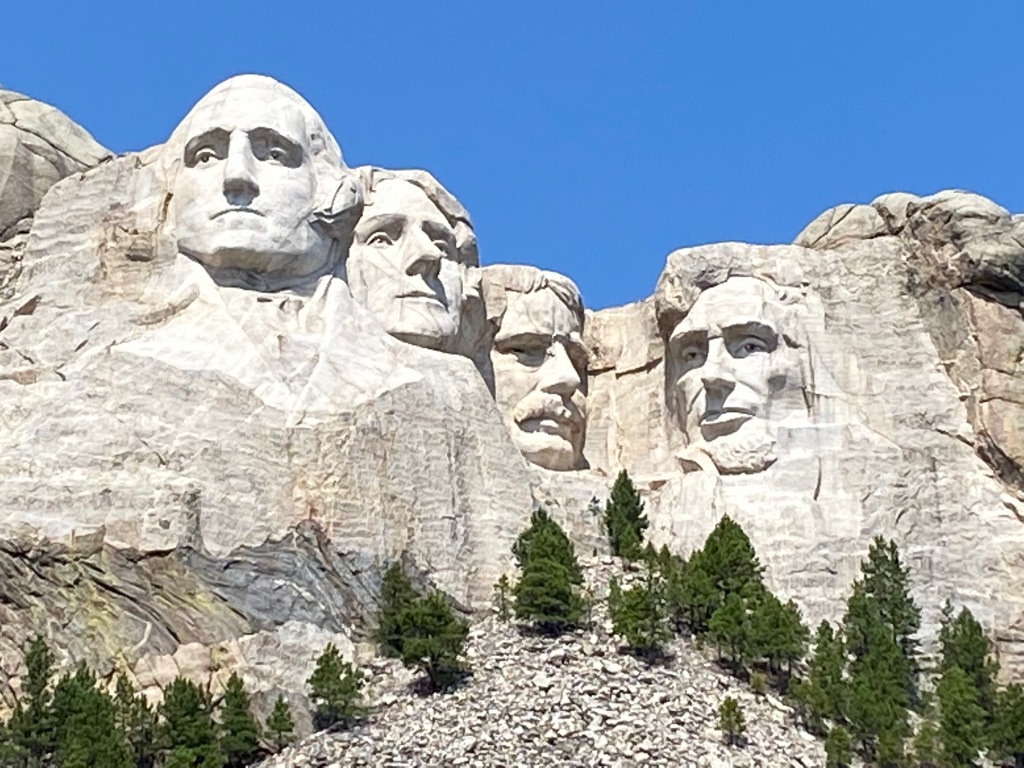
RAPID CITY, S.D. – Elizabeth and I savored the symbolism of Mt. Rushmore on a beautiful Saturday in the Black Hills of South Dakota last week. We admired the artistry of sculptors Gutzon Borglum and his son Lincoln and learned more about this famous monument. During our time here, I also managed to see Custer State Park and Wind Cave and the Badlands national parks.

Since we last visited Mt. Rushmore 35 years ago, the facilities seemed to us much improved. You can view the monument from a terrace lined with the state flags and get a closer look along the Presidential Trail. As we were gazing at the four faces, I noted thoughtfully to Elizabeth that Jefferson appears to be looking more upward and into the distance than the others, probably the sculptor’s way of conveying his more idealistic vision. But when we were in the Sculptor’s Studio, listening to an excellent presentation by a park ranger, he said that the tilt in Jefferson’s gaze had nothing to do with symbolism but was necessary to work around weakness in the granite that was causing his nose to crack. So much for my artistic interpretation! The guide said some people think the faces look small, but if they were attached to bodies of the same scale, they would be 450 feet tall. That would be three times as high as the Statue of Liberty.
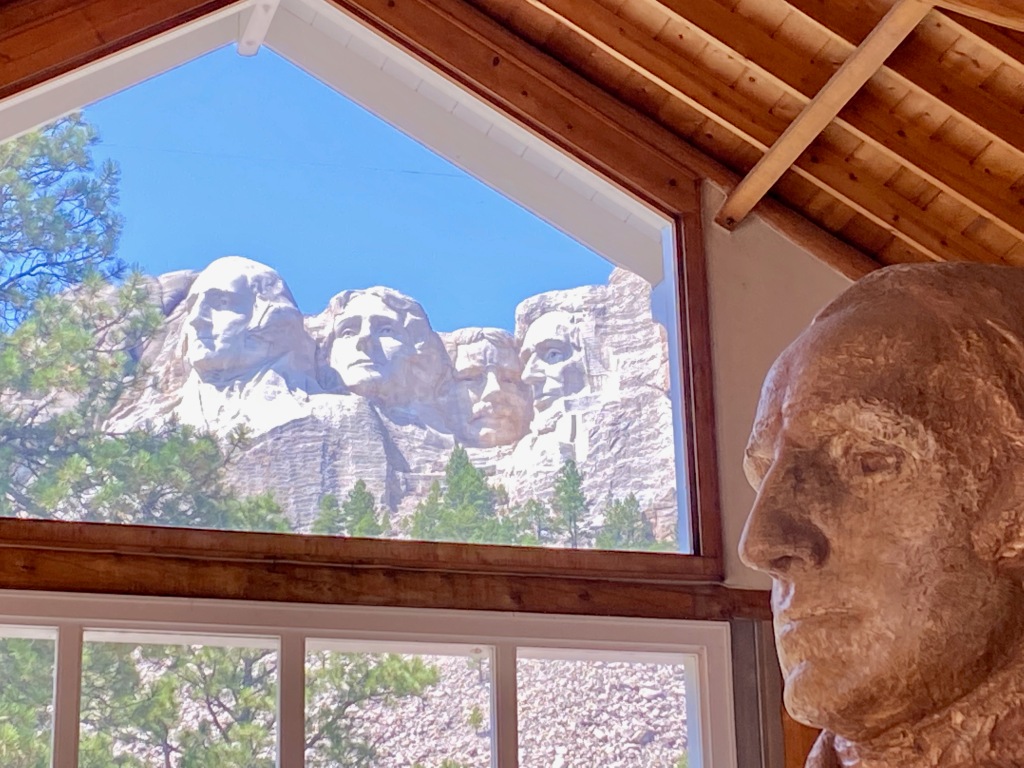
From inside the Sculptor’s Studio. 
Trying out a new look in the gift shop.
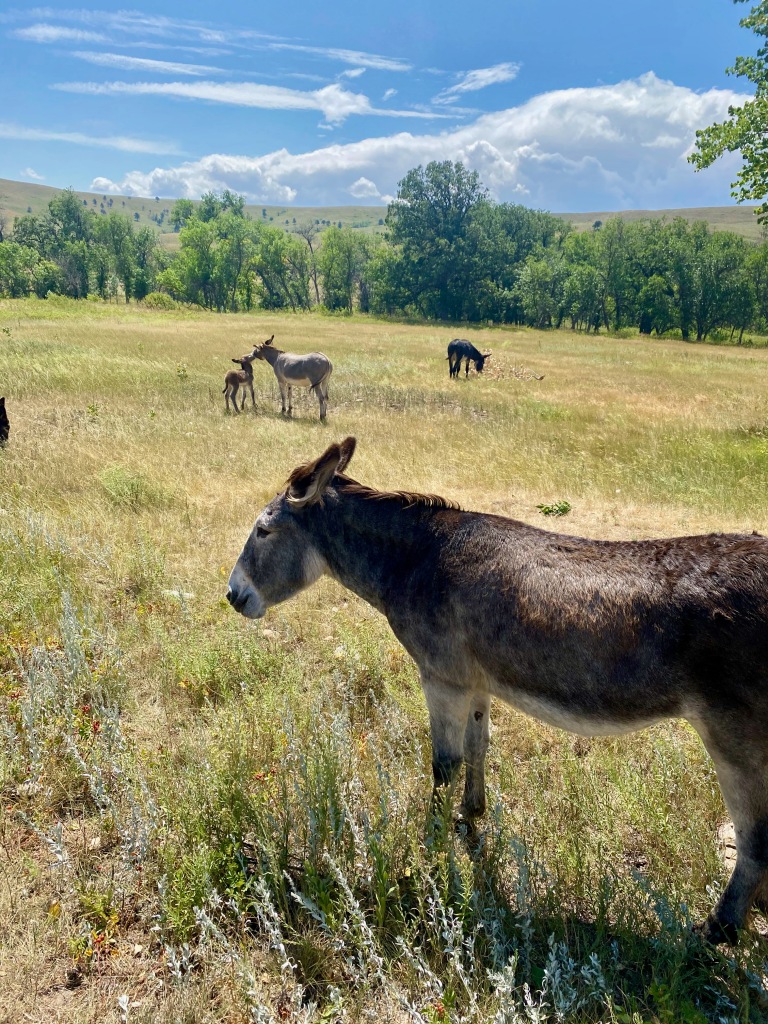
On another day, I drove the Wildlife Loop Road through Custer State Park and it lived up to its name. During my time in the park I saw four herds of bison, big horn sheep, and a herd of not very wild burros entertaining families by the roadside. At the visitor center I watched an excellent film on the park narrated by Kevin Costner. The film featured amazing footage of the bison being rounded up in an annual fall event. As part of our trip to Mt. Rushmore the next day, Elizabeth and I drove past the beautiful Sylvan Lake in the park and along the Needles Highway, which includes beautiful rock spires and a couple of narrow tunnels carved in the rock that were barely more than eight feet wide.

Bison over my shoulder. 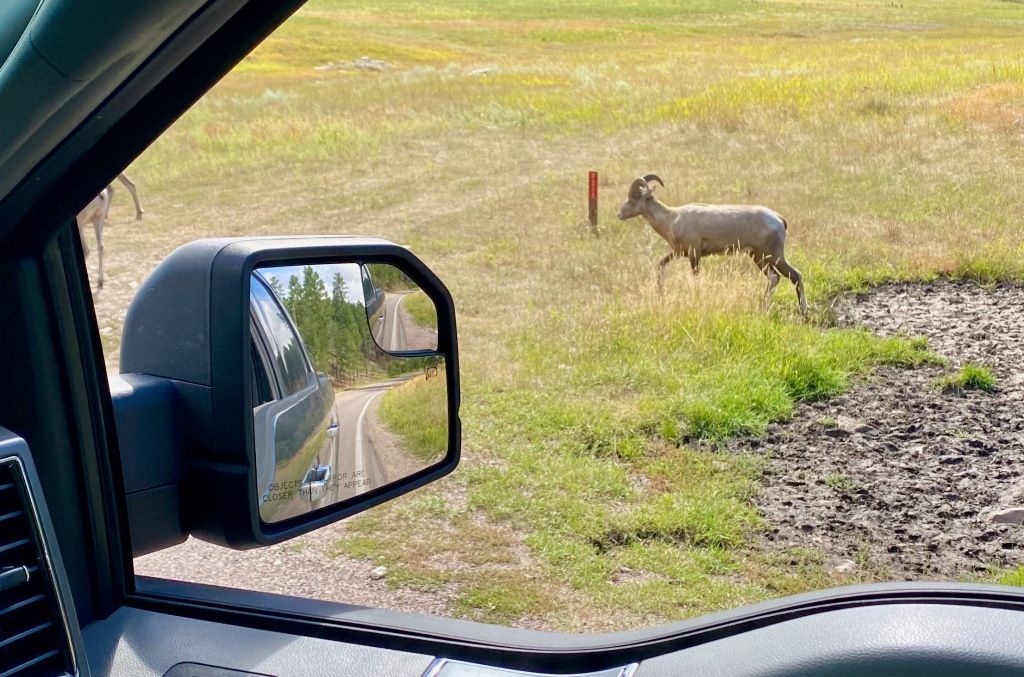


Along the Needles Highway.
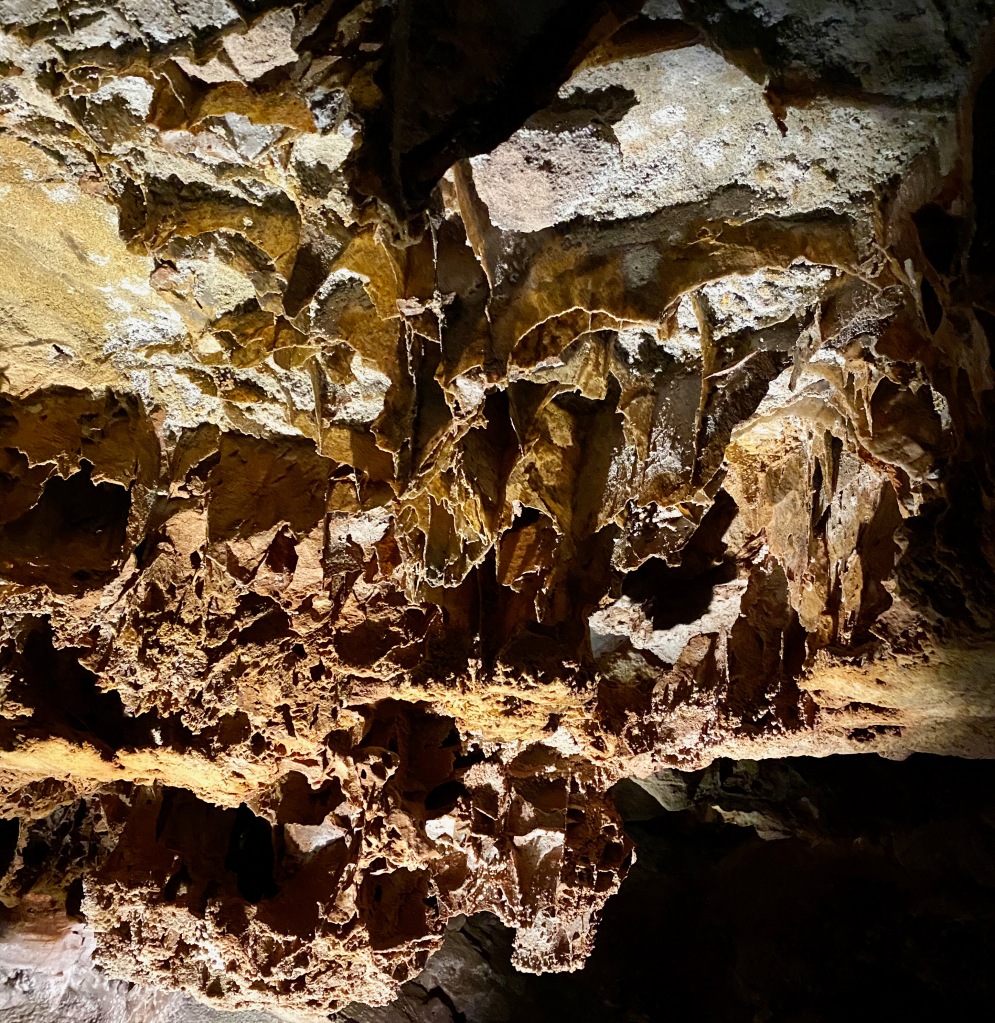
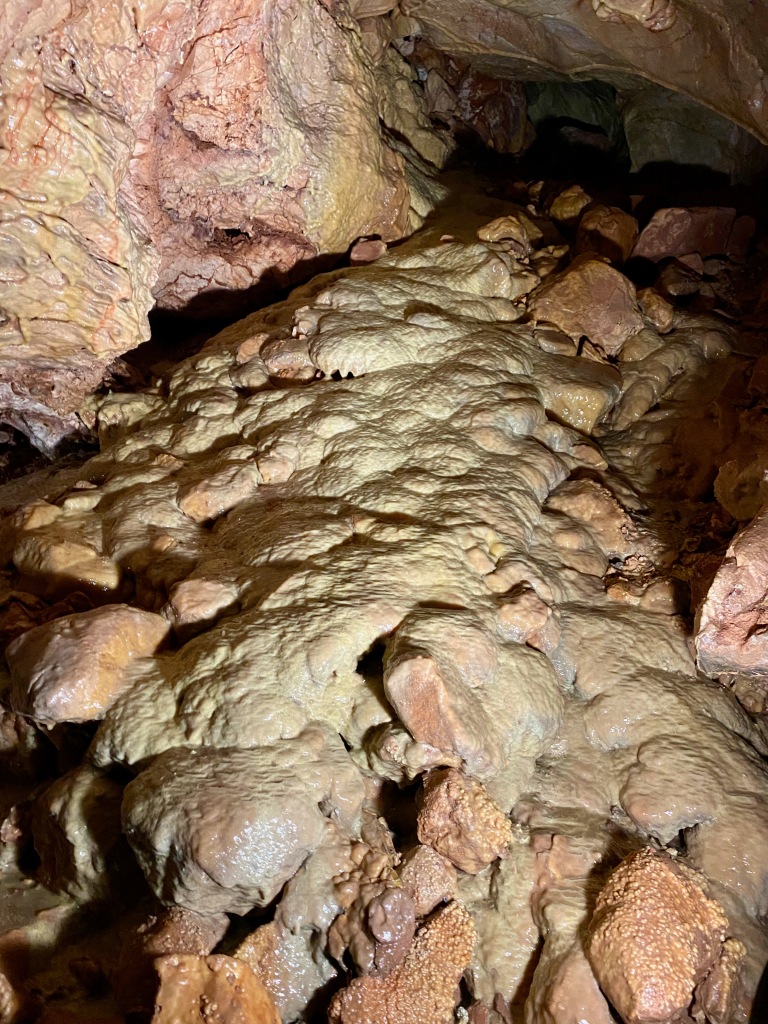
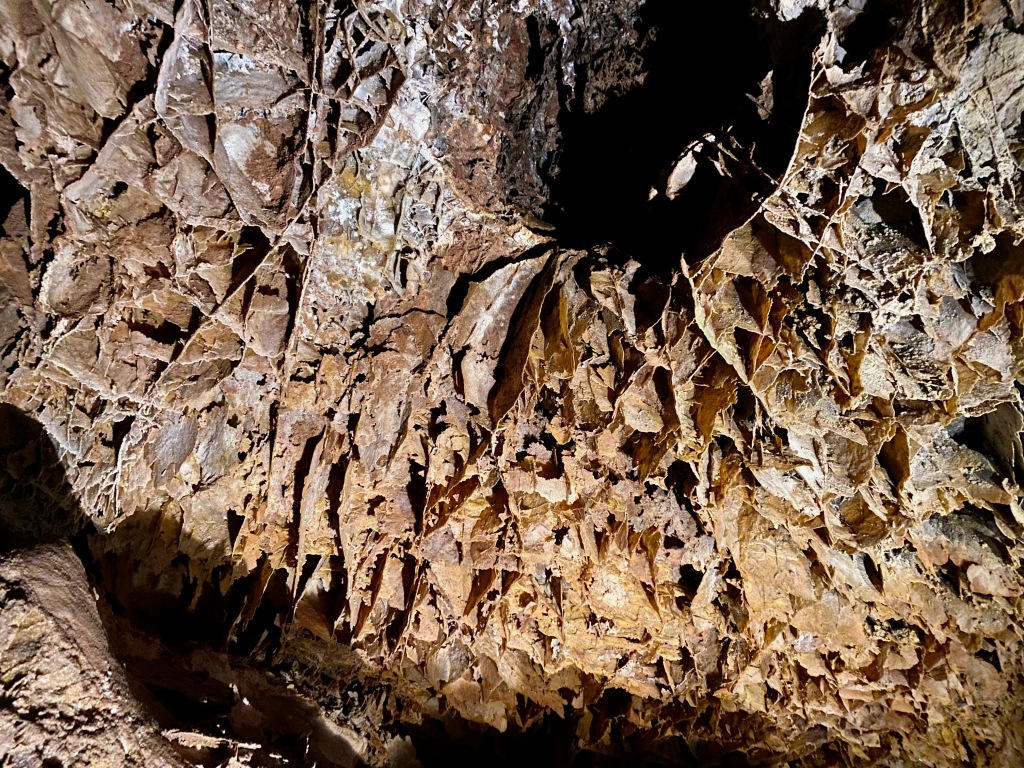
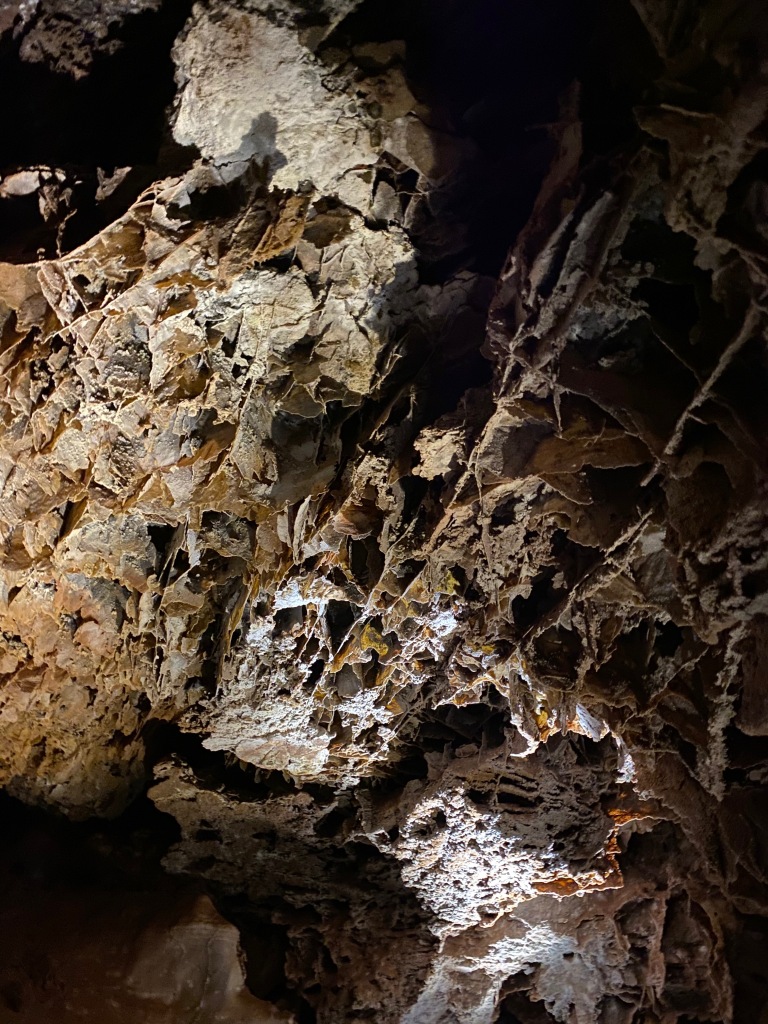
Later that day I joined a one-hour tour of a section of the Wind Cave National Park. This is one of the less-well known national parks. The cave system is worth seeing, primarily for the intricate “boxwork” formations that are rare in any other cave system. I must admit I was a bit underwhelmed by the experience, in part because I could only book the least extensive of the three main tours offered and also because we had toured Carlsbad Caverns in April, which are far larger and more spectacular. I also didn’t care for the park’s first-come, first booked system that requires you to show up in person to book a tour for that day. If I had arrived at the park earlier in the morning and had been able to book the longer Fairground Tour or the Natural Entrance Tour, I might have been more effusive in my praise.
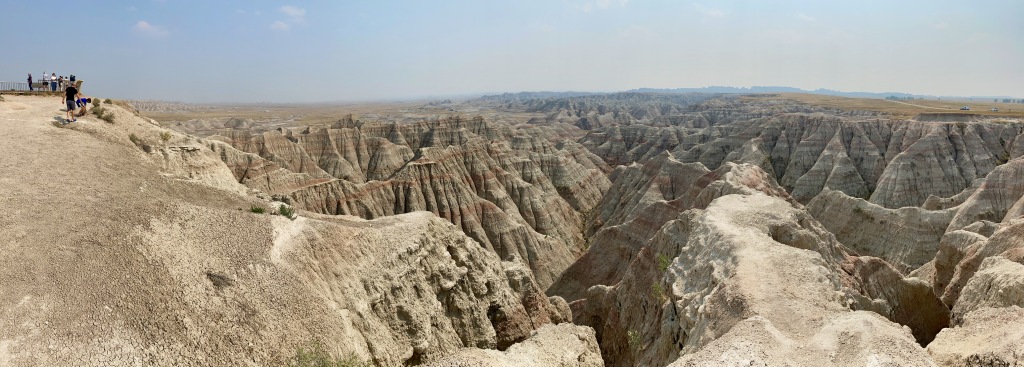
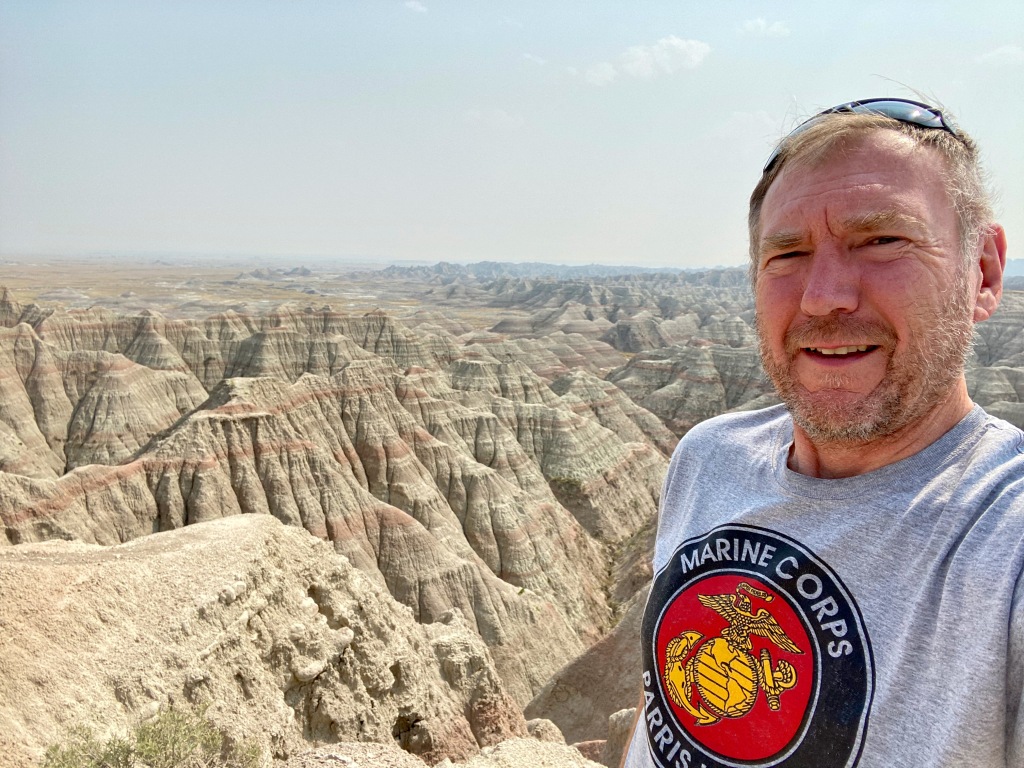
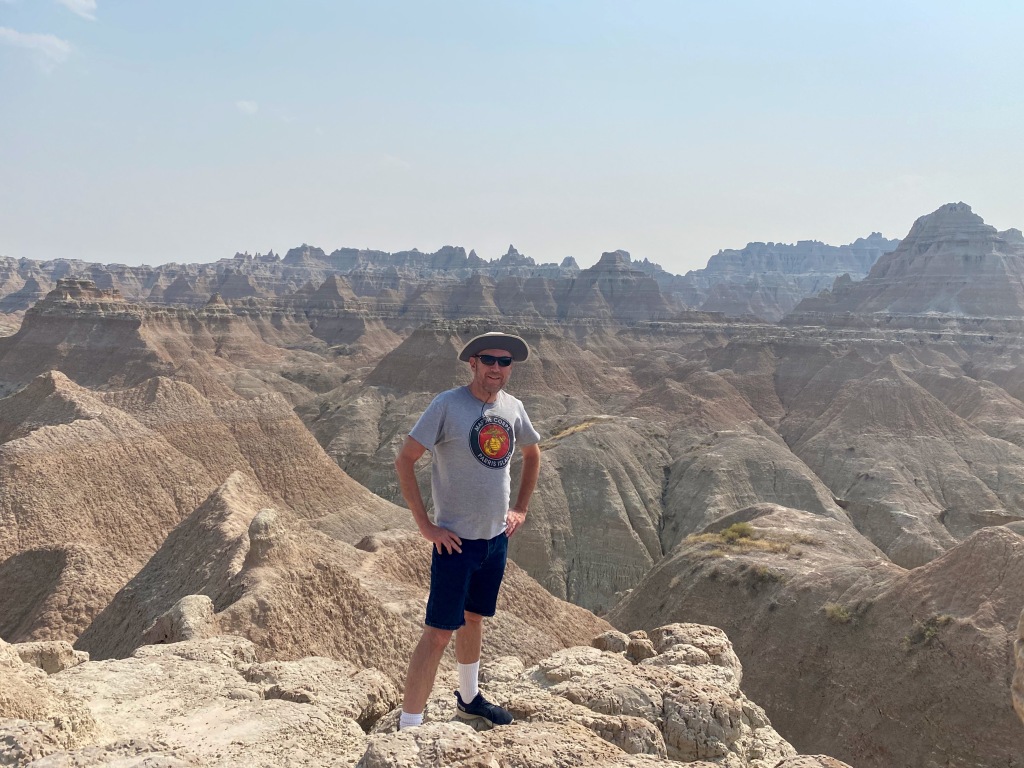
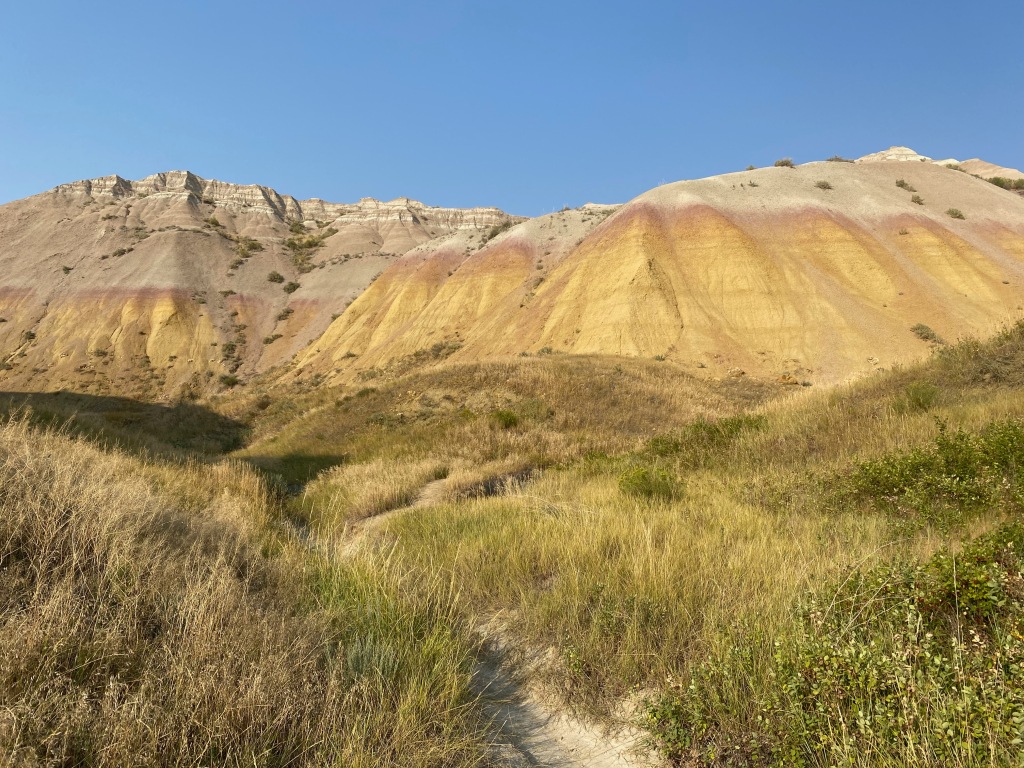
And on another day, while Elizabeth rested at the RV, I drove 75 miles down I-90 to the main entrance to Badlands National Park. We’d also visited this park 35 years ago, but it was even more impressive than I had remembered. The “Badlands Wall” rises up several hundred feet from the southern plains, creating an eerie landscape. Just a few miles south of Exit 131, you can see the stark formations filling the vista. What I really loved, a bit further down the road, was actually hiking the Door Trail along the ridges and out into the Badlands. (If I’d had more time I would have hiked the nearby Notch Trail, which takes you down a ladder into a dry basin.) From there I drove dozens of miles along the Badlands Loop Road, stopping at several overlooks to see the Yellow Mounds and the Pinnacles. I also saw more wildlife along the way, including big horn sheep, bison, and the excitable inhabitants of “Roberts Prairie Dog Town” (captured on the concluding video).




Dashboard:
Days on the road: 196;
Miles towing the RV: 7,780;
RV parks stayed at: 49;
National parks visited: 20.
The road ahead (Lord willing): Theodore Roosevelt National Park, North Dakota.

 Daniel Griswold's Blog