WEST GLACIER, MT – We arrived on Monday at Glacier Campground three miles outside the main west entrance to Glacier National Park. So far we’ve seen a black bear up close, hiked to a couple of glacial lakes, and joined a boat tour for an hour on Lake McDonald. And we’ve enjoyed our wooded RV campsite, even with its extra challenges.
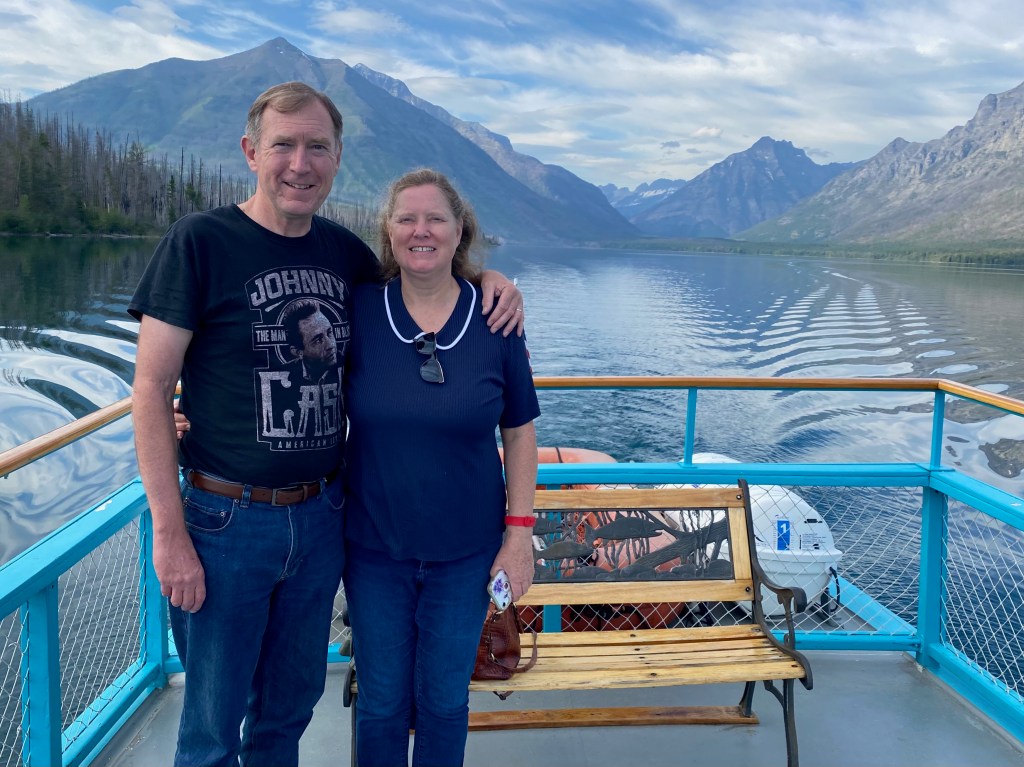
On Wednesday, Elizabeth and I were up early to drive into the park to the trailhead for Avalanche Lake. Because of high demand, Glacier N.P. currently requires a special day permit to enter the park between 6 a.m. and 5 p.m., as well as the normal park pass. Since we weren’t able to get a coveted day pass, we left the RV at 5:15 a.m. and drove into the park before the entry station opened. The trail to Avalanche Lake is about 2.3 miles long each way with 500 feet of elevation gain. The lake lies in a glacier-carved basin with water tumbling down from the glaciers that remain at the top of the rim.
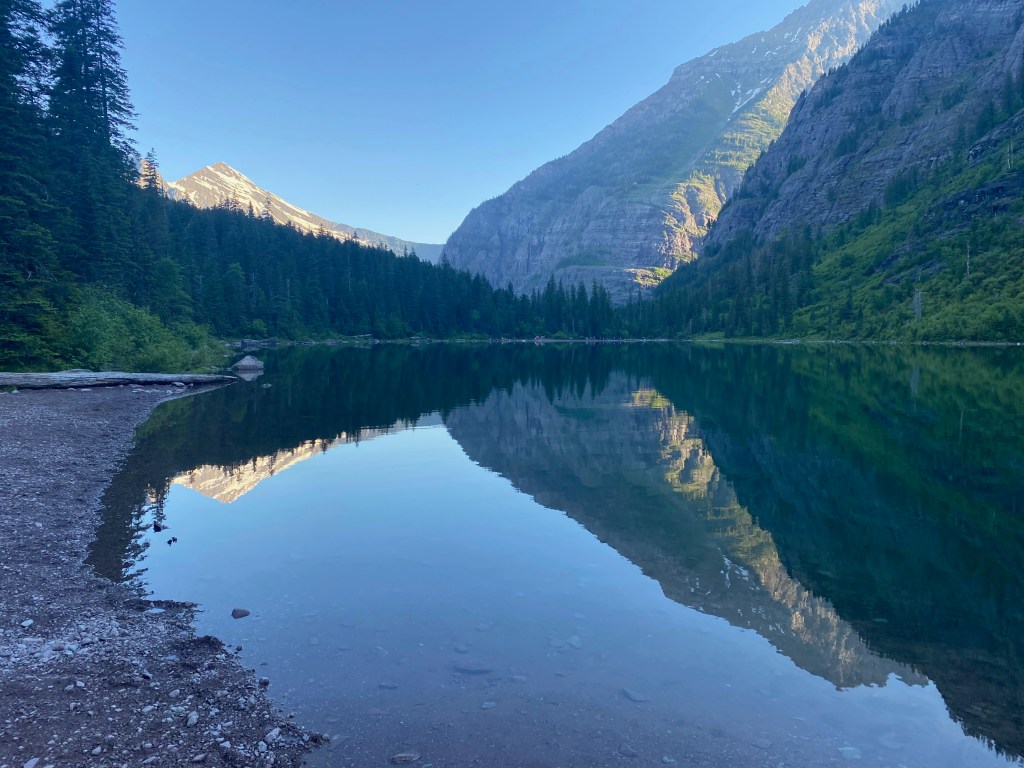
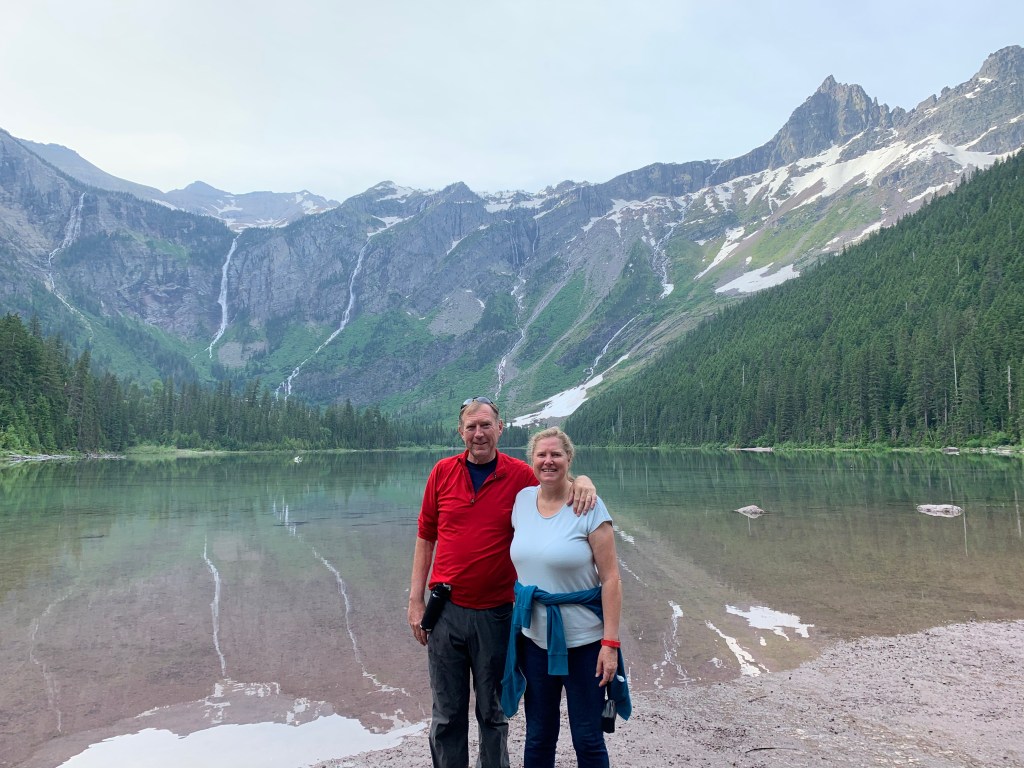
On the way up, we encountered a medium-sized black bear not far from the trail. As you can see from Elizabeth’s video, the bear was ambling in my direction until something made the bear scamper back from the trail. (Here’s my own video that I shared on FaceBook.)
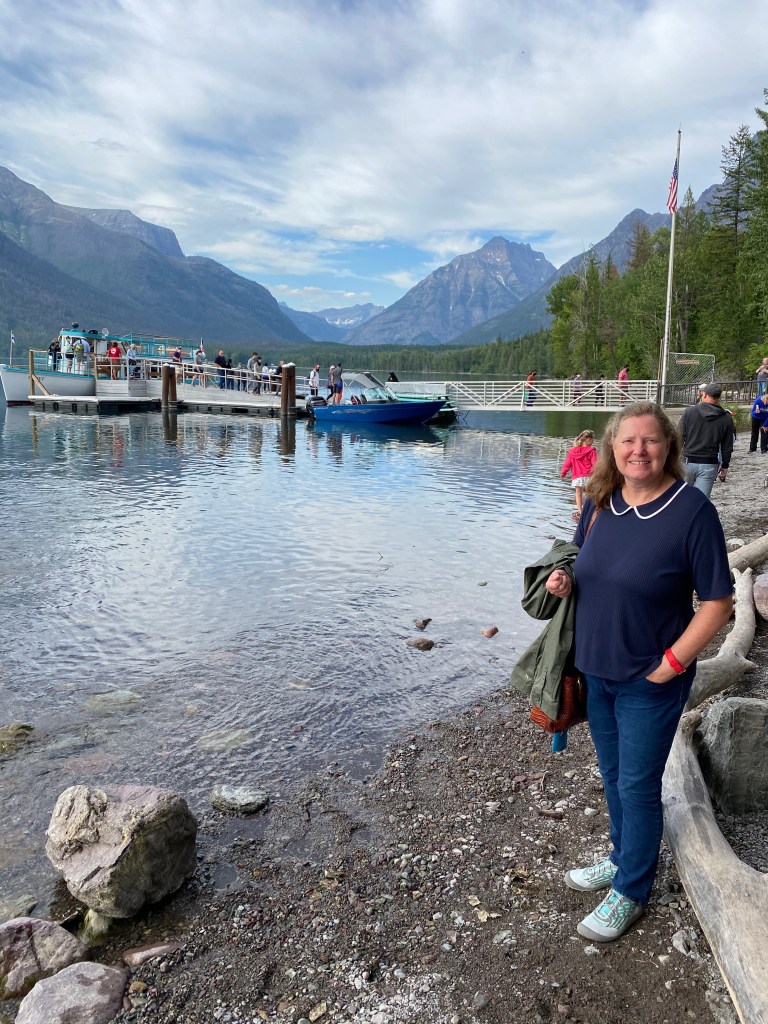
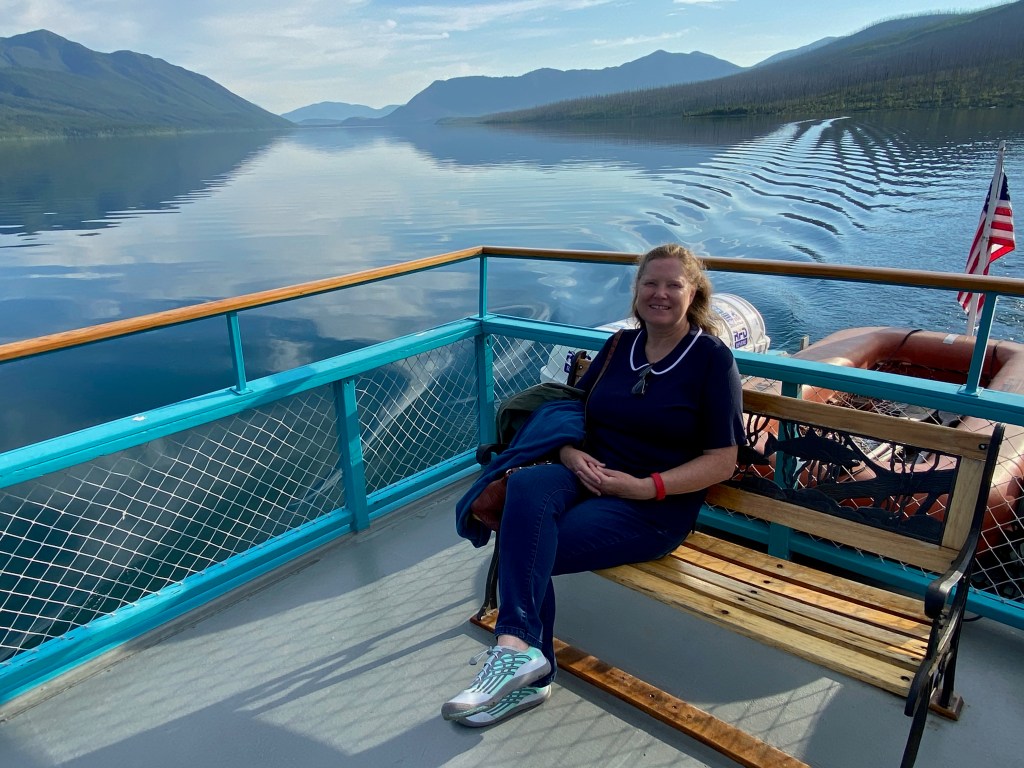
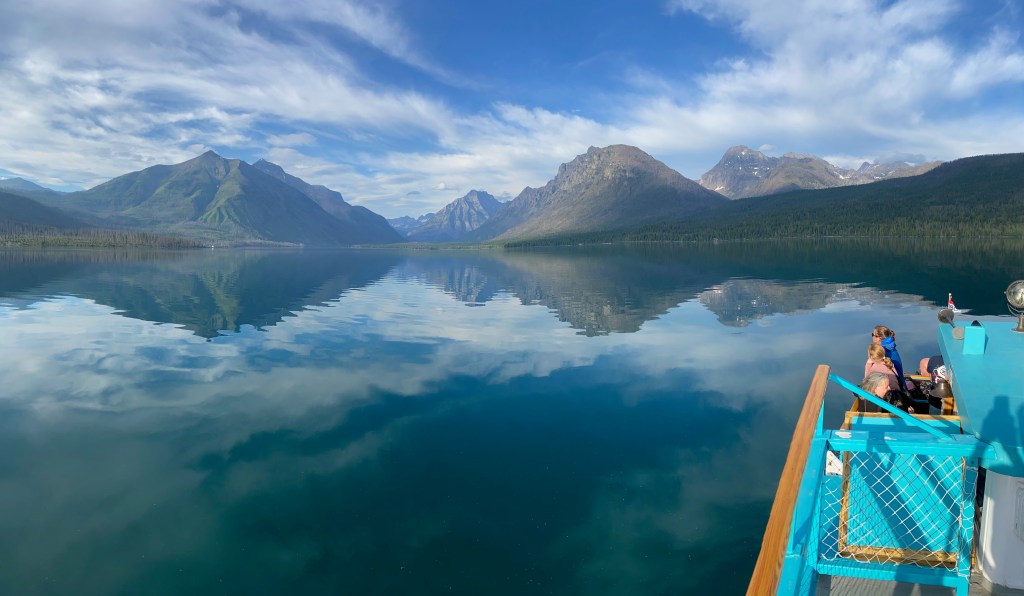
Later that day, we drove to the Lake McDonald Lodge to catch a one-hour boat tour of the 10-mile long, 400-foot deep glacial lake, the largest in the park. The boat held about 40 people and was captained by a young lady who I am sure was no older than about 26. A young man named Ethen provided commentary and answered questions about geology, glaciers, recent fires, and the native Blackfoot Indians.
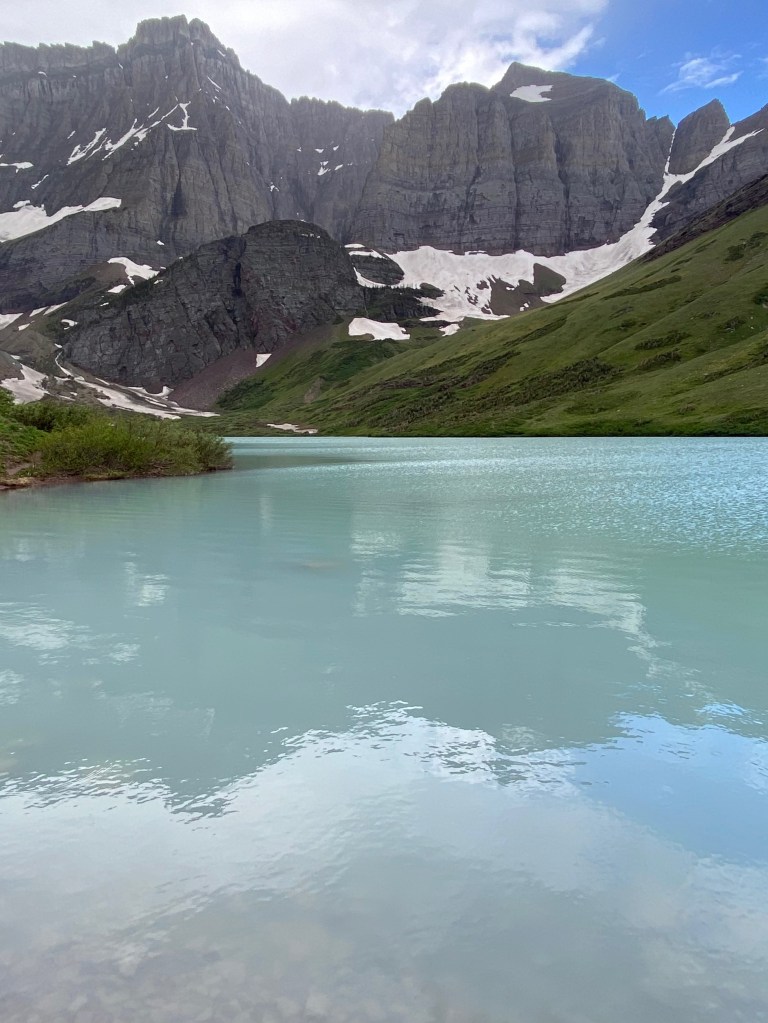
On Thursday I was up even earlier to drive on my own to the east side of the park, where I hiked 6.1 miles one-way through the woods and along the rushing Canyon Creek to the aqua blue Cracker Lake. The lake is nestled in another glacial bowl 6,000 feet above sea level and with about 1,100 feet of elevation gain from the trail head. I crossed a couple of small log bridges and then across several ridges above timberline before coming to the spectacular sight of the lake. I lingered there for almost an hour, looking out on the lake and the peaks 3,000 to 4,000 feet above it. The water draws its color from the small flakes of rock ground by glaciers, known as “glacial flour,” that reflect back blue and green light. I was joined in my time there by several more arriving hikers, and a well-fed yellow-bellied marmot, who didn’t seem to mind us being in his space.
Slideshow: 1) At the shore of Cracker Lake, with rocks visible through the “glacial milk”; 2) the yellow-bellied marmot who joined the hikers at the overlook; 3) looking toward the foot of the lake; 4) blue wildflowers, a blue-green lake, and blue sky; 5) a pano shot from the side of the lake; 6) approaching Cracker Lake; 7) a bridge across Canyon Creek along the lake trail.

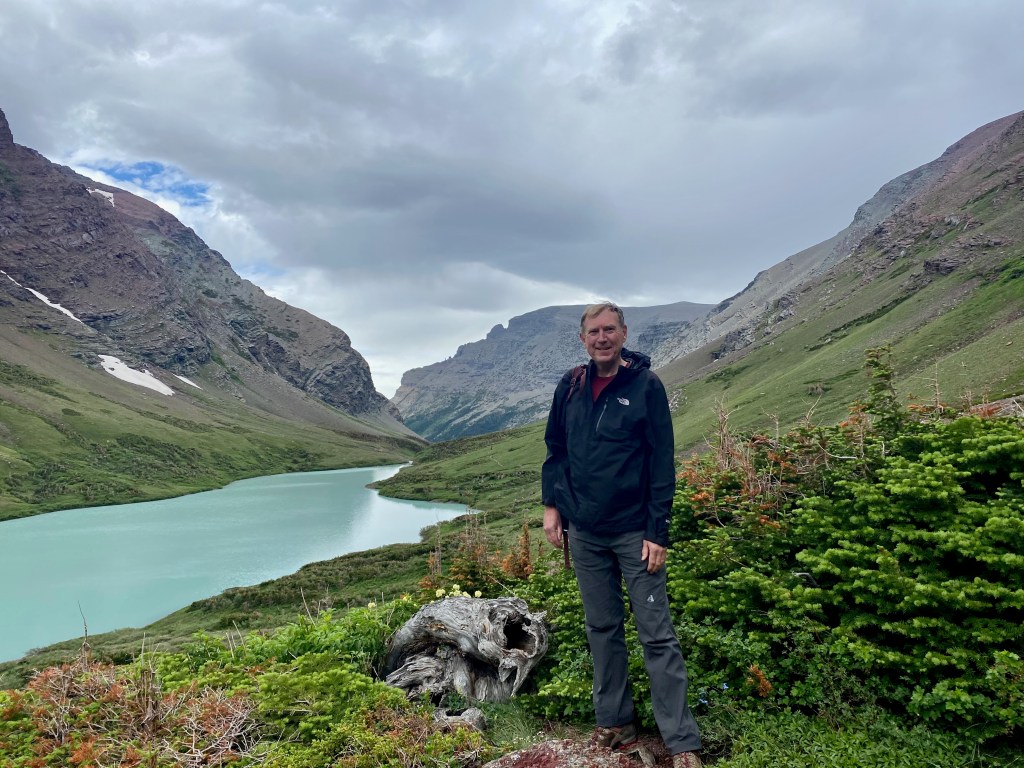
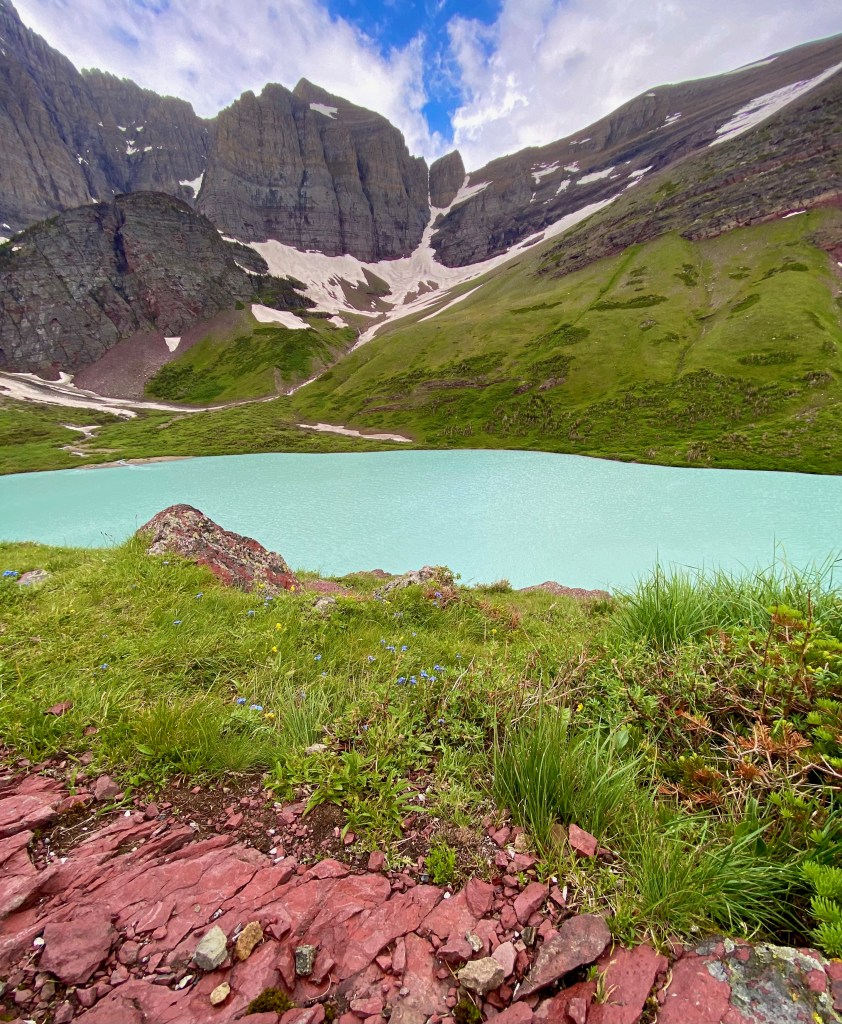
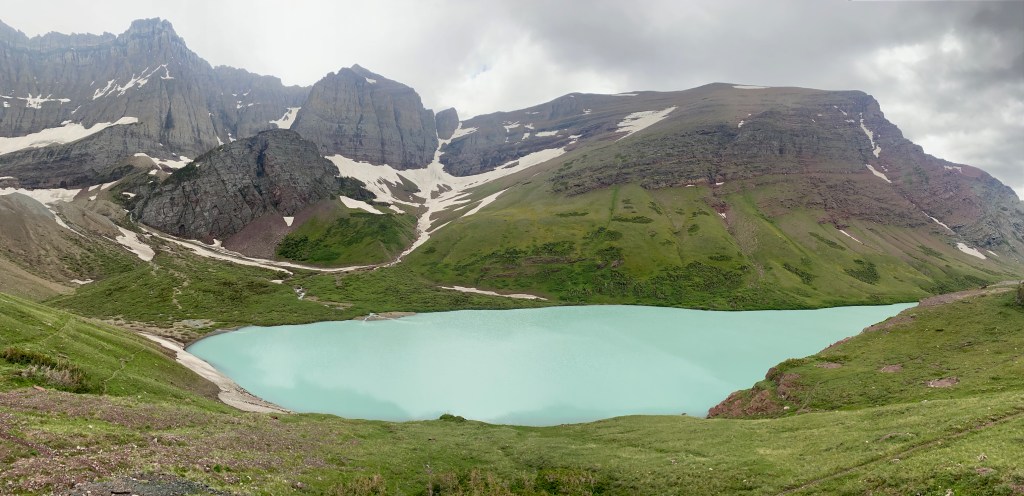
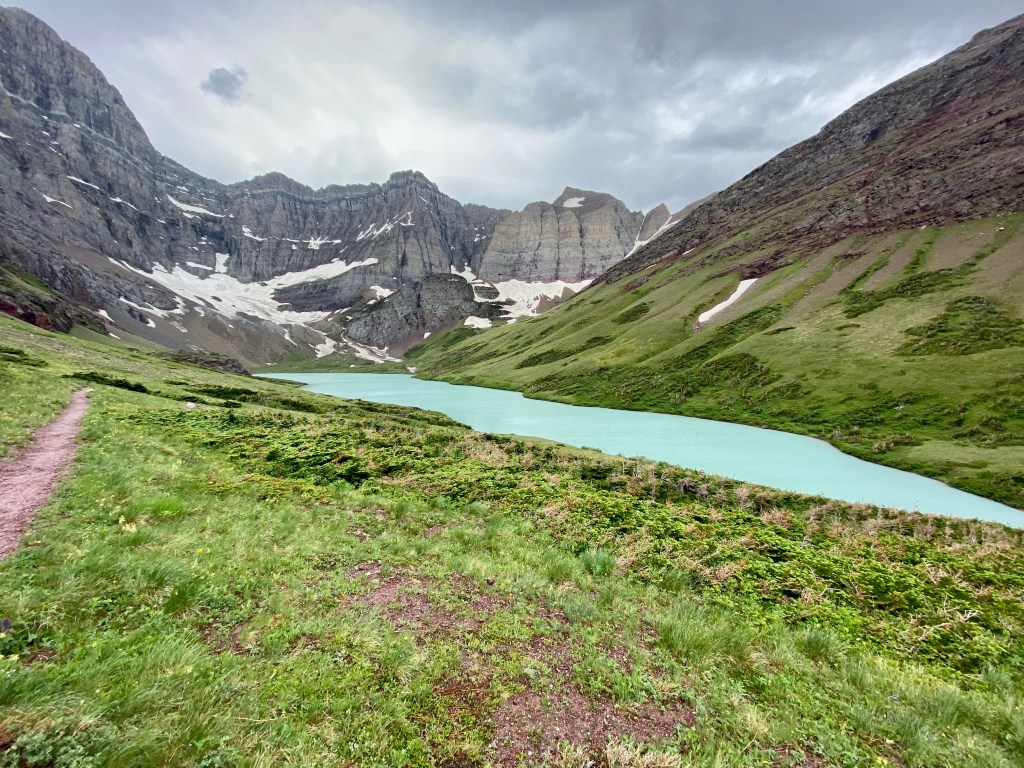
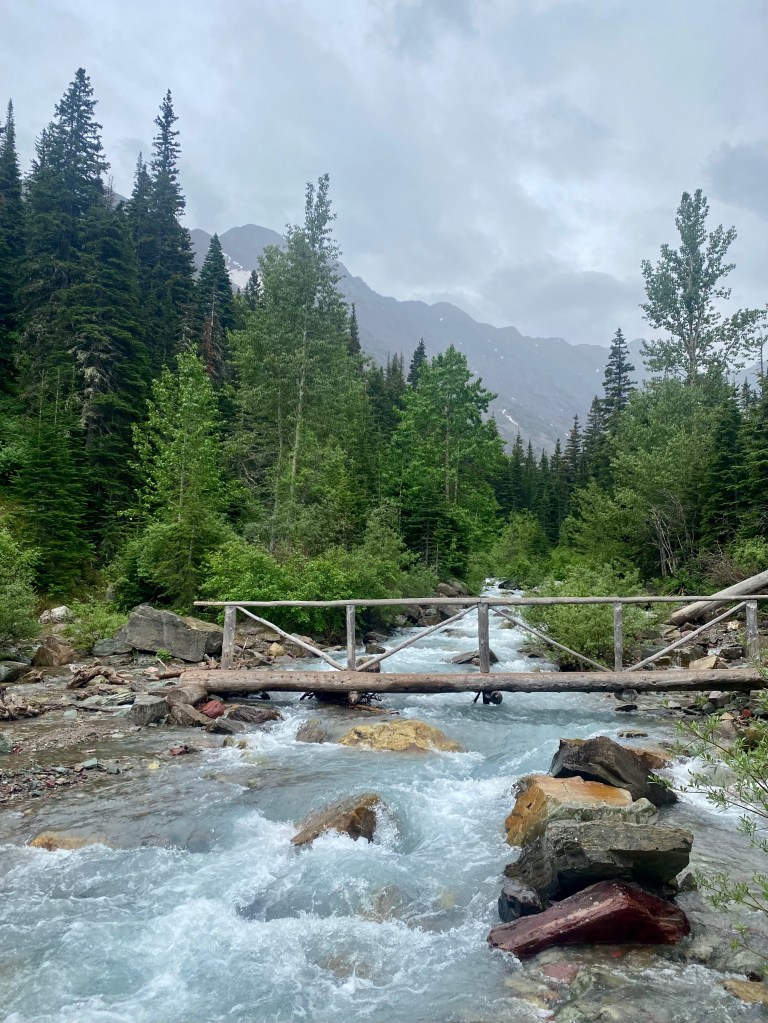
On the way down, I was asked by several hikers heading up, “How far is it to the lake?” This can be a tough question, especially when I’ve already come a long way down, because I don’t always know the miles I’ve covered, but I also don’t want to discourage hikers that still have a long way to go. When one couple that was still far from the top asked me the question, I said they still had a ways to go, and then in a Yogi Berra moment I reminded them, “Half the journey is getting there!” (I think I was trying to say that the journey itself is half the experience.)
***
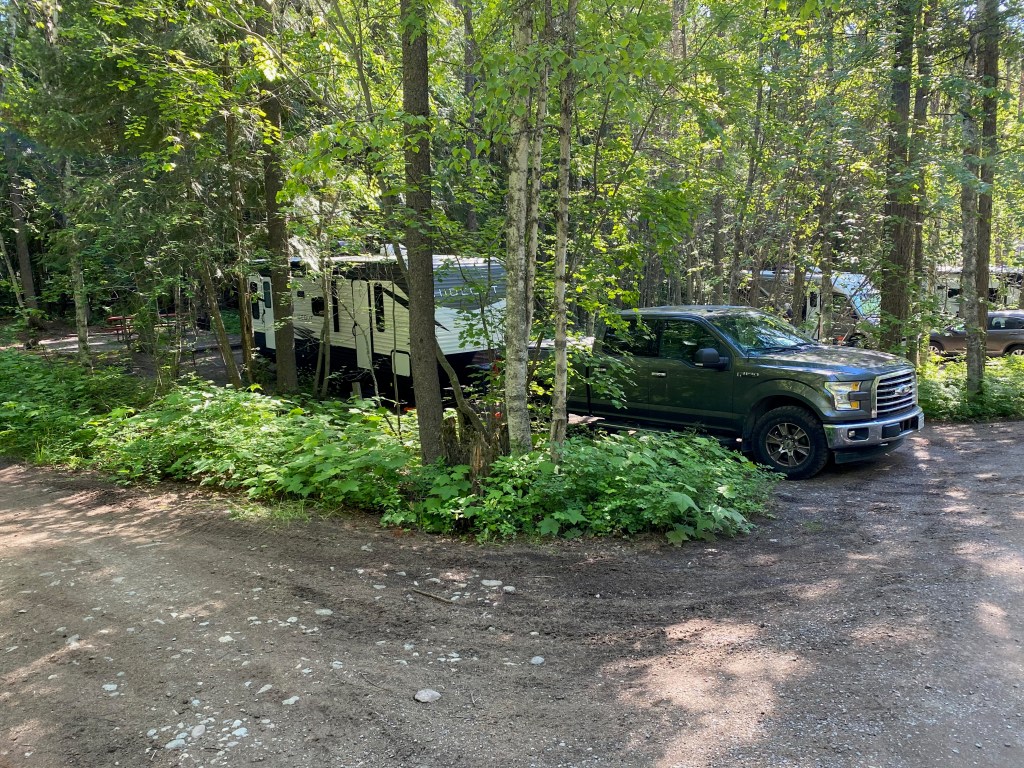
Glacier Campground where we’re staying bills itself as “the way camping used to be.” This is mostly to our benefit. Our camping spot, F5, is a back-in spot, which offers more privacy and woods on three sides, but it also requires that I back our 30-foot trailer into a narrow spot, a skill that I am still developing! And the campground is “partial hook-ups,” which means we’re plugged into water and 30-amp electrical power, but no wastewater hookup. I’ll spare the details for now, but that means every couple of days, we need to empty our gray water tank (which collects drainage from the sink and shower) and our black water tank (which collects from the toilet) into a portable, plastic tote tank and haul it to the campground’s “dump station” to empty. A park employee driving by while we were in the process remarked wryly that this is “the underbelly of camping.”


 Daniel Griswold's Blog