LONG BEACH, WA – We’re wrapping up six days in this beach town just north of the Columbia River, exploring the region where the Lewis and Clark expedition spent the winter of 1805-06 after reaching the Pacific Ocean.
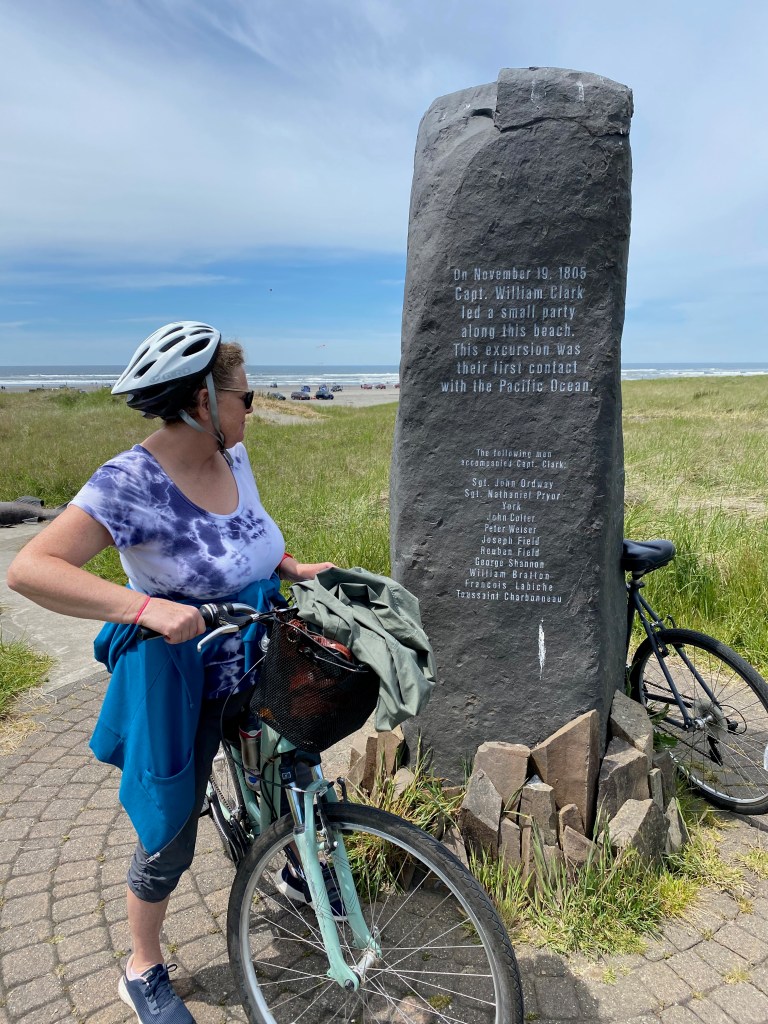
On Friday, we rode our bikes south for six miles along the Discovery Trail, a paved path that parallels the beach and also traces the steps of the Lewis and Clark expedition. A marker on the trail said this was the place in November 1805 where William Clark and a few of the men first reached the Pacific Ocean after their journey across the continent. The trail led us to the North Head Lighthouse built in 1898 to guide ships into the treacherous waters of the Columbia River.


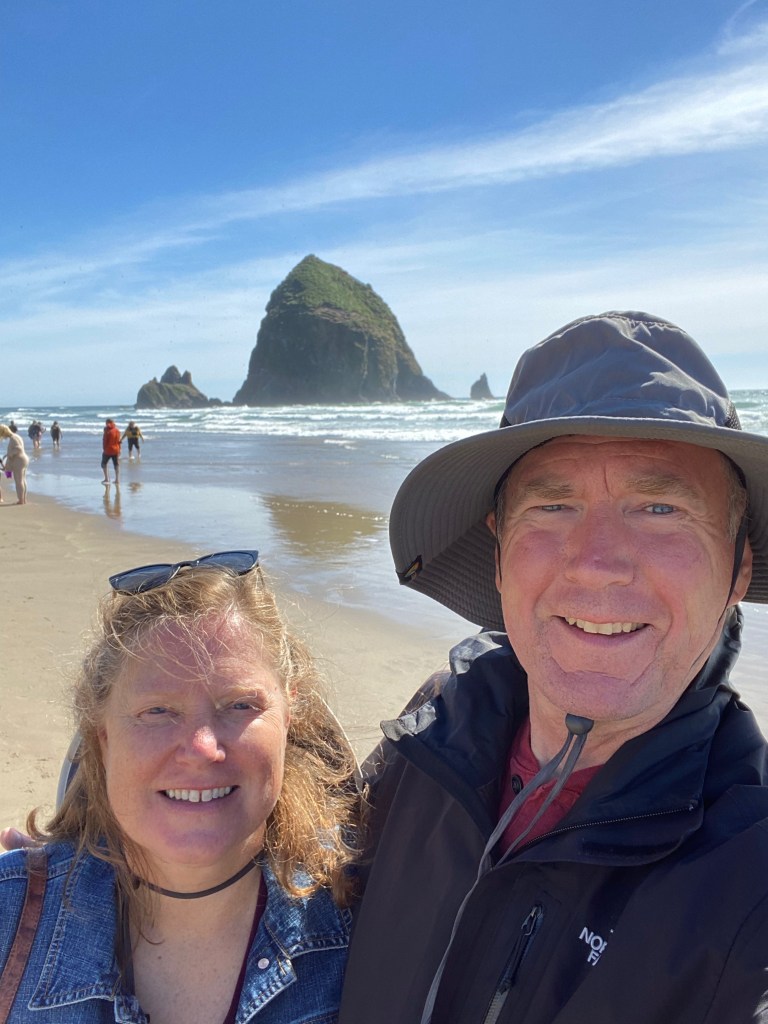
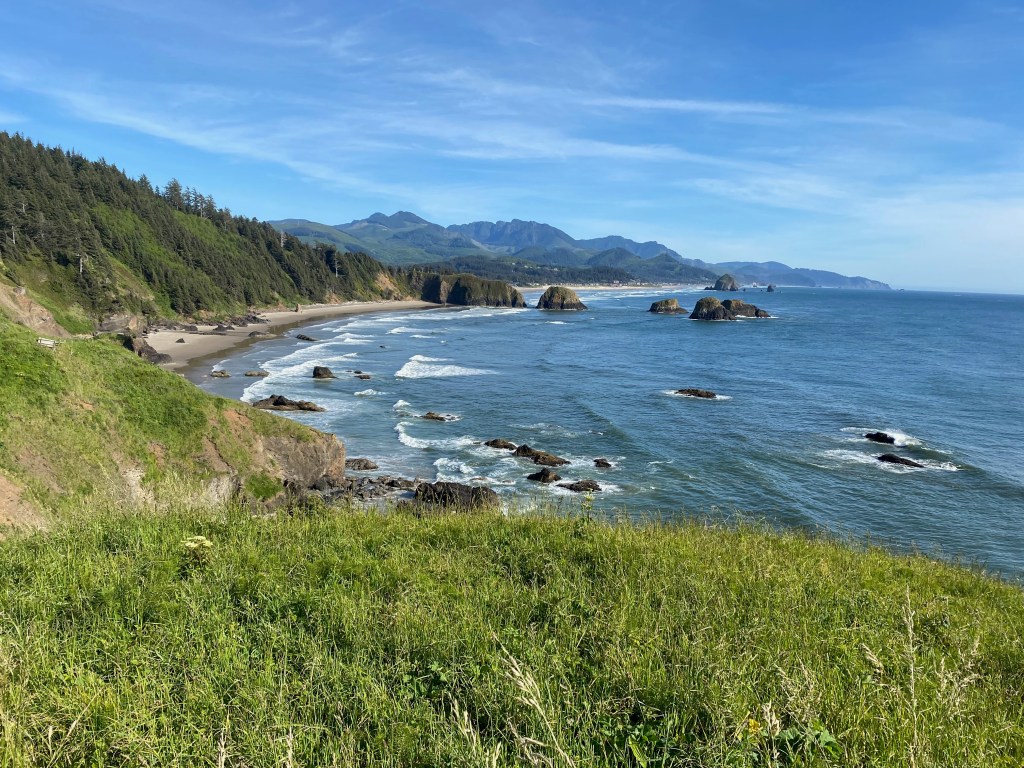
On Saturday, we drove back across the Astoria-Megler Bridge into Oregon to walk on Cannon Beach and see the iconic Haystack Rock just offshore. Clark came to the beach during their time here to investigate reports from Indians of a huge beached whale. We then enjoyed the views from Ecola State Park and the Promenade in Seaside. It was wonderful to see throngs of people on the beach enjoying the sunny start to the Memorial Day weekend.
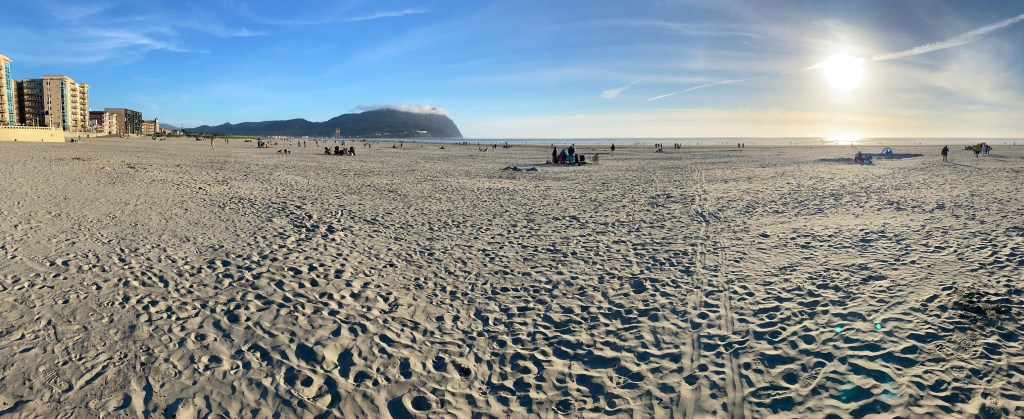
On Sunday afternoon, we drove the pickup truck for 13 miles up the beach from town. Regulations in Washington allow driving on the beach and even building fires. People were riding motor bikes and one family even brought their RV onto the hard-packed sand. Oregon likes to call their beachfront “the people’s coast” because it’s all publicly owned, but this also seemed to be the people’s coast because it could be enjoyed in lots of different ways by local residents. On a walk on the north end of the peninsula, Elizabeth spotted a bald eagle on a perch on one of the dunes overlooking the beach.
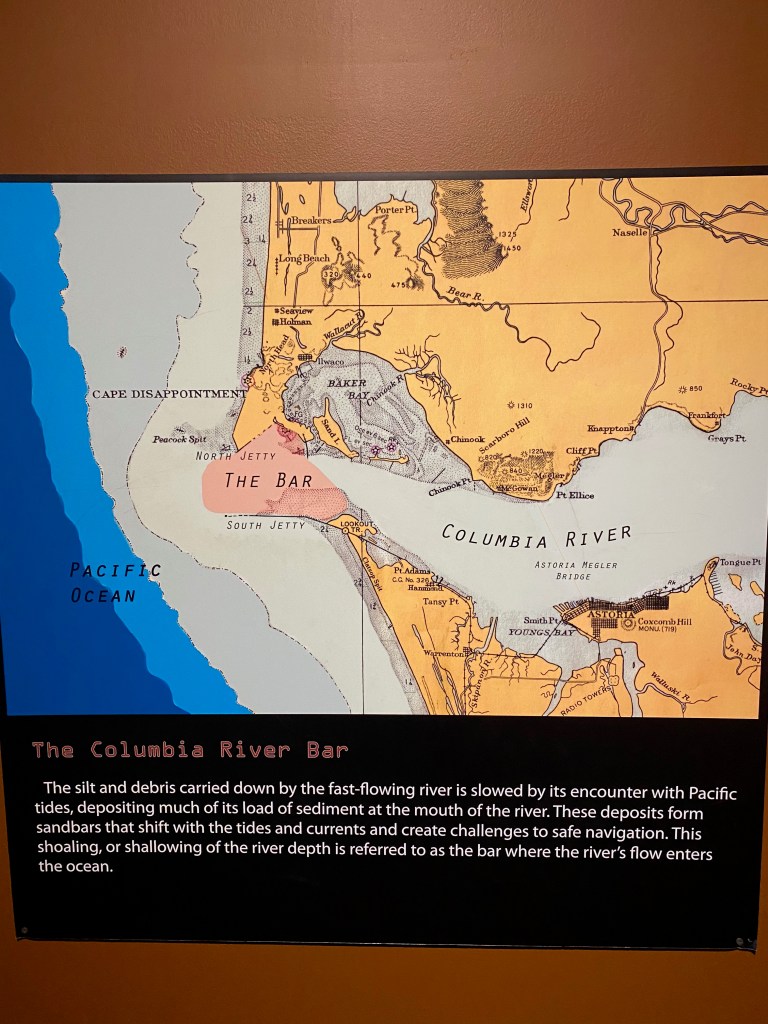
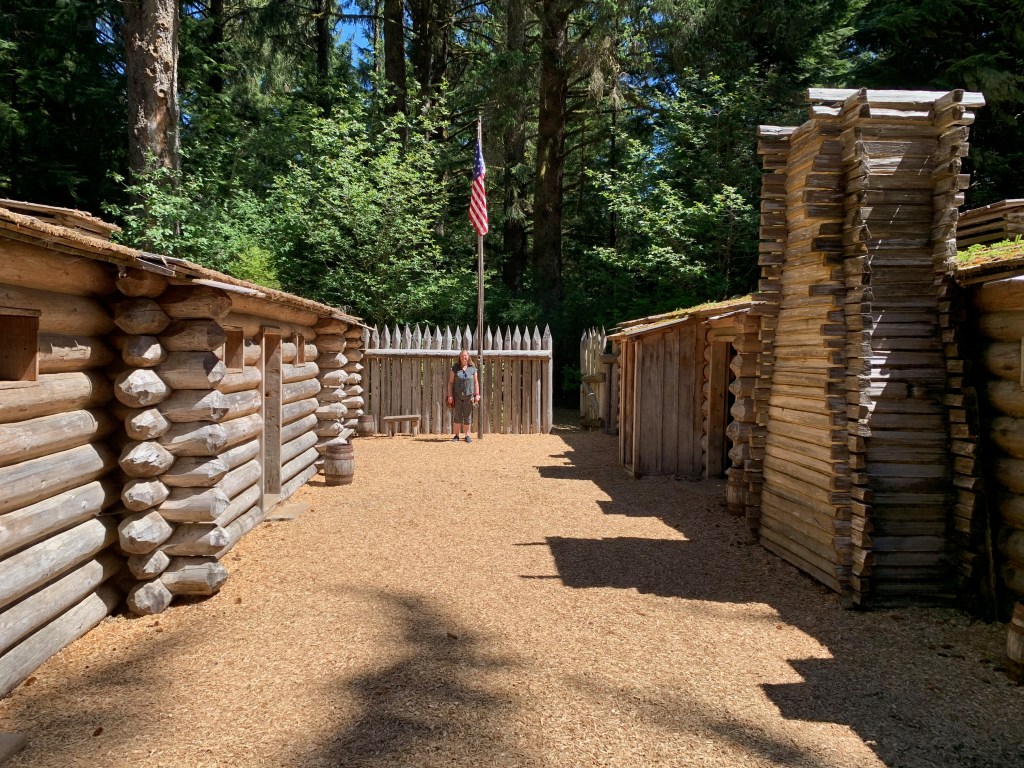
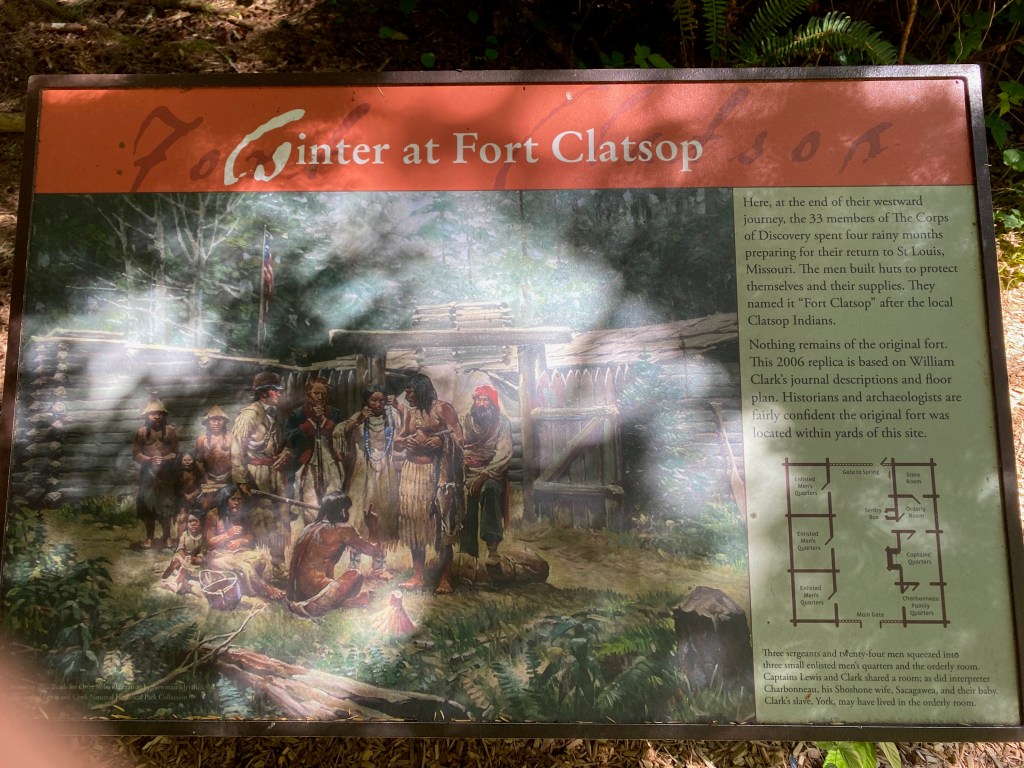
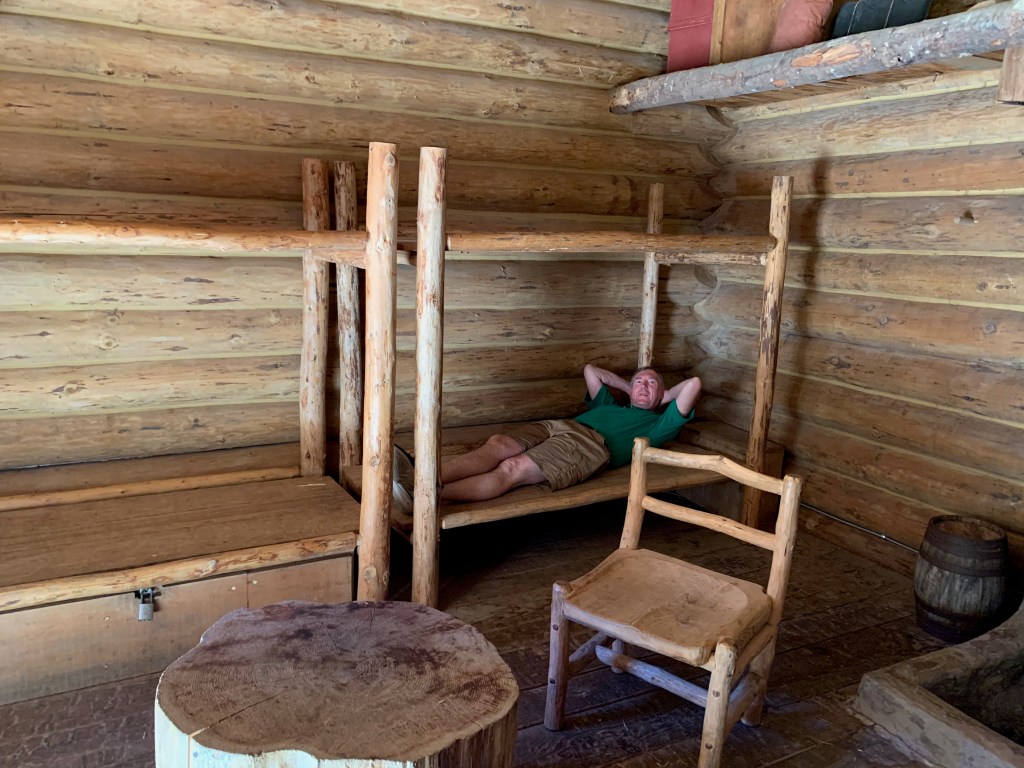
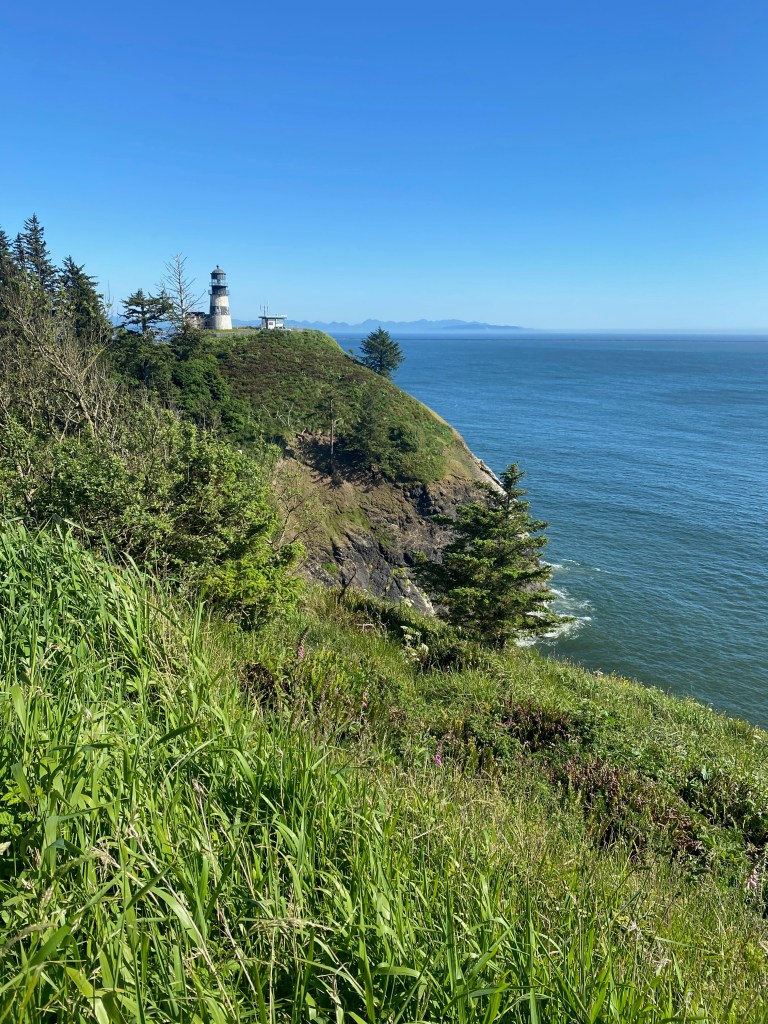
Yesterday we were back across the river in Oregon visiting another Lewis and Clark site, Fort Clatsop. This is a recreated fort on the location where the party spent the winter of 1805-06. I also toured the Columbia River Maritime Museum in Astoria, where I learned about “the Columbia River bar,” the entry point to the river where shifting sand bars and turbulent seas have made this “the Graveyard of the Pacific.” Since the early 1800s, hundreds of ships and 700 lives have been lost. On the way home we stopped at Cape Disappointment to view the lighthouse and look out across the mouth of the river.


 Daniel Griswold's Blog