YOSEMITE NATIONAL PARK, CA – Yesterday I hiked to the rim of Yosemite Valley to look down on one of the tallest waterfalls in North America and then on to Yosemite Point for a sweeping view of Half Dome and the valley floor below. It was one of the most demanding and rewarding hikes I’ve ever tackled.
Upper Yosemite Falls plunges 1,430 feet to the rocks below, where the water cascades to the top of Lower Yosemite Falls, to tumble another 320 feet. From the top of the upper falls to the base of the lower falls, the water drops a total of 2,425 feet. The trail to the top of Upper Falls rises 2,700 feet from the trailhead, and Yosemite Point lies a few hundred feet higher, for a total elevation gain of 3,000 feet. Roundtrip, the hike was 8.8 miles.
After climbing steep switchbacks and stone stairs much of the first part of the hike, I was rewarded with a view from the bottom of the upper falls, with Half Dome in the distance. The spray was enough to wet the screen of my iPhone.
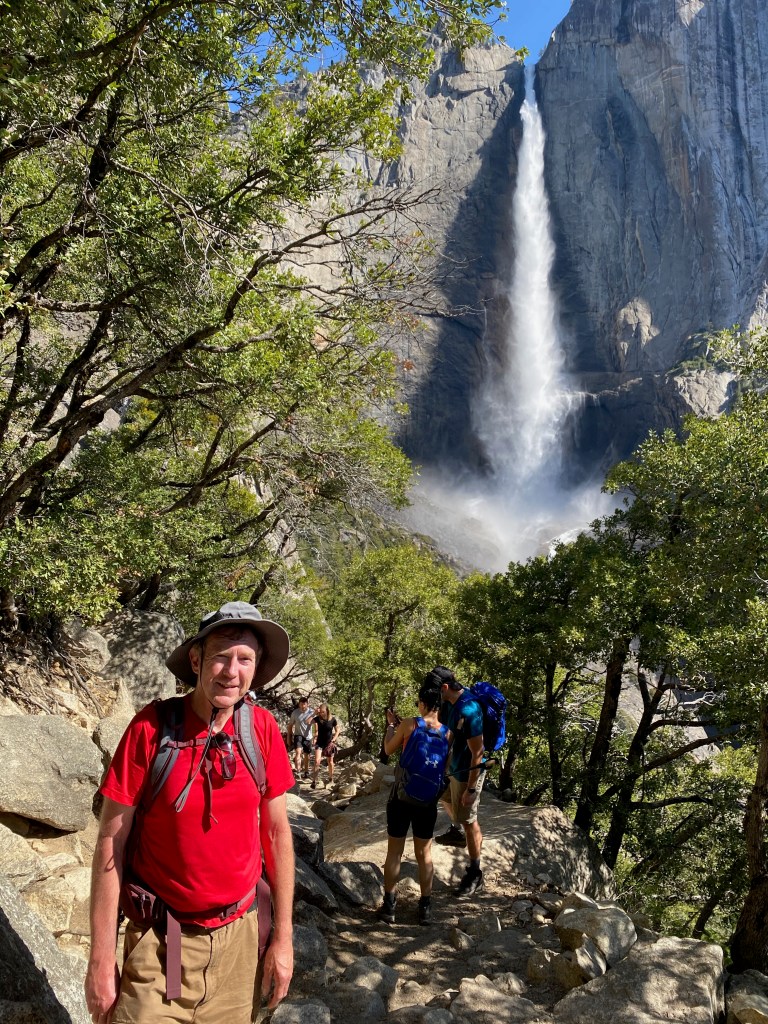


From there the trail follows more switchbacks to the rim of the valley and then down a few hundred feet to a viewing rock at the top of the upper falls. Leaning over a sturdy steel guard rail, I was able to snap a few photos of the falls roaring over the precipice. Thanks to the iPhone wide-angle lens feature, I was able to capture not only the falls but also the valley below.

And from there it was on to Yosemite Point. The trail there is about a mile, crossing Yosemite Creek only about a hundred feet upstream from the falls. The view from there rivals that of Glacier Point on the opposite rim, with Half Dome dominating the east end of the valley.

The hike down was easier on my heart and lungs but more challenging for my brain and balance. With all those stone steps, I had to choose my footing carefully. Once I slipped on a sand-covered step and fell back on my bottom, and at least three other times I had to catch myself. My total time on the trail, including breaks, was about 6 hours.
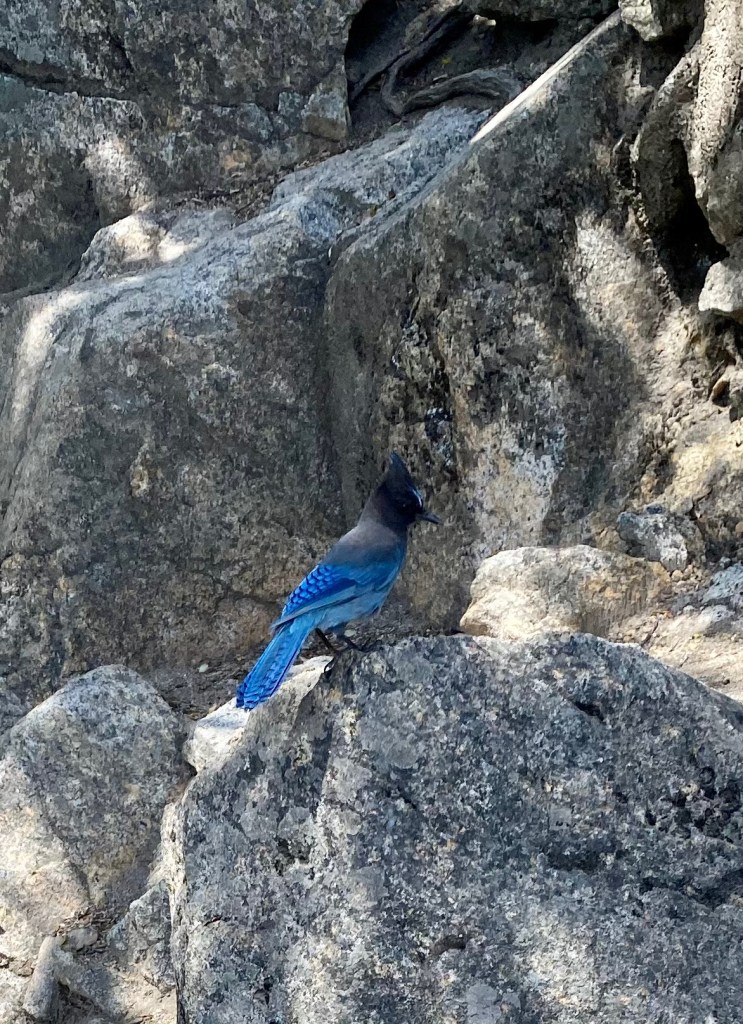
Here are three more photos from the trip down: 1) A look back at Upper Yosemite Falls; 2) Half Dome; 3) A friendly steller’s jay, the same kind of bird that was waiting for a cracker at Muir Rock in Kings Canyon.


***
A few general observations about Yosemite N.P.: It’s an incredibly scenic place, and if you’ve ever thought of visiting, don’t put it off too long. Early May is a great time of year to visit the park. You miss the summer vacation hordes, which means you can enter the park anytime without making a reservation, which will be required this year starting on May 21. Temperatures are warm, in the 70s and low 80s during our visit, but not too hot.
Another benefit of an early spring visit is that the snow melt is still feeding the waterfalls and rivers. When people think of Yosemite, they tend to picture El Capitan and Half Dome, and rightly so, but what brings the park alive is the sound of crashing water. All the major waterfalls—Bridalveil, Yosemite, Vernal, and Nevada—are flowing generously during our time here. That flow can greatly diminish or dry up entirely later in the summer with the last of the snow melt.
Yosemite would be worth visiting even in the drier season, but it would seem to me a diminished experience—like visiting a magnificent concert hall but without the music.

 Daniel Griswold's Blog
We didn’t get off the valley floor when we visited in 2016 and wish we did. Thanks for the virtual hike.