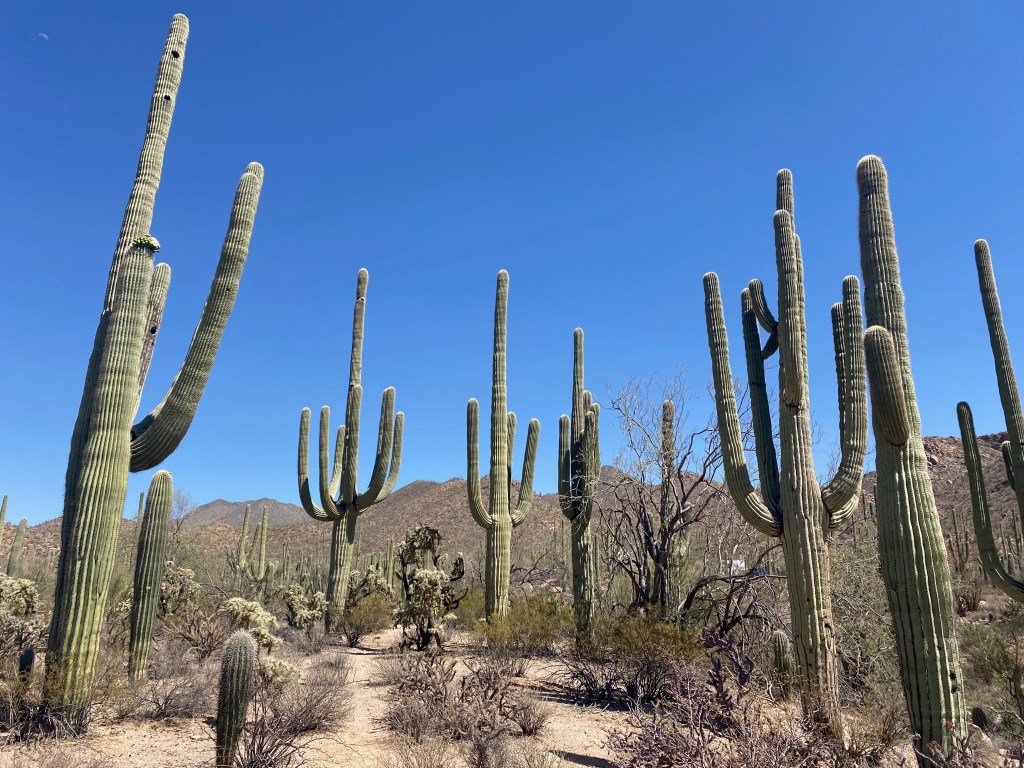
TUCSON, AZ – Who knew the desert Southwest could be so colorful? In our last full day in the Tucson area yesterday, we toured the Arizona-Sonora Desert Museum and the West section of the Saguaro National Park—getting up close to tall saguaro cacti and other blooming desert plants covering the rolling hills of the park.
The Desert Museum is located in the Tucson Mountain Park just south of the Visitor Center in the West section of the national park. Admission was not cheap–$23 per person–but it was a reasonable charge for the three hours we spent there viewing desert plants, wildlife and mineral riches mined in Arizona.
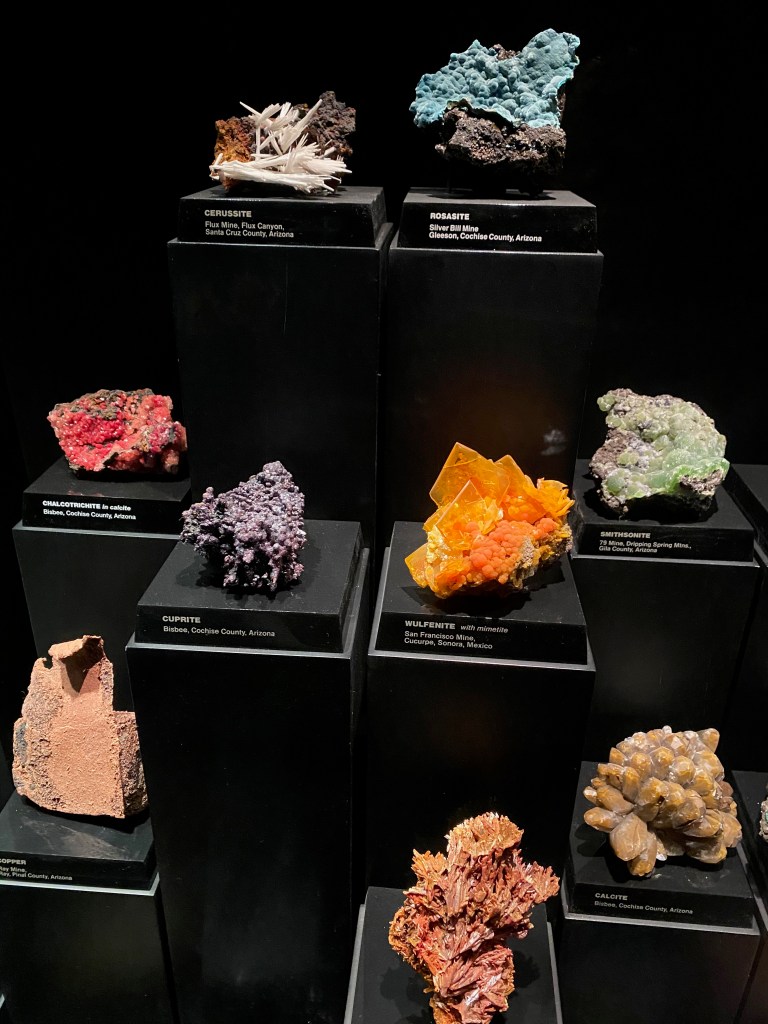
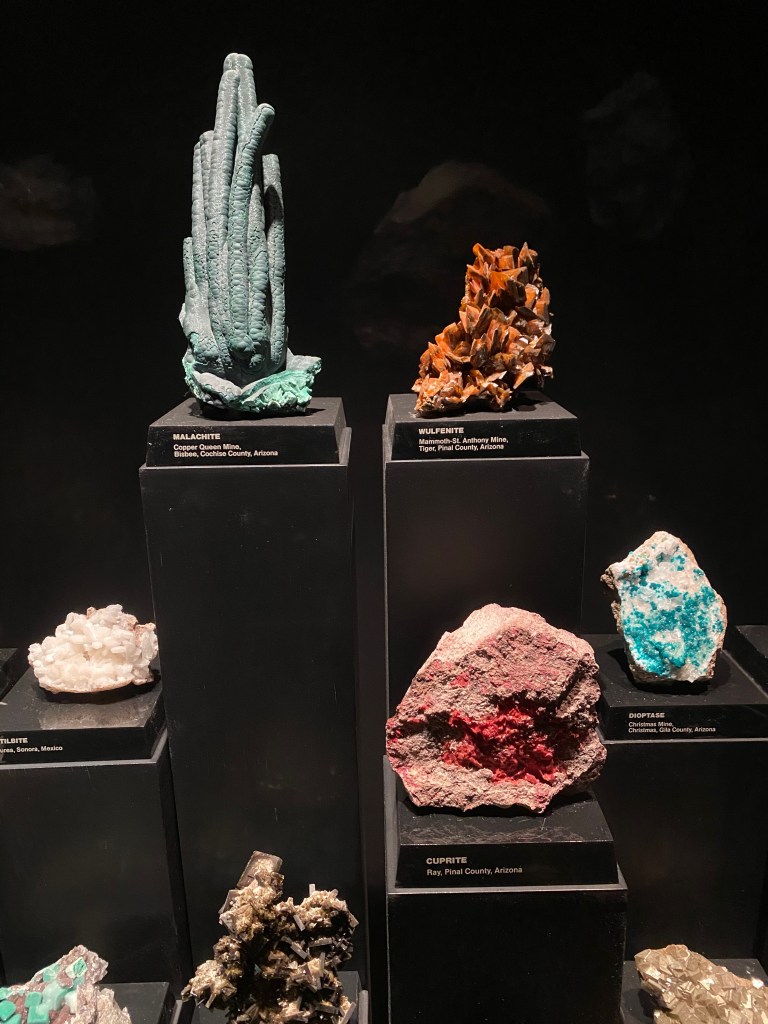
Among the highlights that you shouldn’t miss at the museum is the hummingbird aviary, where we were able to watch three of the little birds flit around us. I was especially impressed with the mineral collection, which I thought rivaled that of the Smithsonian’s Natural History Museum in Washington. The museum’s display was all the more impressive because almost all the colorful rocks were mined in Arizona or in nearby Mexico. (See photos below.)

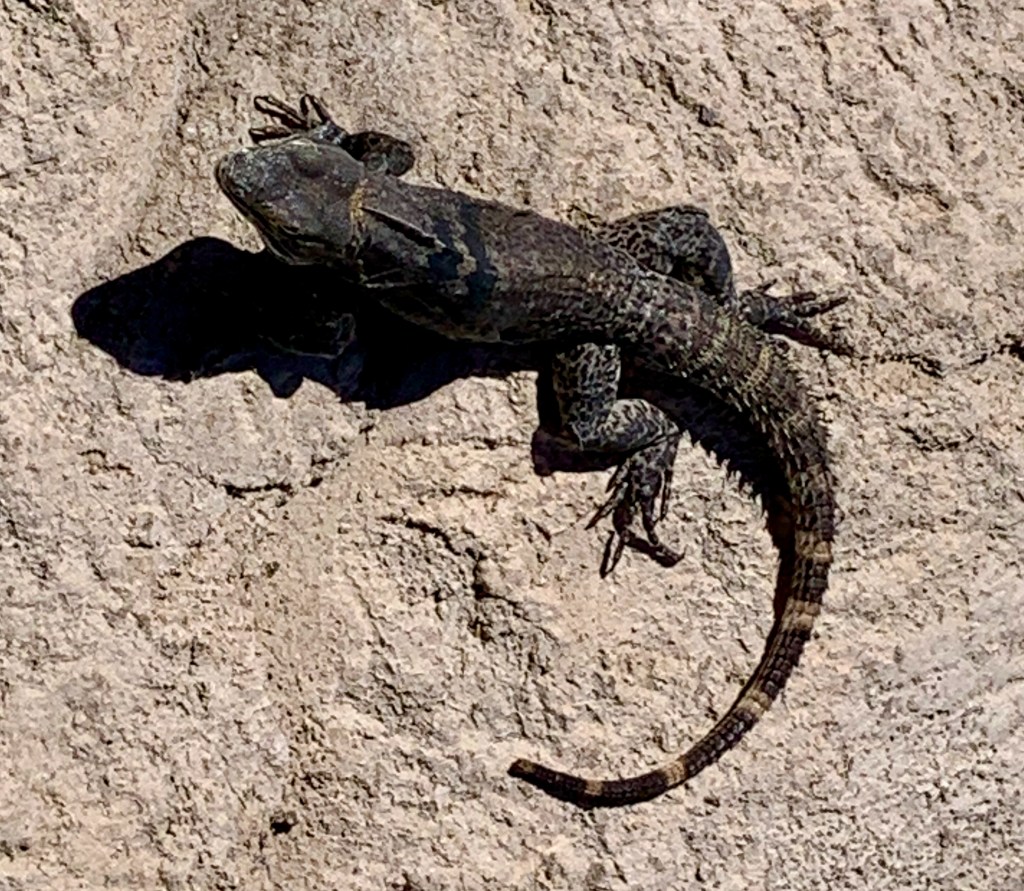
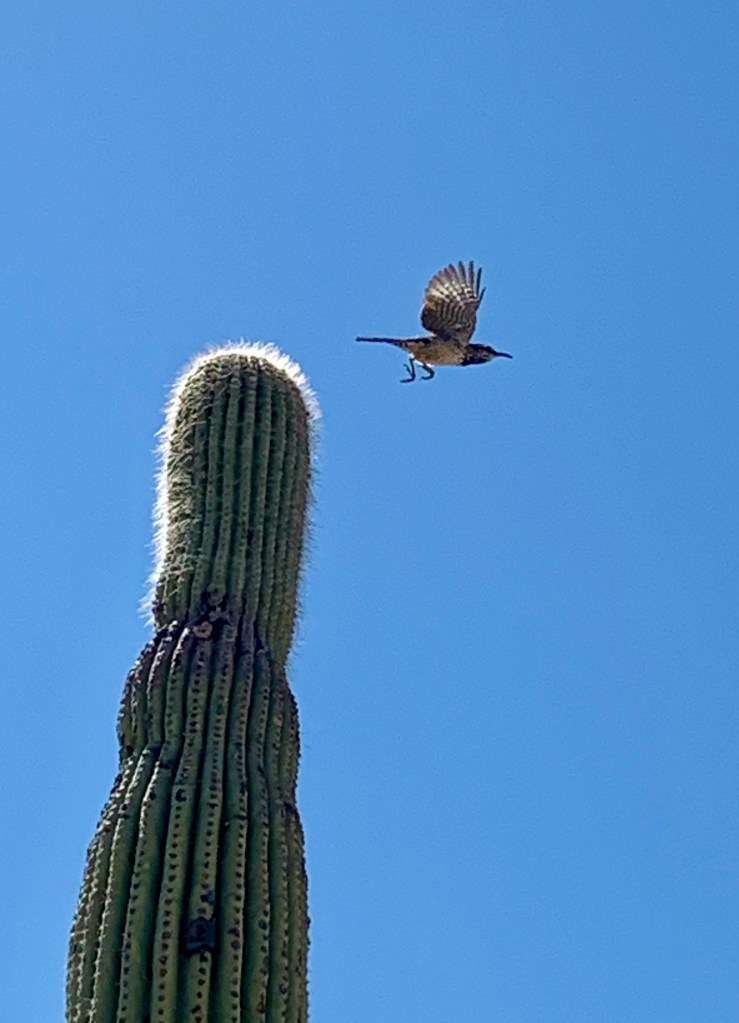
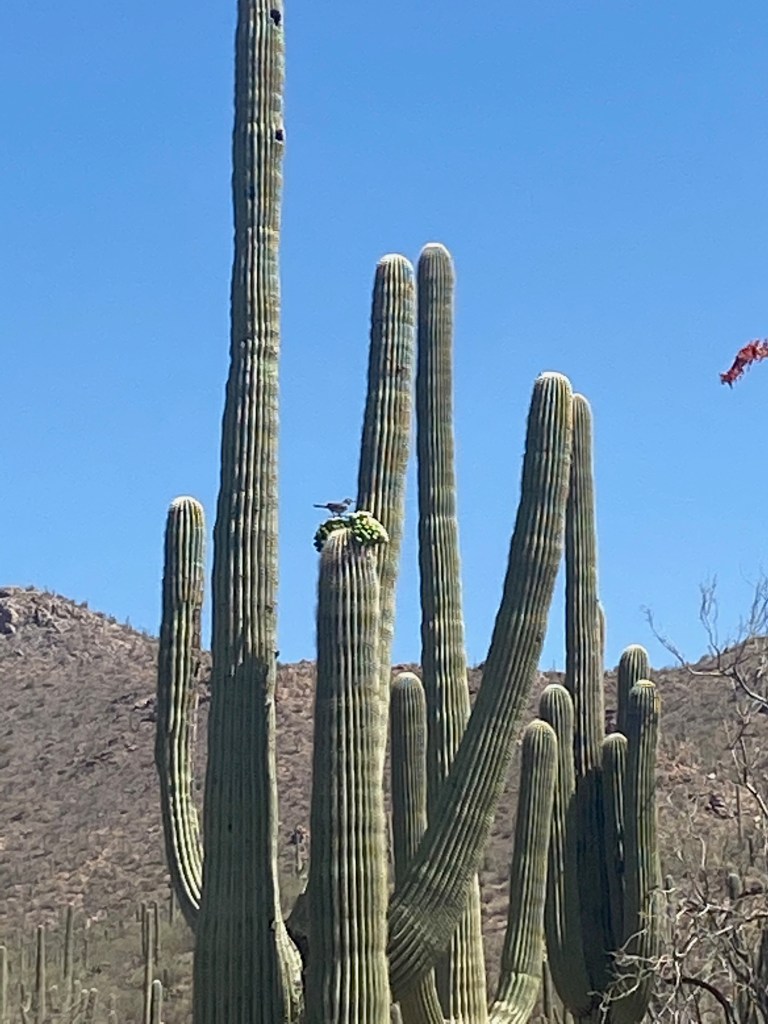
At the museum you can also see wildlife that would be much more rare to see in the park. We saw javalinas sleeping under a pedestrian bridge, a black bear, lots of rattlesnakes safely behind glass, a beaver, a large lizard sunning itself on a rock, and Mexican gray wolves. Elizabeth took the photo of the bird taking off from atop a saguaro cactus, and the coyote was on the road just outside the museum as we were leaving.

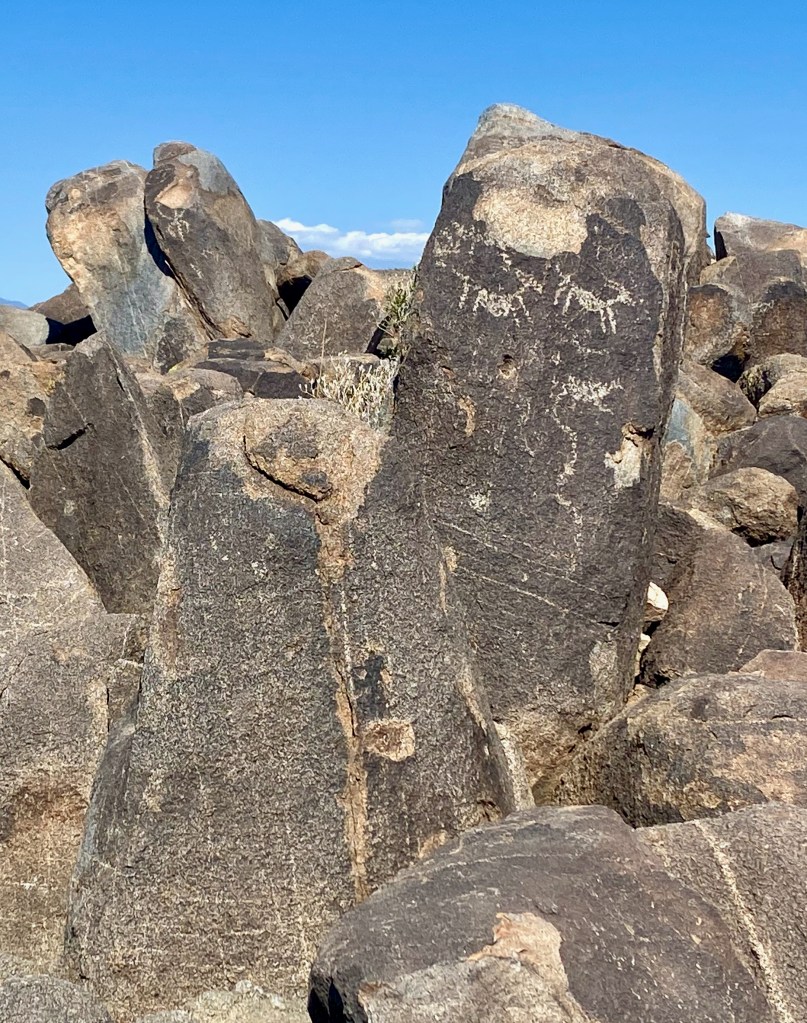
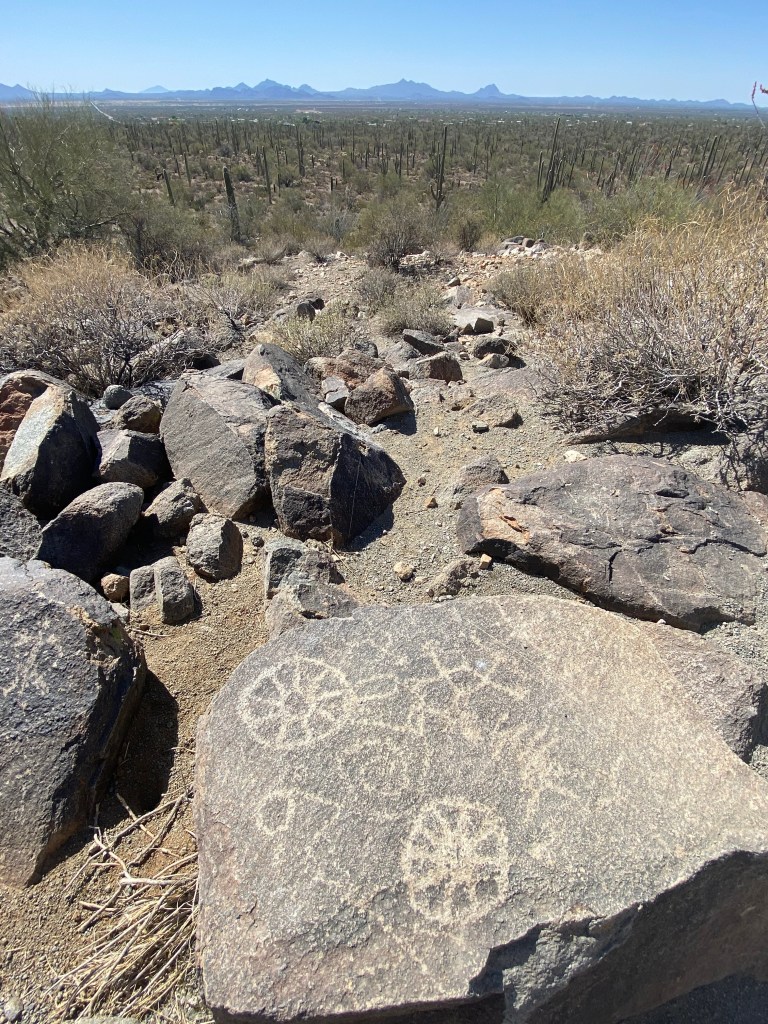
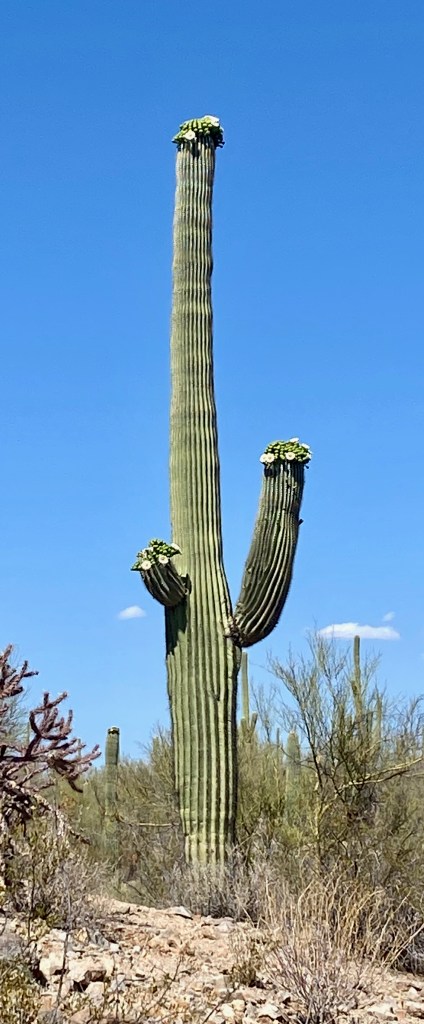
In Saguaro National Park, time limited us to the West section. We drove the 5-mile Bajada Loop through a forest of saguaro (pronounced suh-WAH-row) cacti. We hiked for a mile or so on the Cactus Wren and Wild Dog trails, surrounded by the towering stick figures known as the “sentinels of the desert.” At the visitor center we learned that the saguaro can grow to 40 feet or higher and only start sprouting arms at age 70. They are found in large numbers only in this part of the Sonora Desert. Toward the end of the loop we climbed a third of a mile to the top of Signal Hill to view petroglyphs created by the Hohokam Indians who lived in the area between 450 and 1450 AD.
This was an ideal time of year to visit this verdant desert park. Many of the plants are blooming with colorful flowers. The temperatures were in the 60s at the beginning of the day, peaking in the low 80s by afternoon, compared to highs near 100 that are normal during the summer months.

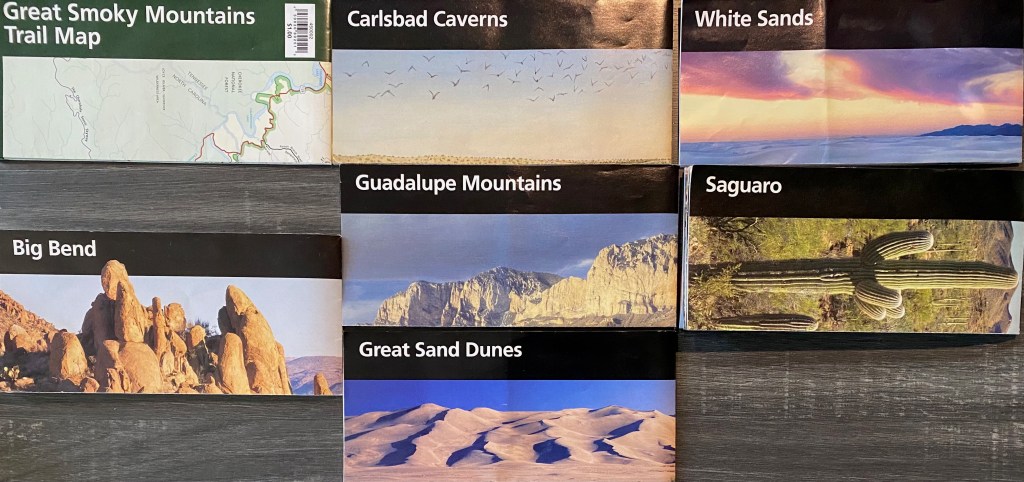
Saguaro marks the eighth national park we’ve enjoyed since we began our trip in early February. Seeing as many national parks as we can has been a kind of organizing principle of our itinerary. Lord willing, by the time we see Yellowstone N.P. in early July, we will have visited 20 national parks! (Here’s a montage of my trophies, minus the brochure for Hot Springs N.P. in Arkansas, which I must have absent-mindedly discarded along the way.)
***
On Sunday we worshiped at Covenant Orthodox Presbyterian Church in Tucson. We heard an excellent sermon from 1 Peter 2:11-17 from a guest preacher on how we should live as “resident aliens” in an unbelieving world. We also enjoyed renewing our connection with Pastor Christopher Chelpka, who was a pastoral intern at Grace OPC in Vienna more than a decade ago. If you are ever in the Tucson area and looking for a place to worship on Sunday, we highly recommend Covenant OPC.

 Daniel Griswold's Blog