ALAMOGORDO, NM – Today we hiked through the gigantic 176,000-acre sandbox known as White Sands National Park. We walked for five miles over dunes mostly in our bare feet on the Alkali Flats Trail, the main excursion in the park.
It was an otherworldly experience to be surrounded by fine white sand in every direction, with the Sacramento Mountains in the distance. There is no normal trail out on the sands but instead red markers every few hundred feet to keep you on the path. The trail turns back where the sands reach the Alkali Flats, an ancient hard-packed seabed that the U.S. military uses as a missile range. (They actually close the park and nearby roads for a few hours each week when testing.)
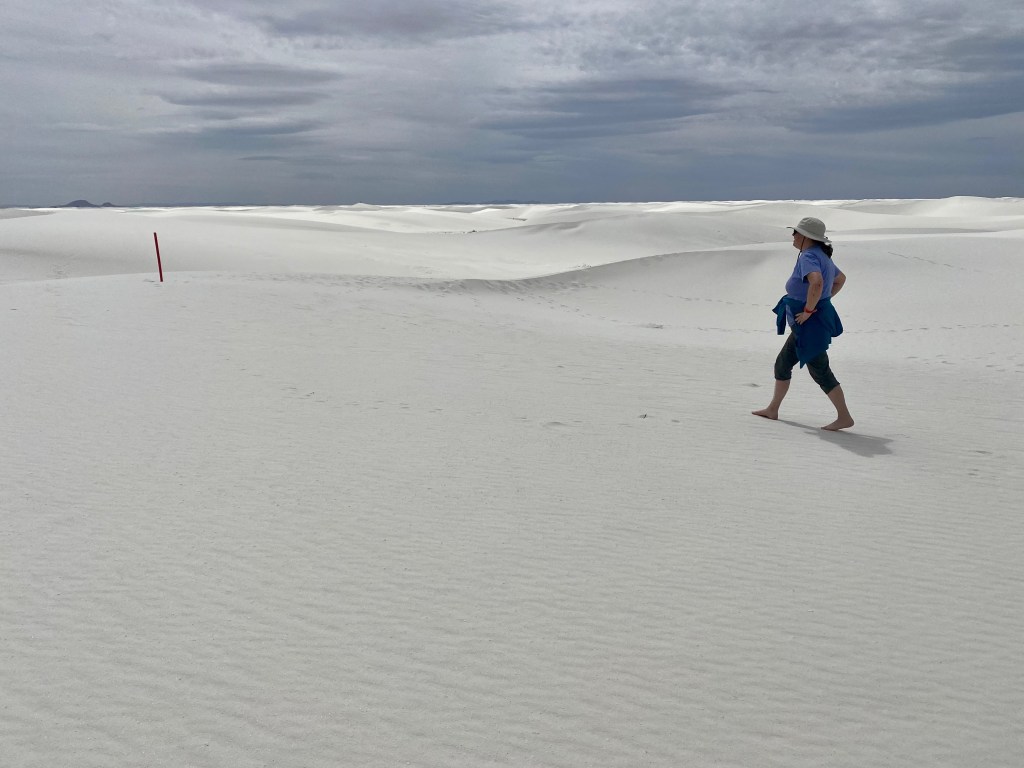
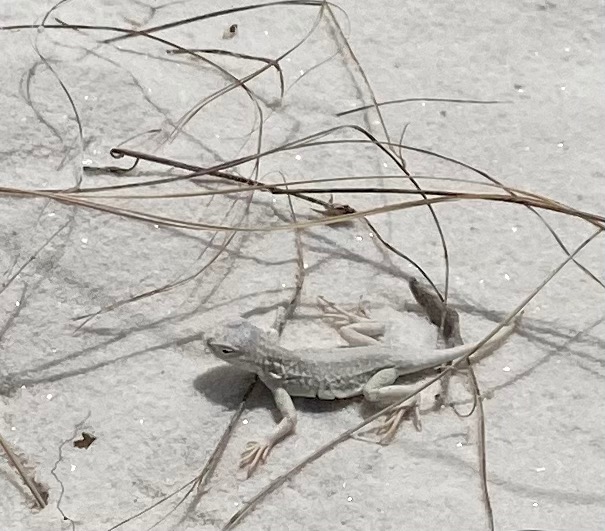
On our walk, we saw a beetle scurrying across the sand and a “bleached earless lizard,” which I understand is neither of those adjectives! We labored up the soft side of the sand dunes, but enjoyed sinking our feet in the cool sand on the downward slopes. Because the gypsum sand is white, it reflects the sunlight and stays cool. It’s also moist just beneath the surface because of the high water table, which tends to anchor the dunes and offer further delight for the feet of hikers.
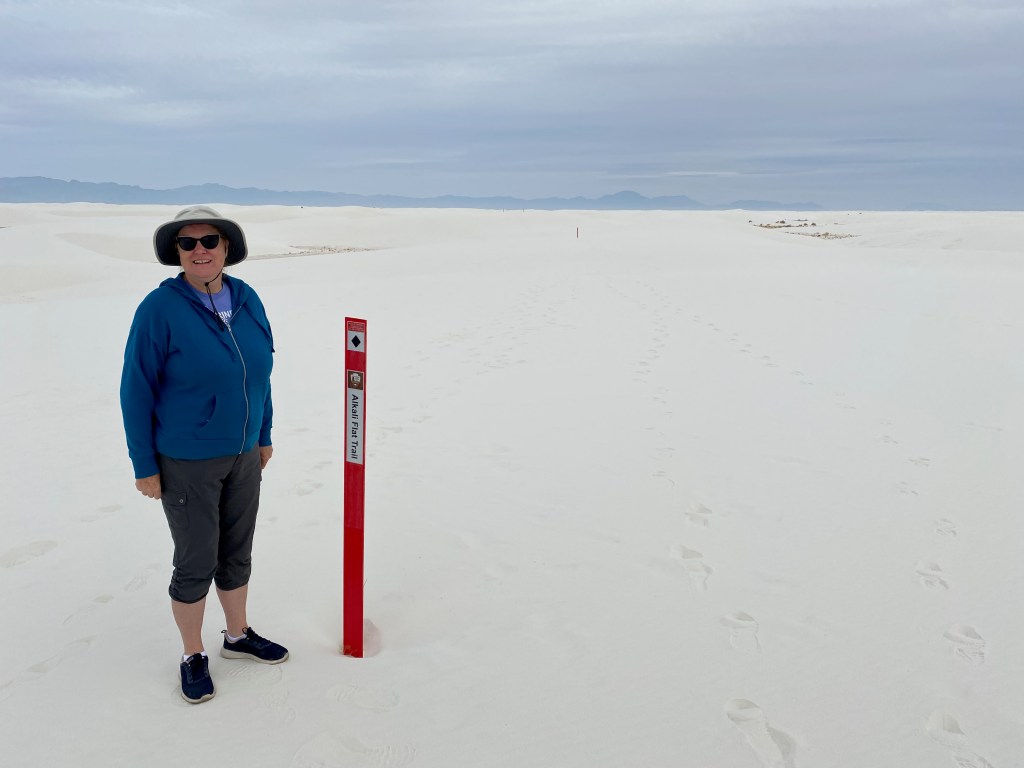
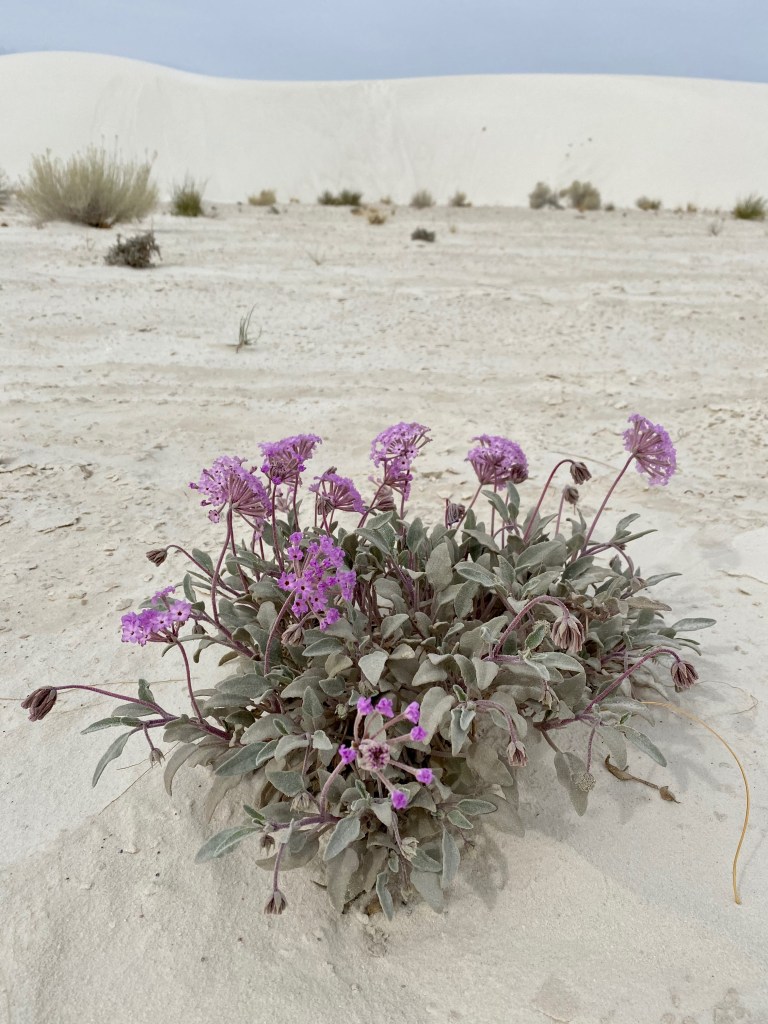
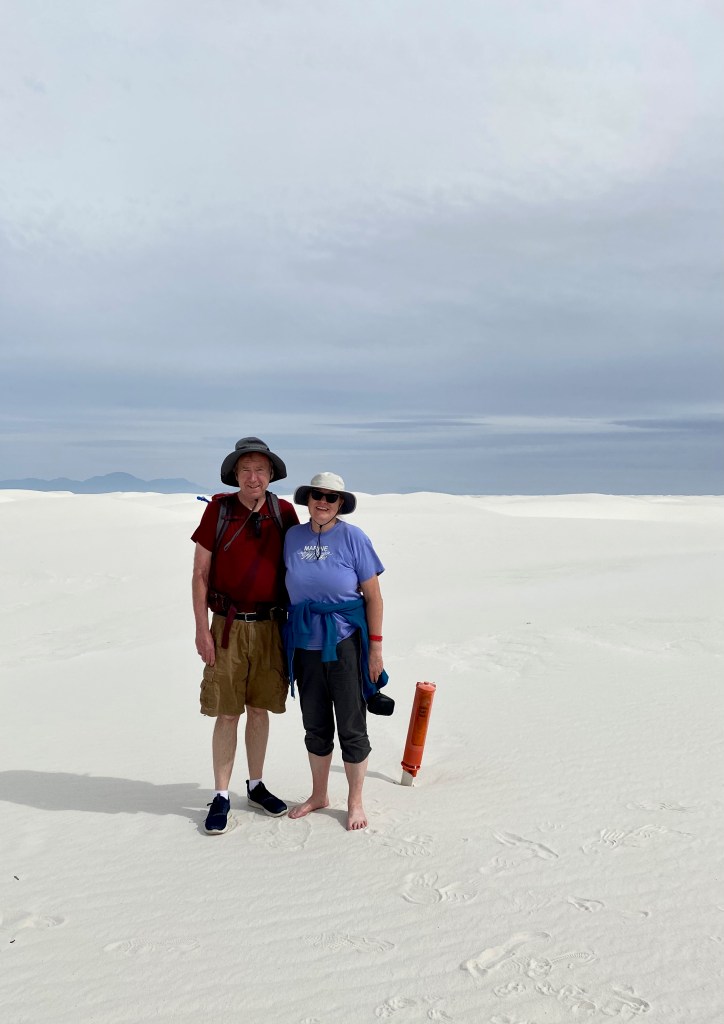

If you hike this trail, our best advice is to go counter clockwise, which allows you to tackle the more challenging dunes when you are freshest. There is little elevation gain on the trail, but hikers still need to climb the dunes, which can reach 50 feet in height. We found that it’s easier to climb the windward side of a dune, where the sand is harder packed and the slope more gradual, which was more often the case on the return leg if you tackle the loop counter clockwise. Also take plenty of water—they recommend 2 liters per person—lather on the sunscreen, and wear a broad-brimmed sun hat. And if you can, visit in the non-summer months and start early in the day to avoid temperatures above 85 degrees F. It was about 70 degrees for us today with winds of 10 to 15 mph and we agreed we would not want it much warmer.
In August 2015 I read a news story about White Sands N.P. that has stuck with me to this day: A French couple touring the American west with their 9-year-old son had ventured out on the Alkali Flats Trail at mid-day with the temperature at 101 degrees and only two 20-ounce bottles of water. About a mile out, the mother felt ill and headed back toward the parking area, but she collapsed and died along the way. The father and son went about half a mile further before the father succumbed. Park staff found the son alive next to his dead father. The son was relatively well hydrated only because the parents had given him extra water, sacrificing themselves for his survival. Here’s a 2015 CNN story on the tragedy, and a New York Times follow up with further details. (The CNN story reports that heat-related deaths in national parks are rare; far more park visitors die from drownings, car crashes, and falls.)
***
On Wednesday, we spent part of the day hiking in Oliver Lee State Park, located in Dog Canyon about 20 miles southeast of Alamogordo. The state park was recommended by a couple we met at another RV park and also by a National Geographic guidebook to state parks that we’ve brought along on our trip. The park was well worth the visit.
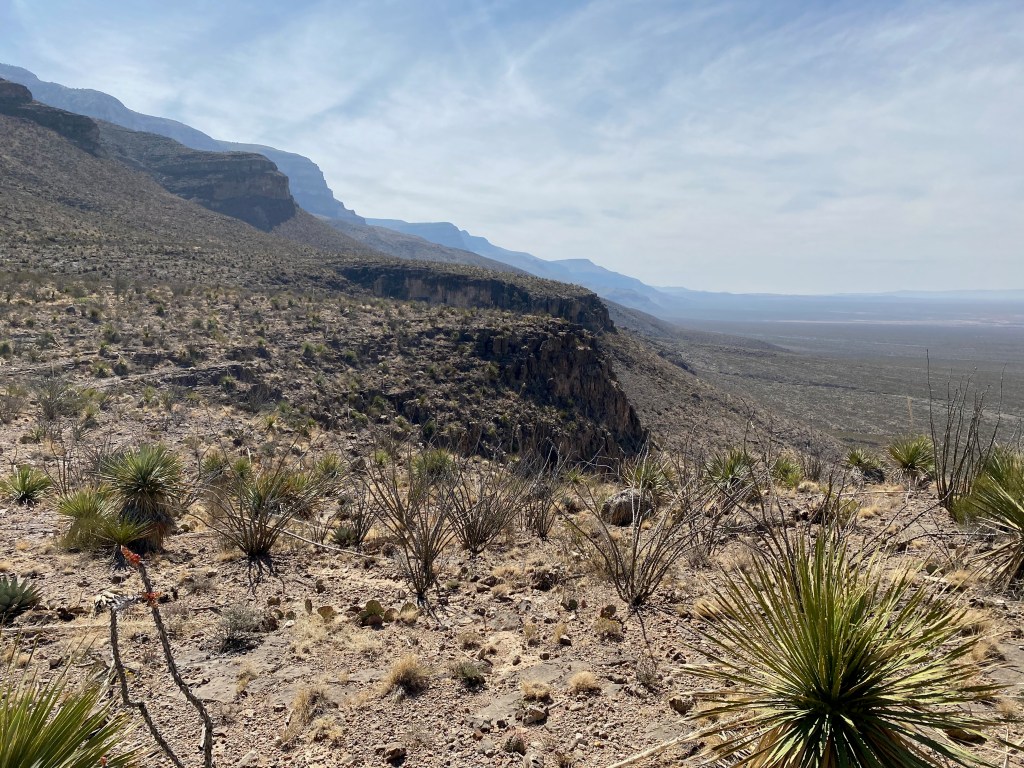
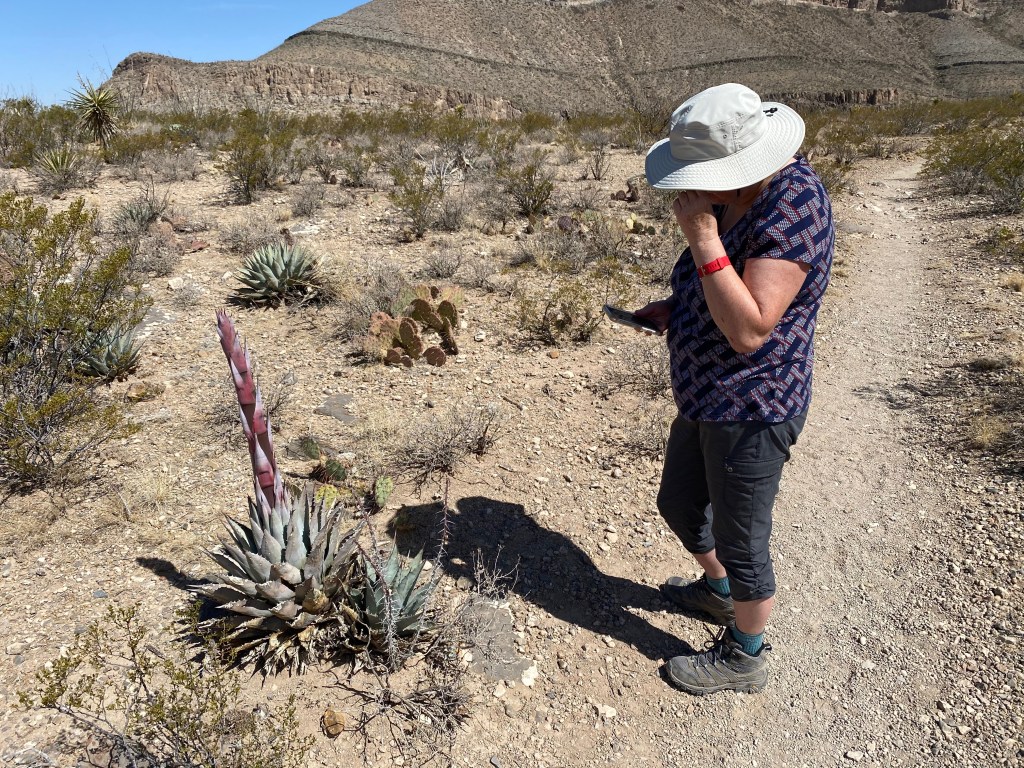
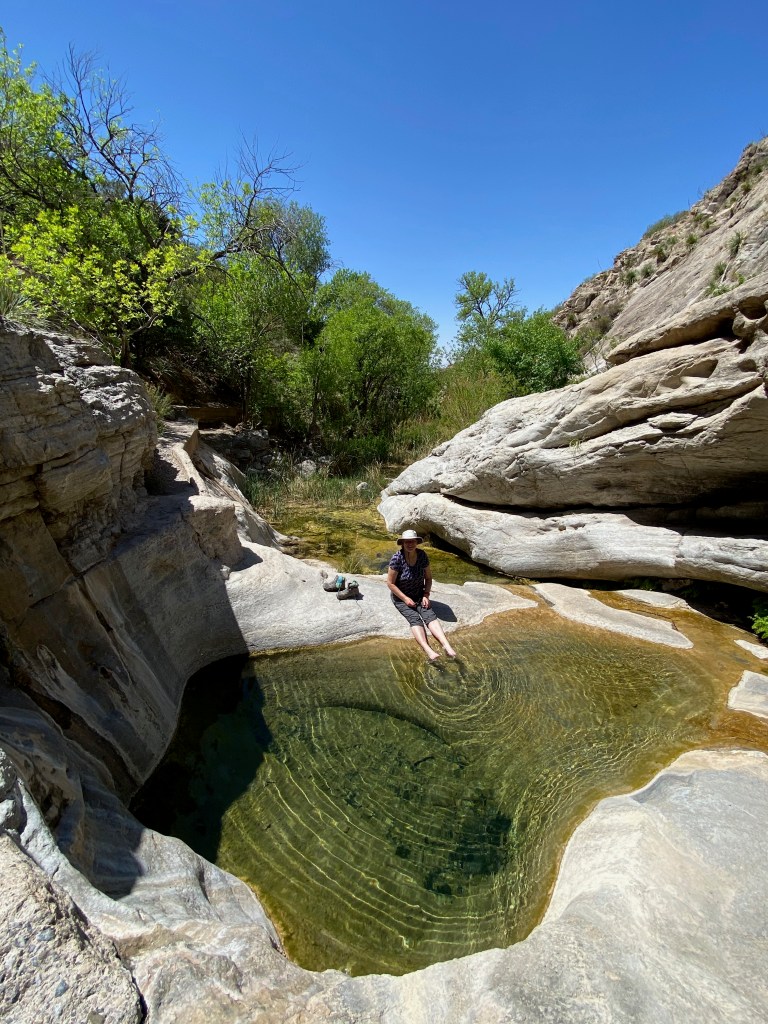
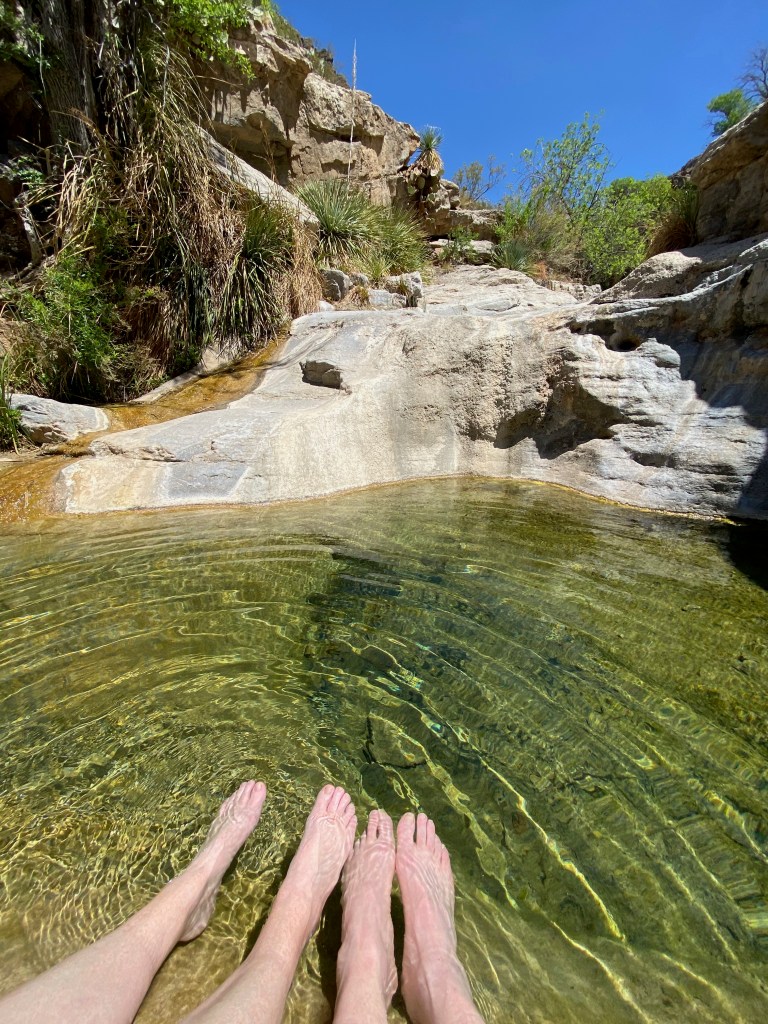
We started our excursion in the park with a 2.5-mile roundtrip hike up and along the side of Dog Canyon. Elizabeth continued her study of desert plants along the trail, and we both enjoyed the views back down the canyon to the valley floor. Our labors were rewarded back near the visitors center when we hiked a short way into the canyon to a spring-fed oasis. We enjoyed soaking our feet in a pool of clear, cool water, shaded by the surrounding cottonwood trees and other plants.

Dashboard:
Days on the road: 66;
Miles towing the RV: 3,044;
RV parks stayed at: 20;
National parks visited: 7.
The road ahead (Lord willing): Tucson, AZ, and Saguaro National Park

 Daniel Griswold's Blog